


Key Takeaways
- Infrared sauna blankets offer portable, full-body far-infrared heat in a form that packs away. They are not a cabin: the Sun Home blanket is far-infrared only, while our Eclipse, Equinox and Luminar cabins are full-spectrum.
- A session raises your heart rate and produces a deep sweat, but the calorie cost is modest. The nearest measured figure comes from a 90°C traditional sauna, not a blanket: about 67 calories for a 10-minute session in normal-weight young men (Podstawski et al., Biology, 2022). Most of the immediate change on the scale is water lost through sweating.
- Routine sessions are commonly used to support recovery and relaxation. Research on heat therapy and long-term health is ongoing.
- Blankets can be used daily, heat up quickly, and suit travel or small spaces. Stay hydrated, and talk to your doctor before use if you have a health condition.
- Many people describe regular use as relaxing and say it helps them wind down, which is why infrared sauna blankets have become a fixture in home wellness routines — those are reports rather than measured outcomes, and how you respond is individual.
Sure, you've started to see infrared blankets pop up all over your Instagram feed, but do they provide health and wellness benefits? Is wrapping yourself like a burrito in this sweat chamber of a blanket worth it?
Is all the celebrity hype on infrared blankets the real deal? We did the research for you and broke down the key benefits of using an infrared sauna blanket.
Infrared blankets share some of the appeal of an infrared sauna in a portable form. They are not the same thing, though, and it is worth being clear about the difference: the Sun Home blanket delivers far-infrared heat only, while our Eclipse, Equinox and Luminar infrared sauna cabins are full-spectrum — near, mid and far infrared — and the Eclipse adds built-in red light therapy, which the blanket does not have. What the blanket gives you instead is something you can pack: you plug it in, it heats up, and it folds away afterwards.
Both infrared saunas and infrared sauna blankets warm your body directly, while a traditional sauna heats the surrounding air. That means the air temperature does not have to be as high, which is part of why sessions can be longer. This matters when considering how long you should use a sauna blanket.

The biggest practical advantage of an infrared blanket over a cabin is portability. If you don't have the space at home for an infrared sauna (or steam shower), or don't want to shell out for a trip to the day spa, then a blanket is the easier way in. Alternatively, a home sauna may be the better long-term investment if you have the room.
Want to experience the benefits of infrared but you are travelling around Europe for the next 3 weeks or taking a road trip down the PCH?
No problem. The infrared blanket can be checked in at the airport or fit right in your car. Just plug it in once you get to your destination — and check the local voltage if you are travelling internationally.
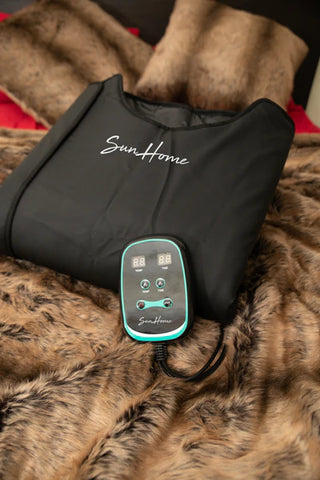
Besides taking your new cozy wellness buddy around the world with you, what are the benefits of an infrared sauna blanket, you ask?
1. A Deep Sweat Without a Workout
Sweating is one of the body's natural processes, and infrared heat is an easy way to work up a good sweat without the workout. Infrared warms your body directly and produces a deep sweat with far less exertion than a run, which is why many people build a session into their recovery routine and say they feel refreshed afterwards.
Worth knowing: sweating plays only a minor part in clearing waste products from the body compared with the kidneys and the gut, which do the real work (Baker, Temperature, 2019). We wrote more about what sweating does and does not do here: sweating and detoxification.

2. Calorie Burn and Water Weight
What a session actually burns: infrared heat raises your heart rate and produces a deep sweat, and the measured calorie cost of sitting in heat is modest. The closest real measurement is not from a blanket at all — in a study of 60 physically inactive young men, a 10-minute session in a 90°C traditional sauna used about 67 calories in the normal-weight group and about 92 in the group with obesity (Podstawski et al., Biology, 2022). That was a sauna cabin, not a blanket, and no equivalent measurement for a blanket exists — so treat the figure as an order of magnitude, not as your number. If you prefer a full cabin experience, a far infrared sauna works the same way.
Key Insight: the calories used during a heat session come mainly from your body's cooling effort, not from burning fat, and the drop you see on the scale straight afterwards is water you will replace when you rehydrate. Treat a blanket as something that complements a healthy diet and exercise routine, not something that replaces them. There is more on the difference here: infrared sauna and weight.
The upside is still real: you can lie in the blanket, watch your favourite episode of Friends, and get a proper sweat at the same time.

3. Regular Use and Long-Term Wellness
Many people find that regular infrared sessions leave them feeling more relaxed and more resilient, particularly through the colder months. Building relaxation into the week is a simple thing to do, and it is what most regular users of a far infrared blanket say they get out of it.
When your core temperature rises, the body produces heat shock proteins. These have been studied for their role in the body's cellular stress response — in sauna cabins and laboratory heating, not in sauna blankets — and heat therapy and long-term health remains an active research area rather than a settled one. We covered one widely discussed sauna routine built around that idea, and you can read more about infrared saunas generally.

4. Pain Relief
A Japanese study of patients with chronic pain reported reduced pain scores and improved function. That study was not done with a sauna blanket, results in studies like this vary, and heat therapy is not a treatment.
Infrared heat is also a popular part of post-workout routines, where people use it to ease general muscle tension and soreness. If you are managing a health condition, talk to your doctor about whether heat therapy is a good fit for you. Those wanting a more immersive version of the same thing may prefer personal saunas designed for home use.

5. Better Mood & Sleep
Heat is widely used for relaxation, and some research suggests it helps moderate cortisol, the primary stress hormone. Whether you use a blanket or an outdoor sauna, the wind-down effect is the part people report most consistently.
Heat and mood have been studied, though not with blankets. In a randomised trial published in JAMA Psychiatry, 29 adults with major depression received either a single session of medical whole-body hyperthermia or a sham session designed to feel the same without the heat. The active sessions ran an average of 107 minutes and continued until core body temperature reached 38.5°C. Depression scores in the active group improved by roughly 6.5 points more than sham one week later, and a smaller difference was still present at six weeks. That was a supervised clinical device running a protocol no consumer blanket reproduces, so read it as a reason the heat-and-mood question is worth studying, not as a result to expect from a blanket.
Many people find that using an infrared sauna blanket in the evening helps them wind down and fall asleep more easily, and describe the feeling afterwards as similar to the calm after a long run. Those are reports rather than measured outcomes, and how you respond to an infrared sauna blanket is individual. Either way, the wind-down is the reason most people keep infrared heat in their routine.
Pro Tip: for sleep, many people use their blanket 1 to 2 hours before bedtime — the natural cool-down after a session is the part that helps you settle.

Researchers have looked at infrared heat from a number of angles, and you can read more about the reported benefits of infrared saunas — it is an active research area rather than a settled one.
With a lot packed into a small package, an infrared sauna blanket is a straightforward addition to a wellness routine.
An infrared sauna blanket can be used every day at whatever time suits you, and it heats up quickly.
What's in the Sun Home blanket
| Infrared Sauna Blanket | Premium Bamboo Insert |
|---|---|
|
|
Looking for an infrared sauna blanket? We've got you covered.
Are Infrared Sauna Blankets Safe?
For most healthy adults, yes, within sensible limits — and our blanket manual is direct about the first step: consult a doctor before use. The manual also lists specific conditions where it says the blanket should not be used without your doctor's approval, and anyone who is pregnant, breastfeeding, recovering from surgery, or has an implanted device should read that list before a first session.
The manual sets a few practical rules too, including the controller's temperature range and how long a session should run. Sun Home's guidance for a beginner is a 20-minute session, building up gradually from there. Follow the temperatures and timings in the manual that came with your own blanket — that is the document those numbers belong to.
Do not wear jewellery or metallic items, which can get hot enough to burn. Do not apply ointments to your skin before a session. Do not use the blanket with an infant, a child, or anyone who cannot get out of it unaided. If you feel excess warmth anywhere, turn the temperature down or get out — you can leave the blanket at any time. Hydrate before and after, as with any heat therapy.
Feel free to contact us directly with any questions or feedback. We love our wellness community.
PS — if you've read all the way through this, go and have a look at the infrared sauna blanket.

FAQ
How often can you use an infrared sauna blanket?
Infrared sauna blankets are portable enough for home or office. Most people use them daily; Sun Home's guidance for a beginner is a 20-minute session, building up gradually from there, and the timings in your blanket's manual are the ones to follow. Stay hydrated before and after.
Should you shower after using an infrared sauna blanket?
Yes, shower afterwards to rinse off sweat. Let your body cool down for about 15 minutes before you shower.
What are the disadvantages of a sauna blanket?
Blankets are affordable and portable, but they hold one user at a time, they have to be packed away between uses, and they deliver far-infrared heat only rather than the full spectrum of an Eclipse, Equinox or Luminar cabin. Those with health conditions should check with a doctor first.
Does a sauna blanket reduce inflammation?
Some users report less stiffness and discomfort with regular use, though individual results vary. Talk to your doctor if you have a specific health condition.
Are sauna blankets safe for daily use?
Generally, yes, but hydrate well and listen to your body. Always check with a healthcare provider if you have concerns.
Looking for a high-quality sauna blanket? Sun Home Saunas has you covered. Reach out today and find out more from our experts.