


Research confirms that post-workout sauna sessions are superior for recovery, endurance, and heart health. While pre-workout heat can impair performance via dehydration, post-training use expands plasma volume and reduces muscle soreness.
For optimal results, enjoy 10–20 minutes in an infrared or traditional sauna after your session to maximize cardiovascular adaptations and longevity.
For optimal performance and recovery, it is best to use a sauna after your workout. Post-exercise sauna sessions support circulation, muscle recovery, and heat adaptation without compromising physical strength. Using a sauna before a workout can lead to premature fatigue and dehydration, which often reduces training quality and endurance.
Research and elite athlete practices show that using the best infrared sauna for home after training supports recovery, circulation, heat adaptation, and long-term cardiovascular health. Pre-workout sauna may feel relaxing, but it often compromises performance.
Understanding how heat stress interacts with exercise helps you choose the timing that matches your goals safely and effectively. Read on to understand why post-workout is ideal and how to structure your sauna session for maximum benefits.
Key Takeaways
- Post-workout sauna bathing is best for recovery, circulation, and endurance adaptation
- Pre-workout sauna can impair strength and endurance due to heat and dehydration
- Regular sauna use is linked to long-term cardiovascular benefits
- Endurance athletes commonly use sauna after key sessions
- Medical clearance is essential for higher-risk individuals
Sauna Before or After Workout: What the Science Actually Shows
Most sauna research spanning from the 1970s to 2023 examines general health outcomes rather than precise workout timing. To understand why timing matters, you first need to grasp what happens to your body during heat therapy exposure and how that interacts with your exercise routine.
|
Timing |
Primary Benefits |
Main Risks |
|
Pre-Workout |
Muscle warmth and reduced stiffness |
Dehydration and early fatigue |
|
Post-Workout |
Recovery, heat adaptation, and circulation |
Dizziness if not hydrated |
Key Physiological Effects of Sauna
When you sit in a hot environment, your body responds with these changes:
|
Response |
What Happens |
|
Core temperature |
Rises 1–2°C (1.8–3.6°F) |
|
Heart rate |
Increases to 100-150 bpm |
|
Blood vessels |
Dilate significantly (vasodilation) |
|
Sweating |
Profuse can lose 0.5-1 kg per session |
|
Cardiovascular load |
Similar to light-to-moderate cardio exercise |
This heat stress triggers your body’s natural thermoregulation systems and creates a training stimulus for your cardiovascular system.
Major Observational Research
The strongest evidence for outdoor infrared sauna benefits comes from Finnish cohort studies that tracked thousands of participants over decades. Here are the findings.
- 2018 Finnish study: Frequent sauna use was associated with reduced risk of high blood pressure, stroke, and fatal cardiovascular disease, demonstrating several health benefits from regular sauna bathing.
Small Intervention Trials
When researchers focused on exercise and sauna combinations, interesting patterns emerged:
- A 2023 randomized trial with male basketball players showed that 20-minute infrared sauna sessions after resistance training produced superior countermovement jump performance and significantly less sore muscle 14 hours later compared to passive recovery
The Evidence Gap
Almost none of these studies directly compared “before vs after workout” timing. Recommendations rely on piecing together physiology, small trials, and athlete experience.
Elite marathoners and triathletes often schedule 20-30 minute sauna sessions within an hour after key runs to adapt to heat and support blood circulation.
Sauna Before Workout: Pros, Cons, and When It Makes Sense
Pre-workout gym sauna can function as a “warm-up boost.” However, it also risks overheating and performance loss, especially for intense or long gym sessions. For most people, the downsides outweigh the benefits.
If you use the best outdoor infrared sauna before a workout, keep it short (5-10 minutes) at a moderate temperature (60-75°C / 140-167°F).
Potential Benefits of Sauna Before a Workout
Infrared sauna benefits include increased core and muscle temperature, which theoretically improves muscle elasticity and joint range of motion, similar to an extended proper warm-up. Physiology studies show that:
- 5-15 minutes of passive heat therapy exposure can increase muscle temperature and blood flow
- Short heat exposure may acutely increase growth hormone and catecholamines (adrenaline, noradrenaline), potentially boosting alertness and mental readiness
- The soothing sauna heat can promote relaxation of stiff joints and reduce muscle tension before movement
When can Athletes Use the Sauna?
In cold climates or early morning sessions, some athletes use a few minutes in the sauna (5-8 minutes) to “take the chill off” before dynamic mobility work.
Strength coaches report that powerlifters sometimes sauna bathe for 5 minutes before dynamic warm-ups to feel less stiff while avoiding longer sessions that induce heavy sweating. Pre-workout sauna may work before:
- Low-to-moderate intensity sessions
- Mobility, yoga, or technique work
- Short strength workouts if you tolerate heat well
- Light exercise days
Remember, pre-workout home sauna sessions should always be followed by an active warm-up, not as a replacement for dynamic movement.
|
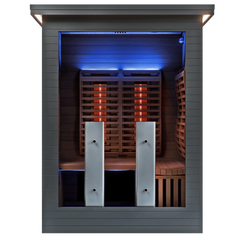
Sun Home Luminar™ Outdoor 5-Person Full Spectrum Infrared Sauna |
Sun Home Luminar™ Outdoor 2-Person Full Spectrum Infrared Sauna |
 |
 |
|
|
What are the Risks and Drawbacks of Sauna Before Training?
Longer or hotter pre-workout weatherproof outdoor infrared sauna sessions increase sweat loss, elevate body temperature, and can reduce endurance and power output when you start lifting weights or running, especially during an intense workout.
What the Research Shows
Exercise heat-stress literature (1990s-2020s) demonstrates that starting exercise after using the sauna leads to earlier fatigue and higher perceived exertion
Even mild dehydration (1-2% bodyweight) impairs endurance training performance and cognitive function
Pre-exercise heat stress does not benefit typical training and may hinder output, according to a 2007 investigation
What are the Key risks involved
|
Risk |
Impact |
|
Dehydration before starting |
Reduced blood volume, earlier fatigue |
|
Orthostatic hypotension |
Dizziness when standing after heat exposure |
|
Elevated core temperature |
Reduced high-intensity capacity |
|
Cardiovascular strain |
Higher heart rate at a given workload |
Who Should Avoid Pre-workout Sauna Entirely?
- People with low blood pressure, arrhythmias, or heart disease
- Those taking beta-blockers or diuretics
- Pregnant individuals
- Anyone with difficulty thermoregulating
Endurance athletes preparing for hot-weather competition should avoid the sauna before key workouts. For the average gym-goer, the performance downsides usually outweigh any warm-up benefits.
When Pre-Workout Sauna May Be Useful (Heat Acclimation)
Heat acclimation is a specialized strategy used 2-3 weeks before marathons, triathlons, or tournaments in hot climates to build heat tolerance and improve cardio fitness.
What Research-based Protocols Show
Endurance training studies conducted between 2010 and 2020 demonstrate that repeated passive heat combined with training can:
- Expand plasma volume
- Lower heart rate at a given workload
- Improve time-to-exhaustion in hot conditions
Most protocols place sauna bathing post-training, but some experimental setups use mild pre-session heating to enhance cardiovascular adaptation.
A Supervised Pre-workout Protocol Includes:
- 5-10 minutes at 70-80°C (158-176°F) before an easy workout
- Aggressive fluid replacement before and during the session
- A few minutes of monitoring between sauna and workout routine start
- A shorter main training set that day
This is an advanced strategy for competitive athletes under a coach or sports-medicine guidance, not something beginners should copy without expert advice.
For recreational exercisers, post-workout or separate sauna sessions are simpler and safer ways to gain heat-adaptation benefits.
Sauna After Workout: Recovery, Adaptation, and Performance

Available evidence and athlete practice favor sauna use after training, especially for endurance athletes and anyone prioritizing workout recovery.
Muscle Soreness and Recovery
Post-workout sauna promotes vasodilation and increased blood flow, which may:
- Deliver more oxygen and nutrients to tired, sore muscles
- Support the removal of metabolic byproducts associated with fatigue
- Accelerate the body’s natural recovery process
Research Findings
A 2023 trial showed that infrared post-sauna resistance training produced significantly less sore muscle and better neuromuscular recovery 14 hours later compared to passive rest
A far-infrared sauna outperformed a traditional Finnish sauna for reducing muscle soreness in trained athletes
Sauna use is not a replacement for other recovery basics such as sleep quality, nutrition (especially protein and carbs), light movement, and stretching.
How to do it Right
- Wait 5-15 minutes after finishing training to cool down and hydrate
- Do 10-20 minutes of gym sauna at a comfortable temperature
- Exit earlier if lightheaded or uncomfortably hot
- Rehydrate with water and electrolytes afterward
Cardiovascular and Performance Adaptations
Finishing a workout with an outdoor full-spectrum infrared gym sauna session adds an extra “cardio-like” stimulus at a relatively low mechanical load on joints, particularly valuable for endurance training.
Key Research Findings
|
Study |
Protocol |
Result |
|
2007 runner study |
30 min sauna post-run, 2-3x/week for 3 weeks |
32% increase in time to exhaustion, 1.9% 5K improvement |
|
Finnish cohorts (2015-2018) |
2-7 sessions/week, observed over 20+ years |
Lower risk of sudden cardiac death, stroke, fatal CVD |
|
Cyclist study |
4 post-training sauna sessions |
Expanded plasma volume, potential VO2max improvement |
Suggested Mechanisms
- Increased plasma volume improves stroke volume and thermoregulation
- Repeated heat exposure may improve endothelial function (blood vessel health)
- Combined effects enhance oxygen delivery capacity
Endurance coaches for marathon and Ironman athletes report that adding a 15-30 minute sauna 3-4x/week after easy runs during a 2-week block before a hot race improves athletes’ comfort and pacing in heat.
For Recreational Athletes
A 10-15-minute sauna session after moderate cardio 2-3 times weekly may support cardiovascular health and mild heat adaptation, as long as proper hydration is managed.
Incorporating it into your fitness routine can provide all the benefits of improved circulation without overcomplicating things.
Mental Health, Relaxation, and Sleep
Many athletes rank the mental benefits of post-workout sauna use as highly as the physical ones. These include deep relaxation, decompression from stress, and a clear “end of day” ritual that can boost mood. Evidence supports these benefits as seen below.
- Small trials show regular sauna use is associated with improved sleep quality and reduced perceived stress
- Heat exposure triggers endorphin release, creating a natural stress relief effect
What Athletes Commonly Report
- Easier transition from high-adrenaline training to rest mode
- Improved ability to fall asleep on nights after hard training
- Reduced stress hormone levels and improved well-being
Maximize the Mental Benefits by
- Using the post-workout sauna as a tech-free, quiet environment (no phones)
- Focusing on relaxed breathing or simple mindfulness
- Scheduling a sauna at least 1-2 hours before bedtime if doing evening sessions
If you struggle with post-workout “wired but tired” feelings, consider 10-15 minutes of sauna as part of your wind-down fitness routine.
|
Pro Tip: Timing is everything: Wait 5-15 minutes after training to allow your heart rate to normalize and get initial hydration in. This cooling buffer makes your sauna session safer and more effective for recovery. |
Risks of Post-Workout Sauna Use
While a post-exercise sauna session is generally preferable to pre-workout use, it still adds heat stress to an already-stressed body, especially right after an intense workout. Key risks include:
- Exacerbated dehydration if already down 1-3% bodyweight from workout sweat
- Increased heart strain after intervals or heavy lifting when the heart rate is elevated
- Prolonged fatigue and slower recovery if heat stress is excessive
- Potential for dizziness or fainting in people with cardiovascular function issues
Major organizations like the American College of Sports Medicine warn that overlapping intense exercise and heat exposure increases core temperature and dehydration risk. Adequate rehydration is essential before exposure to extreme sauna heat for prolonged durations.
Practical Guardrails
|
Situation |
Recommendation |
|
After maximal efforts |
Rehydrate and cool 10-20 min first |
|
First-time users |
Limit to 5-10 min initially |
|
Feeling dizzy/nauseous |
Exit immediately |
|
Pounding headache |
Skip the sauna that day |
People with cardiovascular disease, uncontrolled hypertension, or arrhythmias should only use the sauna after a workout with proper medical clearance.
Evidence-Based Timing: How to Decide When to Sauna

Sauna timing should match your goals, which could be physical performance, recovery, heat adaptation, or general health benefits. Current evidence and elite practice favor:
- Short, cooler pre-workout sessions (or none at all) for most people
- Longer post-workout or separate sessions for recovery and longevity
If Your Goal Is Maximum Workout Performance
- Either skip it entirely, or limit it to 5 minutes maximum at moderate heat
- Use before heavy lifting, sprints, or long endurance workouts
- Hydrate well before starting your exercise routine
How to Use the Sauna Strategically After Training
- 10-20 minutes at 70-85°C (158-185°F)
- 2-4x per week, depending on tolerance
- Separate key workouts and harder sauna sessions by several hours, or do sauna only after easier days
If Your Goal Is Recovery and Soreness Relief
- 10-20 minute sessions work well for most people
- Start with lower durations if you’re new to sauna use
What is the Best Timing for Recovery Benefits?
- After heavy lifting days
- After long runs or an intense workout
- Days when muscles feel stiff and tight (especially to reduce muscle tension)
Pairing Sauna Use With Complementary Practices
- A 5-10 minute cool-down walk or light exercise
- Gentle mobility or stretching after sauna, once blood vessels are dilated for increasing blood flow
Research and athlete reports support better subjective recovery and less muscle soreness when sauna follows training rather than precedes it. This approach maximizes increasing blood flow to blood vessels and delivers all the benefits of enhanced blood flow.
If Your Goal Is Heat Acclimation for a Hot Event
Best-supported protocols use sauna after easy-to-moderate workouts:
- 20-30 minutes at moderate-to-high heat
- 4-5x per week for 2-3 weeks before a hot race or competition
Example Microcycle:
|
Day |
Workout |
Sauna Protocol |
|
Monday |
Easy 45-min run |
20 min sauna after |
|
Tuesday |
Rest |
Skip sauna |
|
Wednesday |
Moderate intervals |
25 min sauna after |
|
Thursday |
Easy 30-min run |
20 min sauna after |
|
Friday |
Rest |
Optional 15 min sauna |
|
Weekend |
Long run |
25 min sauna after |
Repeat 5-10 times over 2-3 weeks before your event. Note that such protocols significantly increase total heat stress, so monitor blood circulation and increase blood flow closely in your fitness routine.
If Your Goal Is General Health, Longevity, and Relaxation
For all the benefits of regular sauna without exercise interference:
- Schedule sauna sessions fully separated from hard workouts when possible
- Evening sauna on non-training days works well
- Several hours after morning exercise is another option
|
Key Insight: Think of your energy as a daily budget. Pre-workout sauna 'spends' cardiovascular resources on cooling before you've trained, while post-workout sauna 'invests' those resources to enhance recovery and adaptation when your workout is already complete. |
Research-aligned Schedule (from Finnish Cohort Data):
- 2-4 sessions per week
- 10-20 minutes each
- 70-90°C (158-194°F) if tolerated and cleared by a physician
For general cardiovascular health and longevity, timing relative to workouts matters less than consistency. Treat sauna as a relaxation ritual with deep breathing and screen-free time to support mental benefits and stress relief.
Practical Guidelines: Duration, Temperature, and Hydration

This section helps you understand how to engage in pre- and post-workout sauna use with specific parameters backed by research and sports medicine recommendations.
How Long and How Hot? (Pre vs Post)
Temperature levels differ by sauna type. Here are common temperature ranges:
|
Sauna Type |
Temperature Range |
Notes |
|
Traditional sauna |
70-90°C (158-194°F) |
High heat, lower humidity |
|
Steam room |
40-50°C (104-122°F) |
High humidity, feels hotter |
|
Infrared sauna |
45-60°C (113-140°F) |
Deeper tissue penetration |
Duration by Timing:
|
When |
Duration |
Goal |
|
Pre-workout |
5-10 min max |
Warm but not sweating heavily |
|
Post-workout |
10-20 min |
Recovery and adaptation |
|
Rest days |
15-30 min |
General health benefits |
|
Heat acclimation |
20-30 min |
Aggressive adaptation |
Start at the lower end of all ranges and build up over several weeks. Finnish studies showing health benefits typically use 10-20 minute sessions multiple times weekly, extreme durations aren’t necessary.
Hydration, Cooling, and Safety
Research shows that losing just 2% of your body weight in fluids can reduce performance and impair cognition. Adding sauna use near workouts amplifies this risk.
Step-by-step Hydration Protocol
- Weigh yourself before and after a combined workout+sauna once to estimate total fluid loss
- Aim to replace 100-150% of weight lost (in kg) with liters of fluid over the next few hours
- Include electrolytes, especially after you sweat heavily
Fluid Timing
|
When |
Amount |
Type |
|
1 hour before training+sauna |
500-750 ml (17-25 oz) |
Water or electrolyte drink |
|
Between workout and sauna |
250-500 ml (8-17 oz) |
Water |
|
After sauna |
500-750 ml (17-25 oz) |
Water with electrolytes |
Safe Cooling Protocol
- Allow heart rate to drop with 5-10 minutes of easy walking before entering the sauna
- After sauna, cool gradually with a lukewarm or cool (not ice-cold) shower
- If following contrast therapy protocols (hot/cold), work with a professional on sequencing
Leave the Sauna Immediately if you experience:
- Chest pain
- Severe shortness of breath
- Confusion
- Fainting
- Persistent pounding headache
Traditional vs Infrared Sauna: Does Type Affect Timing?
Most cardiovascular health research is based on traditional Finnish saunas heated to 70–100°C (158–212°F).
What Studies Suggest About Infrared Saunas
- Lower air temperatures with similar perceived warmth due to deeper tissue penetration
- Some evidence for reduced muscle soreness with post-exercise infrared sessions
- May be more comfortable for longer durations
- Regular infrared sauna use shows promise for neuromuscular recovery
Timing principles are similar for both types:
- Pre-workout: Keep it short and mild regardless of type
- Post-workout: 10-20 minutes is generally well-tolerated if hydrated
Infrared saunas work better for people who struggle with the high heat of traditional formats. If you have cardiovascular issues or heat sensitivity, discuss both sauna types and timing with your physician to get the green light.
Who Should Be Extra Careful or Avoid Sauna Around Workouts?
Although sauna use is safe for many, some groups face a higher risk when combining heat with exercise. So, you must get medical clearance before sauna use around workouts if you have:
- Coronary artery disease, heart failure, or arrhythmias
- Implanted cardiac devices (pacemakers, defibrillators)
- Uncontrolled high blood pressure or very low blood pressure
- Kidney disease or conditions affecting fluid balance
- History of heat stroke or heat exhaustion
Medications Requiring Extra Caution
|
Medication Type |
Concern |
|
Diuretics |
Increase dehydration risk |
|
Beta-blockers |
Impair thermoregulation |
|
Blood pressure medications |
May cause excessive drops |
|
Antihistamines |
Can impair sweating |
If cleared for sauna with medical conditions:
- Opt for shorter, cooler sessions
- Avoid back-to-back intense exercise and sauna use
- Sit on lower benches where the air is cooler in traditional saunas
- Have someone nearby who can help if needed
Situations Where You Should Skip Sauna Entirely
Certain scenarios make sauna use before or after exercise inadvisable:
|
Situation |
Why Avoid |
|
Fever, acute illness, or infection |
Already elevated body temperature |
|
Recent heat exhaustion or heat stroke |
Impaired thermoregulation |
|
Severe dehydration |
Dangerous fluid loss potential |
|
Alcohol consumption |
Impairs judgment and thermoregulation |
|
Pregnancy (especially first trimester) |
Core temperature concerns |
Children and older adults may struggle to regulate body temperature, so they should use lower heat and shorter sessions. Follow facility safety rules and choose cooler, shorter sauna visits if unsure. Sauna benefits build gradually; playing it safe is always better than risking injury.
Putting it All Together: Sample Weekly Plans
These example schedules show how to integrate sauna into your fitness routine based on different goals. Adapt them to your health status and tolerance.
Example 1: General Fitness Enthusiast
|
Day |
Workout |
Sauna |
|
Monday |
45-min strength training |
15 min sauna after |
|
Tuesday |
30-min easy cardio |
Skip sauna |
|
Wednesday |
Rest |
20 min evening sauna |
|
Thursday |
45-min strength training |
15 min sauna after |
|
Friday |
Rest |
Skip sauna |
|
Saturday |
Long hike or bike |
15 min sauna after |
|
Sunday |
Rest |
Optional 15 min sauna |
Example 2: Endurance Athlete (Pre-Race Block)
|
Day |
Workout |
Sauna |
|
Monday |
Easy 60-min run |
25 min sauna post |
|
Tuesday |
Interval session |
20 min sauna post |
|
Wednesday |
Easy 45-min run |
25 min sauna post |
|
Thursday |
Tempo run |
20 min sauna post |
|
Friday |
Rest |
Skip sauna |
|
Saturday |
Long run (90 min) |
25 min sauna post |
|
Sunday |
Easy 30-min recovery |
Skip sauna |
Example 3: Busy Professional (3x Weekly Training)
|
Day |
Workout |
Sauna |
|
Monday |
AM strength session |
Skip sauna |
|
Tuesday |
Rest |
PM 20 min sauna |
|
Wednesday |
PM cardio |
Skip sauna directly after |
|
Thursday |
Rest |
PM 20 min sauna |
|
Friday |
AM strength session |
Skip sauna |
|
Saturday |
Long outdoor activity |
15 min sauna after |
|
Sunday |
Rest |
Optional 15 min sauna |
Change only one variable at a time. First, add a post-workout sauna twice weekly, then adjust times and heat. Track sleep quality, energy levels, and performance throughout your fitness journey.
Facts You Need To Know About Sauna Use and Workouts
- Endurance Boost: Regular post-workout sauna use has been shown to increase time to exhaustion in competitive runners by as much as 32%.
- Cardiac Load: A sauna session can increase heart rate to 100–150 bpm, mimicking the cardiovascular stress of moderate-intensity aerobic exercise.
- Volume Expansion: Consecutive post-exercise sauna bathing can lead to a 7.1% increase in plasma volume, significantly improving thermoregulation during future training sessions.
Frequently Asked Questions
Should you sauna before or after a workout?
For most people, after. Post-workout sauna use supports recovery, circulation, and heat adaptation without compromising performance, while a pre-workout sauna can cause premature fatigue and dehydration that reduce training quality. Short, cooler pre-workout sessions are the exception, mainly for heat acclimation under coaching.
How long should you wait after exercise before using the sauna?
Wait 5–15 minutes after finishing training to let your heart rate normalize and to rehydrate before entering the sauna. This cooling buffer makes the session safer and more effective for recovery.
How long and how hot should a post-workout sauna session be?
Aim for 10–20 minutes at a comfortable temperature, 2–4 times per week depending on tolerance. Start at the lower end of the range if you are new to sauna use, and exit earlier if you feel lightheaded.
Summary
For many workout enthusiasts and athletes, post-workout sauna use delivers the greatest benefits. Studies link post-training sauna sessions to improved recovery, reduced muscle soreness, expanded plasma volume, and small but meaningful endurance gains.
It is worth mentioning that pre-workout sauna use carries dehydration and performance risks and should be limited to short, mild sessions or avoided entirely. Sauna timing should align with your goals, hydration status, and medical profile.
Want better recovery and long-term health? Start by adding short post-workout sauna sessions twice per week and track how your body responds.