


The best flooring options for saunas and cold plunges are those that safely handle heat, moisture, weight, and hygiene demands. Unlike standard bathrooms, these environments require slip-resistant, waterproof, and structurally sound materials. The most reliable approach combines a durable base such as sealed concrete or porcelain tile with removable comfort layers like wood duckboards or rubber mats. Read on to understand which materials work best, why they matter, and how to choose the right option for your wellness space.
Key Takeaways
- Use sealed concrete or high-traction porcelain tile as the structural base
- Add removable wood or rubber layers for comfort and safety
- Confirm structural load limits for cold plunge tubs
- Choose products with verified slip, VOC, and antimicrobial certifications
- Always follow local building and drainage codes
How is Flooring Under Saunas and Cold Plunges Different?
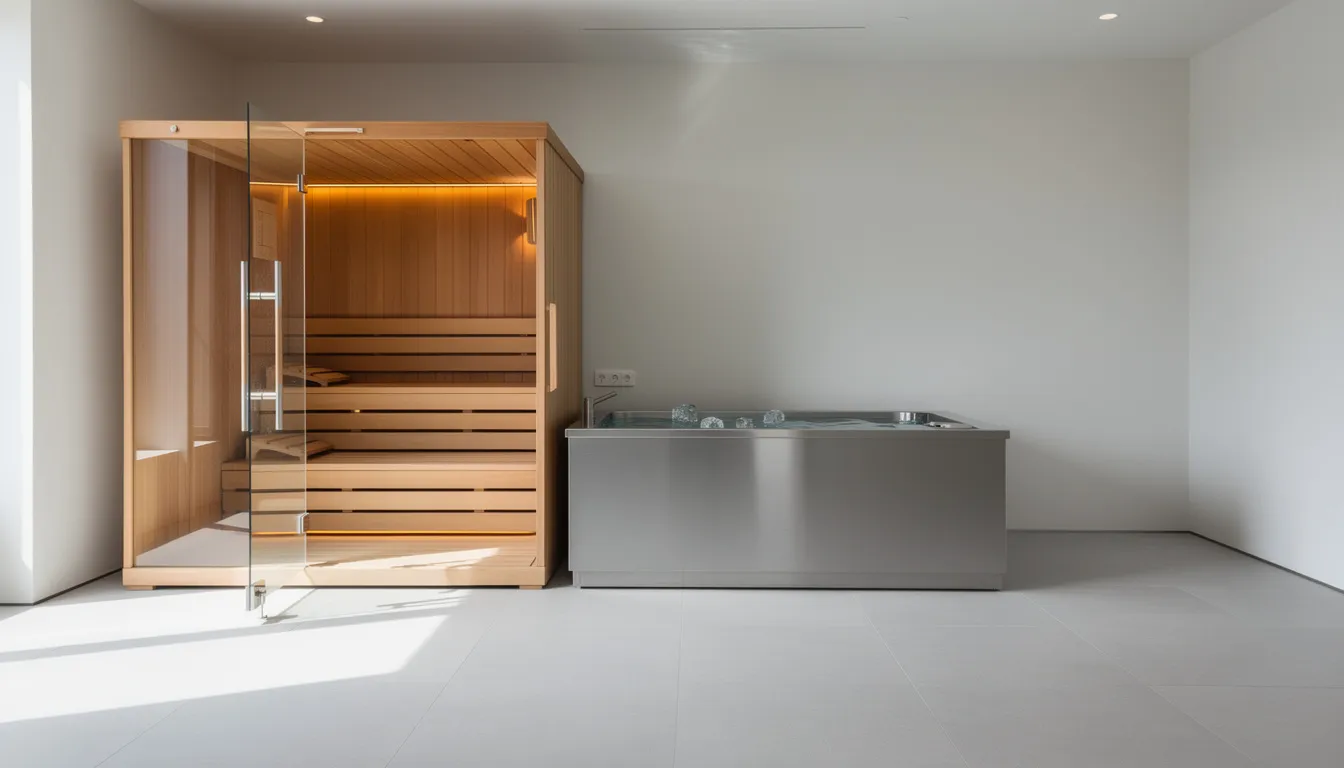
Creating the right floor for your wellness space isn’t like choosing tiles for a standard bathroom. These environments demand materials that can handle constant moisture, extreme temperature swings, substantial static loads, and rigorous hygiene requirements that most residential flooring simply wasn’t designed to manage.
Hot outdoor infrared saunas drive heat and steam directly into the floor assembly during every sauna session, with temperatures regularly exceeding 194°F (90°C). Meanwhile, cold plunge tubs concentrate thousands of pounds of static load onto a relatively small footprint, often 1,000 to 3,000 pounds when filled with water and occupants. The floor beneath these installations must manage both the damp conditions and the structural demands without failing.
These areas often sit adjacent to showers and changing rooms, creating wet-to-dry transition zones where slip risk is significantly higher than in ordinary bathrooms. A person moving from a steam-filled sauna to a cool plunge area walks on wet feet across potentially slippery surfaces, a safety concern that drives much of the material selection process.
The ideal approach uses a two-layer concept. A structural, waterproof base (concrete or tile assembly) forms the permanent foundation, while a comfort and safety surface (wood duckboards, rubber mats, or PVC grid systems) sits on top and can be removed for cleaning or replacement. This combination ensures longevity while maintaining flexibility for maintenance.
Building codes in North America and Europe require floor drains, non-slip surfaces, and waterproof membranes in these wet zones. Before purchasing any materials or beginning installation, verify your local regulations.
Structural Base Materials Under Saunas and Cold Plunge Tubs
The structural base is the permanent layer tied into your building’s floor assembly. This isn’t the surface you’ll walk on barefoot. It’s the foundation that handles moisture, weight, and long-term durability beneath your comfort layers. Getting this right is essential because mistakes can create costly problems that are hard to repair.
When evaluating structural base materials, compare them across four critical factors. Load bearing ability for heavy tubs and equipment, waterproofing capability to prevent damage to underlying structures, compatibility with drains and plumbing, and long-term maintenance requirements.
· Concrete (Reinforced, Sealed)
Reinforced concrete slabs represent the gold standard under both indoor saunas and cold plunge tubs. A 4” to 6” thick slab with proper rebar or welded wire mesh provides the compressive strength needed to support even the heaviest commercial weatherproof outdoor infrared sauna while maintaining dimensional stability through temperature and moisture fluctuations.
For indoor builds, slabs should be sloped at 1/4” per foot (approximately 2% grade) toward a floor drain and covered with a bonded waterproofing system. This slope prevents water from pooling anywhere in the room and directs splash-out toward proper drainage.
Concrete sealers should carry published slip-resistance meeting ASTM D2047 or equivalent standards. For enclosed spaces like home saunas, look for sealers with low-VOC certifications to ensure the material won’t off-gas harmful compounds when exposed to high heat.
· Mortar Bed + Porcelain or Ceramic Tile
A full mortar bed with porcelain or ceramic tile remains the most common choice in 2026 spa and commercial cold plunge tub wellness centres. This option provides durability, cleanliness, and design flexibility that few other materials can match.
The critical specification for tile in wet barefoot areas is the Dynamic Coefficient of Friction (DCOF). Look for tiles rated ≥ 0.42 wet per ANSI A326.3 for general wet areas. Higher values provide additional safety margin near plunge tubs where water is constantly present. European anti-slip classes offer another reference point. DIN 51130 ratings of R10–R11 and DIN 51097 ratings of class A or B are appropriate for barefoot wet zones.
Grout selection is equally important in humid environments. Specify epoxy or high-performance grout with antimicrobial and stain-resistant properties. The most reliable antimicrobial claims cite ISO 22196 testing, which measures actual bacterial growth suppression on surfaces rather than relying on marketing language.
· Engineered Concrete Panels Over Wood Framing
When a heavy tub must sit over wood-framed construction rather than a concrete slab, the floor requires substantial engineering. This means 2×10 joists at 16” on center with additional blocking between joists, topped with cement board panels (often called cement board underlayment) and a waterproof membrane.
For any tub exceeding approximately 1,000 to 1,500 pounds when filled, structural engineer sign-off is strongly recommended. Standard residential floor systems are designed for distributed loads of 40–60 pounds per square foot, a cold plunge tub concentrates far more weight onto its footprint than these systems were designed to handle.
· Existing Slab Retrofits
Converting a basement or garage into a luxury home sauna space often means working with an existing concrete slab. Before proceeding, inspect thoroughly for cracks, leveling issues, and moisture intrusion. Any significant cracks should be filled and stabilized before adding finish layers.
Once the slab is sound, apply a liquid-applied waterproofing system and top with either a non-slip coating or tile assembly. This approach can transform an existing concrete floor into a proper base for your new sauna or cold plunge without the expense of pouring new concrete.
Resilient-only bases such as vinyl sheet on plywood subfloor, laminate flooring, or carpet should never serve as the primary structural layer under a cold plunge tub or heavily used sauna. These materials cannot handle the moisture exposure and weight, leading to rot, deflection, and eventual failure.
· Comfort & Finish Layers Underfoot in Saunas
The finish layer in a sauna balances thermal comfort, barefoot feel, and safety over the structural base beneath. This is the surface you’ll walk on during your sauna session where material selection affects both the experience and maintenance requirements.
All wood options should be installed over a waterproof base (concrete, tile, or similar) rather than directly over soil or untreated subfloor. Modern builds recognize that even high moisture resistant wood species need proper drainage and airflow beneath to reach their full lifespan.
· Thermally Modified Wood Duckboards and Platforms
Thermally modified spruce, aspen, or pine represents a premium, stable option for sauna flooring that resists cupping and decay without chemical treatment. The thermal modification process changes the wood’s resistance to moisture and insects while enhancing dimensional stability. Lifespans can reach 20–25+ years with proper care.
For optimal performance, install boards as removable slats set on small sleepers, with 3–5 mm gaps between boards for drainage and airflow. This design allows you to lift the duckboards periodically for cleaning the base underneath, a significant advantage in humid environments where debris and moisture can accumulate.
Reputable manufacturers often provide FSC or PEFC certification for sustainable sourcing and may publish VOC testing data following EN 16516 or similar standards for low emissions. These certifications matter more in enclosed spaces where off-gassing becomes concentrated during high heat exposure.
· Cedar (Western Red Cedar, Alaskan Yellow Cedar)
Cedar has been the traditional choice for the best outdoor infrared sauna benches and floor panels for generations, valued for its cool surface temperature and pleasant aromatic properties. The wood contains natural oils that resist decay and create the characteristic cedar scent many sauna users associate with a great sauna experience.
For floor use, select clear, tight-grained grades rather than knotty lumber. Higher grades resist splintering and provide a more consistent surface underfoot. Annual oiling or sealing extends lifespan, and regular inspection for splinters is important in high-humidity applications where the wood undergoes repeated wet-dry cycles.
Consider allergy and sensitivity factors before using cedar. Some users react to the aromatic compounds that make cedar distinctive. If building a commercial sauna or serving a diverse clientele, thermally modified alternatives may be safer choices. When using any finish or sealant on cedar, look for products with safety certifications for interior air.
· Heat-Rated Sauna Floor Tiles (Wood-Look or Composite)
Modular, interlocking tiles rated for continuous exposure to at least 194°F (90°C) offer a low-maintenance alternative to natural wood in outdoor full-spectrum infrared sauna floors. These products, often made from thermoplastic or wood-plastic composites, provide the visual warmth of wood with greater dimensional stability and easier cleaning.
When evaluating these products, look for manufacturer declarations specifying heat range limits, slip resistance values, and any fire testing documentation (UL 94 or EN 13501-1 where applicable). Not all plastic or composite materials perform safely at sauna temperatures. Ensure the specific product is well rated for this application.
· Rubber or EVA Foam in Sauna Anterooms Only
Dense rubber or EVA foam tiles provide excellent cushioning and grip in changing areas outside the hot room. These materials create a comfortable transition space where users can rest between heat and cold exposure.
However, many rubber and foam products are not rated for continuous sauna temperatures. Bringing unrated materials into the hot room can result in off-gassing, accelerated degradation, and potential safety hazards. Before installing any rubber or foam product near a sauna, verify temperature ratings and look for VOC/odor certifications such as low-VOC rubber mats certified to ISO 16000 series tests or equivalent protocols.
What Flooring Can be Used Under and Around Cold Plunge Tubs?
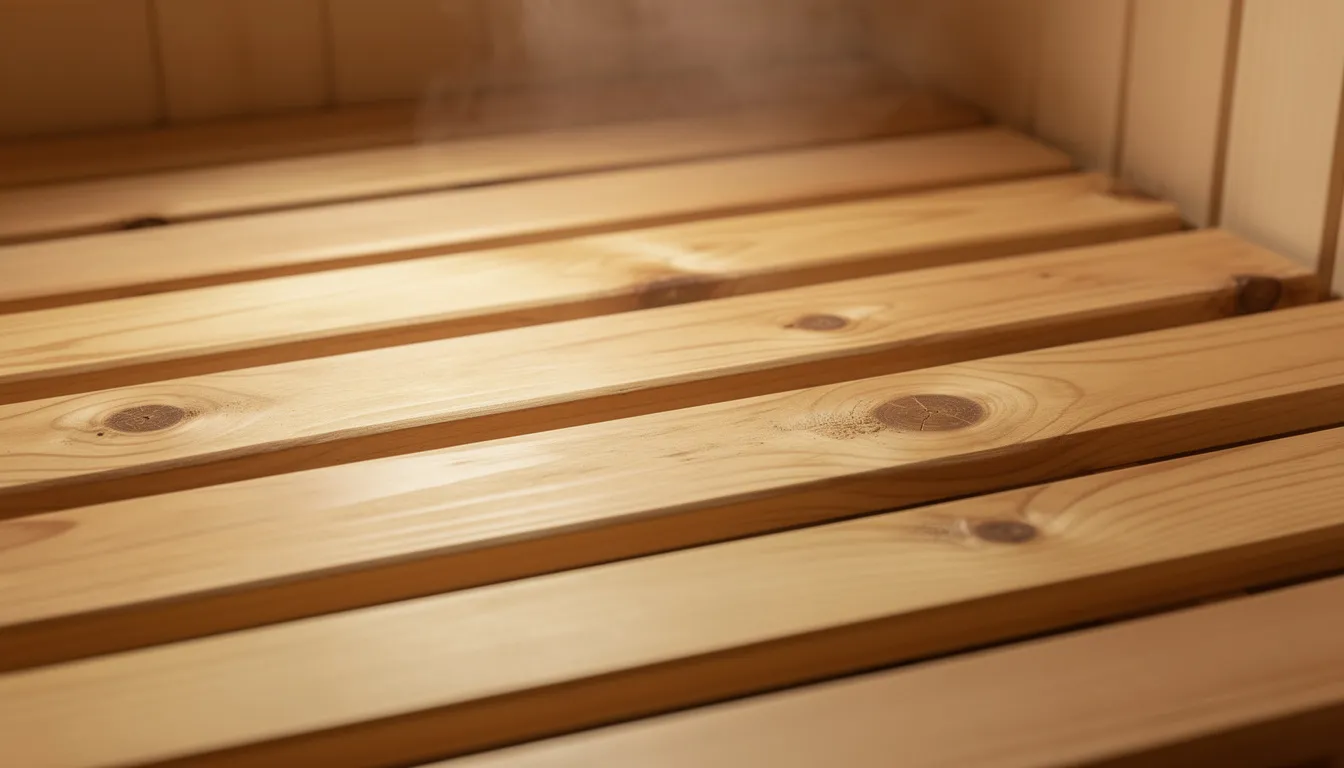
Cold plunge tubs maintained at 34–50°F (1–10°C) place different stresses on flooring than saunas. While you’re not dealing with extreme heat, you face the combination of high concentrated weight, constant splash-out and humidity, and potential chemical exposure from chlorine, bromine, or salt used to maintain water quality. Flooring options include:
· Reinforced Concrete Pads
Many outdoor cold plunge tubs for home and heavy steel or concrete tubs require dedicated reinforced concrete pads, 4” to 8” thick with rebar or welded wire mesh. These pads distribute the substantial point loads of a filled tub across a larger footprint and into stable ground below.
Before installation, calculate total weight: empty tub + water capacity + maximum occupants. Compare this against residential floor load limits (40–60 pounds per square foot for general living spaces) versus spa pads designed for significantly higher point loads. A standard 4-person cold plunge tub can easily exceed 2,000 pounds when filled, far beyond what typical indoor residential floors can safely support without reinforcement.
· Porcelain/Quarry Tile Surrounds
Porcelain or quarry tile zones around plunge tubs provide durable, easy to clean surfaces that handle constant water exposure. Choose textured, matte finishes rather than polished tiles.
Target DCOF values of ≥ 0.42 wet, or for European specifications, look for tiles meeting DIN 51097 class B or better (suitable for barefoot wet areas). The walk from a plunge tub to a towel or robe puts substantial slip risk demands on the surrounding floor.
Both grout and setting materials should be rated for full immersion and compatible with pool and spa chemicals where applicable. Standard grout formulations may degrade under repeated chlorine or salt exposure, leading to premature failure and water intrusion.
· Epoxy or Polyaspartic Coatings on Concrete
Modern high-build epoxy or polyaspartic floor coatings offer an efficient solution for indoor cold plunge rooms, particularly when retrofitting existing concrete slabs. These coatings provide chemical resistance that handles sanitizing chemicals and integrated slip-resistant aggregates that maintain traction even when continuously wet.
When selecting coatings, request certification and test data: ASTM D2047 for slip resistance, chemical resistance charts showing performance against chlorine and common sanitizers, and low-VOC or zero-VOC labels (LEED-compliant or Greenguard certified products provide documented compliance).
Drainage and Splash Control
Any cold plunge installation requires thoughtful drainage design. Choose perimeter trench drains or centrally located floor drains with minimum 2% slope away from walls and equipment. Water that pools against walls or under equipment creates mold and decay issues that undermine even the most durable materials.
Consider installing curbs or small thresholds between the plunge area and adjacent dry rooms. These barriers keep splash-out contained and prevent moisture from migrating into spaces where it can damage different floor materials.
Never place cold plunge tubs directly on wood floors or vinyl planks without a proper structural, waterproof layer below. The combination of weight, constant moisture, and chemical exposure creates conditions that lead to rot, mold growth, and eventual structural failure.
Slip Resistance, Hygiene, and Safety Certifications
Spa flooring is a regulated safety category in many jurisdictions. Making selections based on appearance alone create liability exposure for commercial operators and injury risk for everyone. Understanding the relevant certifications helps you make informed choices and document compliance. These include:
· Slip-Resistance Metrics
The Dynamic Coefficient of Friction (DCOF) is the primary slip-resistance metric used in North America. For general wet areas, pick products rated ≥ 0.42 wet. This threshold is established in ANSI A326.3 as the minimum for wet areas where walking would be expected. Close to cold plunge tubs where water is continuously present, higher values provide additional safety margin.
European norms provide alternative reference points. DIN 51130 establishes R ratings (R9 through R13) for occupational areas, with R10–R11 appropriate for pool decks and spa surrounds. DIN 51097 establishes A, B, and C classes specifically for barefoot wet zones, with class B recommended for areas around saunas and cold plunges.
When shopping for tiles, look for products specifically labeled as pool deck or wet barefoot area tiles with published DCOF or DIN ratings rather than relying on descriptive terms like slip-resistant without supporting data.
· Antimicrobial and Hygiene Claims
Antimicrobial flooring and mats should cite specific testing protocols that demonstrate performance. ISO 22196 and JIS Z 2801 are the standard methods for measuring bacterial growth on surfaces. Products making antimicrobial claims should reference one of these standards with specific reduction percentages.
Remember, antimicrobial additives do not replace cleaning. These treatments reduce bacterial growth between cleaning sessions but don’t eliminate the need for regular cleaning and periodic disinfection. Commercial facilities should establish documented cleaning protocols. Home users should rinse surfaces after each session.
· Indoor Air Quality and Chemical Safety
Enclosed spa rooms collect any emissions from flooring, coatings, and adhesives. Common certifications indicating low emissions include Greenguard and Greenguard Gold (North America), FloorScore (North America), and EMICODE EC1 (Europe). These certifications matter particularly in sauna rooms where high heat can accelerate off-gassing from materials that seem fine at normal temperatures.
Manufacturers of polyurethane coatings, epoxy systems, and adhesives should provide Safety Data Sheets (SDS) and, ideally, independent VOC test reports. Request this documentation during the specification process.
· Thermal Safety in Hot Rooms
Materials installed in sauna hot zones should be rated to at least 194°F (90°C) and tested for dimensional stability and odor at these temperatures. Materials that pass standard indoor testing may behave differently when exposed to sauna conditions for extended periods.
For wall and ceiling panels, fire classification standards like EN 13501-1 (class B-s1, d0) provide reference points for material safety. Floor materials may be subject to different local code interpretations. Verify requirements with your local building authority before finalizing material selections.
Material-by-Material Comparison for Saunas and Cold Plunges
Rather than getting lost in technical specifications, this section presents each major material category with its strengths, limitations, and best applications for your wellness space. The right choice depends on your specific situation—there’s no universal “best” material.
· Concrete (Sealed or Coated)
Concrete serves as the default structural base for both home sauna wellness units and the cold plunge tub for home. Its advantages are fundamental. Excellent load-bearing capacity, complete moisture resistance when properly sealed, and essentially unlimited longevity with minimal maintenance. For durability and cost-effectiveness at the structural level, nothing else comes close.
The trade-offs are equally clear. Concrete feels cold and hard underfoot, making it uncomfortable as a finish surface in most applications. It requires mats or duckboards over the top for comfort and warmth. When used as a base layer beneath other materials, however, concrete is difficult to beat.
· Porcelain / Ceramic Tile
Tiles represents the best balance of durability, ease of cleaning, and aesthetic options for indoor wellness spaces. With hundreds of colors, patterns, and textures available, tiles allow custom design while providing a surface that handles moisture, chemicals, and foot traffic without degradation.
Success with tiles depends on correct installation. Waterproof membrane beneath the mortar bed, appropriate thin-set mortar rated for high-temperature applications (if near a sauna), proper expansion joints at perimeters and transitions, and high-performance grout with antimicrobial properties. Cutting corners on installation undermines even premium tile selections.
· Natural Stone (Granite, Slate, etc.)
Natural stone can create stunning wellness spaces but requires more careful selection and maintenance than tiles. For slip resistance, choose non-polished, textured varieties. Polished stone become dangerously slippery when wet regardless of its other properties.
Stone requires regular sealing to prevent staining and chemical damage, particularly around cold plunge areas where sanitizing chemicals accumulate during splash-out. Before deciding on and selecting stone for a design or construction project, make sure it works with your planned water treatment method and ask the supplier for DCOF (slip resistance) or similar safety data. Many stone suppliers can provide this information but don’t include it in standard specifications.
· Thermally Modified Wood & Cedar
Wood provides superior comfort in the sauna. Warm underfoot, pleasant to the touch, and visually creating the relaxation atmosphere most users expect. Between thermally modified wood and traditional cedar, thermally modified options offer better dimensional stability, reduced maintenance requirements, and longer lifespan without sacrificing the natural wood aesthetic.
Neither material works well as a primary structural surface or in areas that remain continuously wet. Use wood as a comfort layer over waterproof bases, not as a substitute for proper structural flooring.
· Vinyl Planks / LVT
Vinyl and luxury vinyl tile (LVT) work well in adjacent changing rooms and transition spaces where budget matters and moisture exposure is intermittent rather than constant. Modern vinyl offers realistic wood and stone looks at a fraction of the cost, with snap-together installation that simplifies DIY projects.
Vinyl is not appropriate for use directly under cold plunge tubs (insufficient load capacity and moisture resistance). Many vinyl products cannot withstand continuous sauna temperatures. If using vinyl near wellness spaces, ensure that specific products are rated for high moisture exposure and look for clear indoor air quality certifications.
· Rubber and PVC Grid Mats
Removable rubber and PVC grid mats add traction, drainage, and cushioning as top layers in commercial saunas and around cold plunge zones. These mats can be lifted for cleaning, replaced when worn, and configured to fit various space layouts.
Before purchasing mats marketed as hygienic or antimicrobial, verify the specific claims. Chemical resistance documentation, temperature limits, published slip test results, and antimicrobial testing to ISO 22196 or equivalent. The quality range in this product category is substantial. Certification documentation separates reliable products from marketing claims.
· Popular 2026 Material Stacks
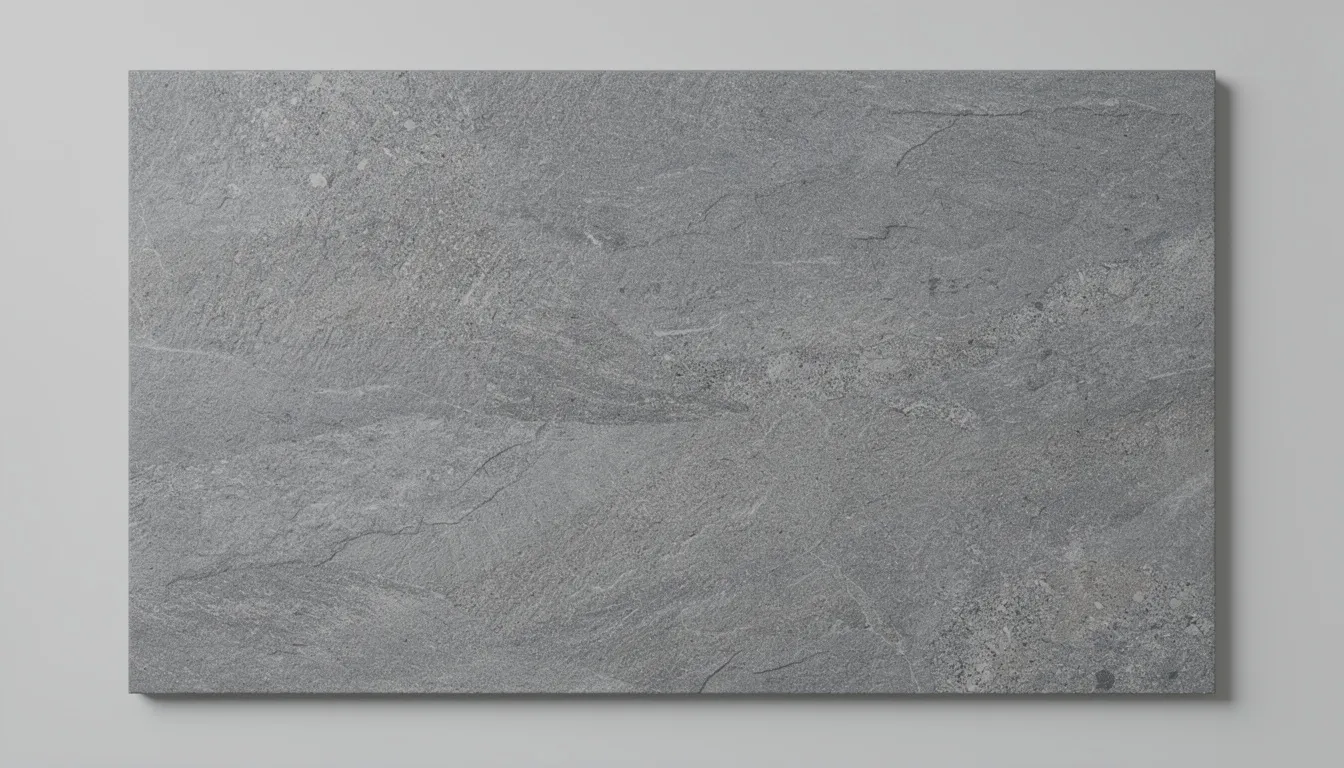
For an indoorhome wellness room, a popular combination would be concrete slab + waterproof membrane + porcelain tile throughout + thermally modified cedar duckboards in the sauna zone + rubber grid mats around the cold plunge tub. This approach provides a unified, moisture-proof base with replaceable comfort layers tailored to each zone’s requirements.
What are the Installation & Maintenance Best Practices for 2026?
Even the best materials fail if slopes, membranes, and detailing are wrong. Current best practices require fully waterproofed wet zones with proper drainage. Cutting corners here creates problems that are expensive to repair later.
· Drainage and Slope Details
Minimum slopes of approximately 1/4” per foot toward floor drains should be maintained throughout sauna and cold plunge rooms, with no low spots where water can stagnate. Standing water promotes bacterial growth, degrades materials faster, and creates slip hazards.
· Vapor and Thermal Control
Vapor barriers under slabs or tile beds prevent moisture migration through concrete, particularly important in cold climates or when the wellness space sits above living areas. Modern membranes are rated for continuous exposure to both moisture and temperature swings. Choose products designed for this application instead of repurposing general construction materials.
Insulation under slabs or subfloors prevents condensation issues and improves comfort. Without proper insulation, cold plunge rooms can experience condensation problems, and sauna rooms lose heat to the ground rather than maintaining temperature efficiently.
· Jointing, Expansion, and Movement
The temperature cycling around saunas (ambient to 194°F+ and back) and plunge tubs (ambient to near-freezing and back) creates expansion and contraction that rigid materials cannot absorb without cracking. Expansion joints and flexible sealants at perimeters, transitions, and within large tile fields are critical for controlling cracks.
Space tile installations per manufacturer specifications, and use flexible caulk rather than grout at surface transitions (floor to wall, floor to curb). These details prevent the cracks that lead to water intrusion and eventual failure.
How to Clean and Disinfect Flooring in Saunas and Cold Plunges
Commercial facilities should establish daily wipe-down or hose-down routines, with documented cleaning protocols that satisfy health department requirements. For home saunas, after-session rinsing removes sweat, debris, and prevents buildup that promotes bacterial growth.
Use pH-neutral cleaners approved for your specific flooring material. Stone and tiles have different requirements than sealed wood or rubber mats. Harsh bleach can damage unsealed surfaces and degrade grout. Check manufacturer recommendations before using any unfamiliar cleaning product.
Inspection and Replacement Cycles
Annual inspection of grout, sealers, membranes (where visible), and removable duckboards or mats helps catch problems before they escalate. Look for cracked grout, worn sealers, delaminating membranes, warped wood, and mat surfaces that have lost their texture.
Typical replacement timelines vary by material and use intensity. Rubber and PVC mats often need replacement every 3–5 years in commercial spas as their texture wears. Thermally modified wood duckboards last 7–15 years depending on species and care. Cedar may need earlier replacement if not regularly maintained.
All installation work near drains and structural modifications should comply with local plumbing and building codes. Many jurisdictions require licensed professionals for drain connections and structural reinforcement. Verify requirements before beginning work.
How to Choose the Right Flooring System for Your Wellness Space
Different situations call for different material combinations. Here’s how to match your specific context to appropriate flooring stacks.
· For Home Indoor Saunas with Small Cold Plunge
A concrete or tile base works throughout the entire room, providing unified waterproofing and structural support. In the sauna zone, add thermally modified wood or cedar duckboards for comfort and authenticity. Around a compact plunge tub, non-slip porcelain tiles with rubber grid mats provide safety and ease cleaning.
This approach creates distinct zones for different activities while maintaining a cohesive, fully waterproofed foundation. The duckboards and mats can be removed for cleaning and replaced when worn without disturbing the permanent floor.
· For Commercial Spa Facilities
Heavy-duty tile or natural stone over waterproofed mortar beds provides the durability commercial traffic demands. Combine with rubber or PVC modular mats rated for high traffic and sanitizing chemicals. Clear documentation of safety certifications and maintenance logs demonstrates due diligence and supports liability management.
Commercial installations benefit from standardization. Using consistent materials throughout simplifies maintenance training and replacement parts inventory. The focus should be on durability and safety documentation rather than cost minimization.
· For Outdoor Barrel Saunas and Stand-Alone Plunge Tubs
Outdoor installations have different requirements than enclosed rooms. Reinforced concrete pads under heavy equipment provide stable, level foundations. For lighter tubs and barrel saunas, compacted gravel with pavers can work if drainage is adequate.
Raised wood platforms built with pressure-treated or thermally modified framing keep the sauna off ground contact while allowing airflow beneath. Ensure all ground-contact materials are rated for continuous moisture exposure in your climate.
Budget-Conscious Renovations
When budgets are tight, prioritize waterproofing and structural integrity over aesthetic upgrades. Reusing an existing sound slab with new non-slip coatings costs far less than replacement. Adding simple cedar duckboards over existing tile transforms the feel of a space without major renovation.
Invest in proper waterproofing. Aesthetic upgrades can always be added later, but moisture damage to structural elements requires expensive remediation.
The most cost-effective choice usually combines a robust, code-compliant base with easily replaceable comfort layers. This approach protects your investment in the permanent structure while allowing future updates to the visible surfaces as preferences or budgets change.
Summary
Sauna and cold plunge flooring must balance safety, durability, and comfort under extreme conditions. Sealed concrete and non-slip tiles provide strong, waterproof foundations, while wood duckboards and rubber mats enhance barefoot comfort. Proper drainage, slip resistance, and verified certifications are essential for long-term performance and compliance. Whether for a home sauna or commercial spa, thoughtful material selection prevents costly failures and improves user safety. Planning a wellness space? Use this guide to choose flooring that lasts.
FAQ
Can I install wood flooring directly under a sauna or cold plunge?
No. Wood should never serve as the primary structural layer. It must sit over a waterproof base like concrete or tile to prevent rot, mold, and structural damage caused by constant moisture and temperature fluctuations.
What slip-resistance rating is recommended for sauna and plunge areas?
In North America, flooring should meet a DCOF rating of at least 0.42 when wet. For European standards, DIN 51097 class B or higher is recommended for barefoot wet environments.
Why is concrete considered the best base material?
Concrete offers excellent load-bearing capacity, resists moisture when sealed, and remains stable under temperature swings. It also integrates well with drains and waterproof membranes, making it ideal for saunas and cold plunges.
Are rubber mats safe to use inside a sauna?
Only in cooler anterooms or changing areas. Many rubber and foam products are not rated for sauna temperatures and may off-gas or degrade. Always verify temperature and VOC certifications before use.
Do I need a structural engineer for a cold plunge installation?
Often, yes. Filled cold plunge tubs can exceed 2,000 pounds. A structural engineer ensures your floor system can handle concentrated loads safely, especially over wood-framed construction.