


The best time to use a red light sauna is generally early morning (6 to 10 AM) for energy and mood, or early evening (5 to 9 PM) for relaxation and sleep support — though the ideal window shifts depending on your goal, from post-workout muscle recovery to skin health. Sun Home Saunas builds infrared cabins with integrated red light therapy and independently-tested low-EMF heating, so once you've picked your window, the equipment isn't the limiting factor — timing is.
Unlike traditional infrared saunas that focus on heat and sweating, red light therapy saunas use photobiomodulation — red and near-infrared wavelengths in the 660–850nm range — to stimulate cellular energy. It's a gentler approach than heat alone, and many people build it into their recovery and skincare routines alongside a traditional sauna session.
The ideal time for your session depends on your goals: morning sessions align with your body's natural wake-up rhythm, while evening sessions help the nervous system wind down before bed. By choosing the right window — whether for early energy or post-workout muscle recovery — you can build a consistent routine that actually fits your life.
This guide covers each window in detail so you can build a wellness routine that sticks.
Key Takeaways
- The most effective windows for red light sauna use are early morning (6 to 10 AM) for energy and mood, and early evening (5 to 9 PM) for relaxation and infrared sauna benefits, including sleep support.
- For muscle recovery, using your red light sauna within 1 to 2 hours post-workout is the timing most athletes and trainers recommend.
- Consistency matters more than clock precision: aim for 3 to 5 sessions per week, each lasting 15 to 30 minutes, scheduled around your existing daily routine.
- Red light saunas pair well with infrared and traditional saunas as part of a complete home wellness setup, letting you stack heat and light protocols.
- Sensitive users should avoid sessions after 10 PM if they notice difficulty falling asleep or feel wired afterward.
What Exactly Is the Ideal Time to Use a Red Light Sauna?
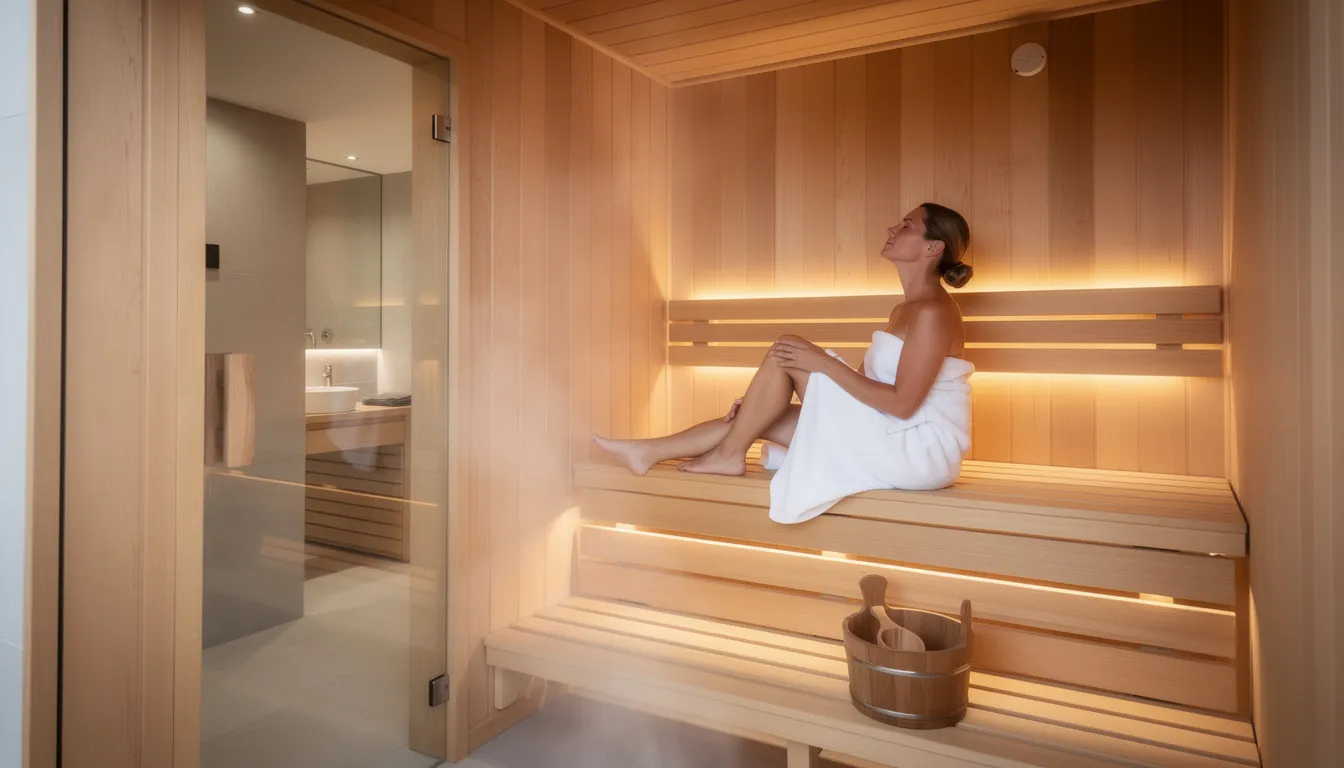
Morning (6 to 10 AM) and early evening (5 to 9 PM) are generally the most popular windows for red light sauna use. These times align with your body's natural daily rhythm.
Here is how to match timing to your specific goals:
| Goal | Best Timing | Session Length |
|---|---|---|
| Energy, mood, and focus | Shortly after waking (6 to 10 AM), before coffee if possible | 15 to 20 minutes |
| Sleep quality and stress relief | 2 to 3 hours before bedtime (5 to 9 PM) | 20 to 30 minutes |
| Muscle recovery | Within 1 to 2 hours after training | 10 to 20 minutes |
| Skin health | Morning or early evening | 15 to 25 minutes |
Many biohackers and athletes use a split routine on heavy training days: a shorter session of 10 to 15 minutes in the morning for energy, followed by a longer session of 15 to 30 minutes in the evening for recovery and relaxation. This spreads the benefits across the day without overloading any single session.
If your schedule is tight, do not stress about hitting perfect timing windows. Consistent use at any regular time — even a 12:30 PM sauna break during lunch — still works. Showing up regularly matters more than hitting a perfectly timed window.
One practical note: allow at least 60 minutes after a large meal before your session. This gives your digestive system time to settle rather than competing with the therapeutic warmth for blood flow.
Why Are Morning Sessions Effective for Energy and Mood?
The 6 to 10 AM window lines up with your body's natural cortisol awakening response — the hormone that helps drive alertness rises naturally in the first stretch after you wake up. A morning sauna session during this window supports alertness and mood without artificial stimulants.
Key benefits of morning red light sauna use:
- Increased blood flow, creating a natural wake-up sensation without relying on caffeine
- A boost to mood at the start of a busy day, which many users describe as feeling more settled and alert
- Improved circulation that can ease morning stiffness — particularly valuable for desk workers or early trainers
- Mental clarity that many users say carries through demanding morning tasks
Session structure for mornings: start with 10 to 20 minutes if you are new to sauna therapy, gradually increasing to 20 to 30 minutes as your body adapts. For Sun Home's Red Light Therapy Panel add-on, keep the recommended distance of 6 to 24 inches from the panel and let the warmth work without pushing intensity. Finish before heavy screen time or stimulants to maximize the natural energy lift.
If you also plan on significant outdoor sun exposure that morning, it's a reasonable habit to leave some time between your red light sauna session and time outside, simply so you can gauge how your skin responds on a given day.
Sample morning routine for busy professionals:
- 6:45 AM: Wake, hydrate with 8 to 12 oz. of water
- 7:00 to 7:20 AM: Red light sauna in your Sun Home Saunas cabin
- 7:25 AM: Quick cool shower for a circulation boost
- 7:40 AM: Breakfast and coffee
This rhythm turns your infrared sauna experience into a consistent anchor for the day rather than something squeezed in when convenient.
What Are the Benefits of Midday and Afternoon Sessions?
A red light sauna session between 12 and 4 PM works well for remote workers, entrepreneurs, and anyone needing a second wind without reaching for more caffeine. Research on adenosine and sleep-wake regulation describes how adenosine accumulates over the course of the day and is linked to the well-known midday dip in alertness — exactly the window a midday session can help reset.
Benefits of afternoon timing:
- Mental reset and stress relief after a demanding morning, without sedation
- Support for recovery when used as a lunch-break protocol following a morning workout
- Gentle relief for stiff joints and tight shoulders after long periods of sitting
- A natural pick-me-up that combats feeling sluggish without disrupting nighttime sleep
Keep midday sauna sessions slightly shorter at 10 to 20 minutes to avoid post-session sluggishness during work hours. The goal is a reset, not relaxation so deep you cannot focus afterward.
If you work from home, consider positioning your Sun Home Saunas setup where you can easily slip in a midday session without major schedule disruption. Use a lower temperature or shorter distance from the infrared panels when you need calm alertness rather than deep unwinding.
Practical timing guidance:
- Schedule sessions at least 60 to 90 minutes after large meals for comfort
- A light snack 30 to 45 minutes before is generally fine
- Plan for 10 to 15 minutes of transition time afterward before jumping back into focused work
For desk workers dealing with shoulder and neck tension, a midday red light sauna session directly addresses these patterns while providing a mental refresh.
Why Are Evening Sessions Ideal for Stress Relief and Sleep?
The 5 to 9 PM window is the most popular timing among Sun Home Saunas customers, fitting naturally after work and before bedtime. This is when your body starts naturally winding down toward sleep — the perfect physiological backdrop for a relaxation-focused session.
Key benefits of evening use:
- Deep muscle relaxation and nervous system downshifting after daily stress
- Relief of muscle tightness from training, commuting, or physical activity
- Support for a calmer, more relaxed state heading into the evening
- Indirect support for sleep quality when sessions end 1.5 to 3 hours before bed, allowing your core body temperature to drop naturally on its own schedule
Elevating body temperature and then gradually cooling down mirrors the natural pre-sleep temperature drop your body uses as one of its sleep signals. This is why timing matters: finish your evening session early enough that your body can complete the gradual cooling process before you try to fall asleep. (Separately, regular sauna bathing has also been studied for its association with long-term cardiovascular outcomes — see Laukkanen et al., JAMA Internal Medicine — though that research is about bathing frequency and cardiovascular risk, not sleep timing specifically.)
Specific timing examples:
| Bedtime | Latest Session End Time | Recommended Session Window |
|---|---|---|
| 10:00 PM | 8:00 to 8:30 PM | 7:30 to 8:00 PM |
| 10:30 PM | 8:30 to 9:00 PM | 8:00 to 8:30 PM |
| 11:00 PM | 9:00 to 9:30 PM | 8:30 to 9:00 PM |
During your evening session, consider ambient low lighting and calming practices such as breathwork, gentle stretching, or simple meditation to reinforce the wind-down signal to your nervous system. This turns the sauna experience from mere heat exposure into a deliberate transition ritual.
Important note for sensitive sleepers: if you notice feeling wired or having a harder time settling into sleep after late sessions, shift your timing earlier rather than pushing through. If a late session isn't working for your body, it isn't the right window for you — try morning or midday instead.
Should You Use a Red Light Sauna Before or After a Workout?

Pairing your red light sauna with strength training, running, or cycling can support both muscle recovery and joint comfort. The timing strategy differs depending on whether you use it before or after physical activity.
Pre-Workout Red Light Sauna (5 to 10 Minutes)
Brief exposure before training serves as a tissue warm-up:
- Gentle pre-workout warmth some people use to loosen tight joints and muscles before training
- Brings blood flow to working muscles before loading
- Should be kept at low to moderate intensity to avoid fatigue or excessive sweating pre-exercise
- Complete 15 to 30 minutes before training to allow rehydration and light mobility work
This approach works particularly well in colder months when cold muscles and stiff joints make warm-up more challenging.
Post-Workout Red Light Sauna (10 to 20 Minutes)
The primary recommendation for athletes and fitness enthusiasts:
- Optimal within 1 to 2 hours after training for recovery support
- Widely used by athletes to help manage delayed-onset muscle soreness (DOMS) after hard training days
- A relaxing way to wind down after a workout while easing tight, worked muscles
Athletes using split routines — morning energy sessions plus post-workout evening sessions on heavy training days — often say the combination helps them feel ready to train again sooner than sauna use alone.
Caution: Avoid stacking a very intense infrared heat session immediately after a long, hot outdoor workout. If you have already elevated your core temperature significantly, keep the sauna session moderate in temperature and shorter in duration to prevent overheating. Drink plenty of water before and after.
Sun Home Saunas customers with full-spectrum infrared cabins can run a mild infrared setting (115 to 120 degrees F) with red light therapy active for a combined heat-and-light recovery protocol.
How Often and How Long Should You Use a Red Light Sauna Each Week?
Timing and consistency work together. An ideal plan fits around work, family, and training rather than fighting them. The best schedule is one you will actually follow for months, not just weeks.
Recommended Frequency by Experience Level
| Experience Level | Sessions Per Week | Duration Per Session |
|---|---|---|
| Beginners | 2 to 3 sessions | 10 to 15 minutes |
| Regular users | 3 to 5 sessions | 15 to 30 minutes |
| Advanced/biohackers | Up to daily | Adjusted based on recovery |
A common recommendation among trainers and sauna practitioners — echoed in guides like this 2026 red light and infrared heat guide — is 3 to 5 weekly sessions of 15 to 30 minutes as the sweet spot for most people. Under-dosing yields minimal effects; more isn't automatically better.
Sample Weekly Schedules
Example A: Morning-focused routine
- Monday, Wednesday, Friday at 7:00 AM
- 20-minute sessions
- Best for: energy, mood, and productivity
Example B: Evening-focused routine
- Sunday, Tuesday, and Thursday at 8:00 PM
- 25-minute sessions
- Best for: stress relief, sleep quality, and recovery
Example C: Mixed training routine
- Post-workout Monday, Wednesday, Saturday (15 minutes each)
- One evening relaxation session on Thursday (25 minutes)
- Best for: athletes balancing performance and recovery
Tracking Your Personal Pattern
Log your session time of day, duration, and how you feel afterward for 2 to 4 weeks. This simple practice reveals your individual response pattern. Some people strongly prefer morning sessions; others find evening sessions consistently deliver better sleep and wellbeing. The data removes guesswork.
Sun Home Saunas units feature timers and intuitive controls that make scheduling automatic. Set your cabin to begin warming at 6:45 AM each morning, and consistent use becomes nearly effortless.
What Safety and Hydration Guidelines Apply to Red Light Sauna Use?
Red light saunas are generally gentler than traditional saunas, but timing should still respect your individual health status and daily stress load.
Hydration Guidelines
- Drink plenty of water (8 to 16 oz.) 30 to 60 minutes before your session
- Rehydrate afterward with another 8 to 16 oz., especially if combining with infrared heat
- Sessions that include infrared heat can cause meaningful fluid loss through sweat, so replace fluids accordingly
- Monitor for signs of dehydration: headache, dizziness, or excessive fatigue
When to Avoid or Adjust Timing
Skip or reschedule your session if:
- You have consumed alcohol within the past 90 minutes
- You have eaten a heavy meal within the past 60 minutes
- You are feeling unwell, feverish, or acutely dehydrated
Adjust timing rather than skip entirely if:
- You have a history of insomnia: move sessions earlier in the evening
- You notice overstimulation after late-night use
- You are in an unusually stressed state that might benefit from a shorter session
Medical Considerations
Users with cardiovascular conditions, pregnancy, or photosensitivity should consult a healthcare provider about appropriate session timing and frequency before starting. Individual circumstances vary.
Sun Home Saunas' infrared heating technology has been independently tested by Vitatech Electromagnetics and operates at ultra-low EMF levels — roughly 0.3 to 0.9 mG at a typical 3-foot seated distance. Electrical requirements differ by model: the Equinox and Pod are built for a dedicated 20A circuit (NEMA 5-20P), while the larger Eclipse and Luminar cabins use higher-amperage 240V circuits (NEMA L6-30P or L6-20P) — always confirm your specific model's electrical spec before installation.
How Do You Combine Red Light with Infrared and Traditional Saunas?
Many Sun Home Saunas customers own a full-spectrum infrared sauna or traditional sauna and add red light for a fuller wellness setup. The combination leverages different mechanisms: photobiomodulation for cellular energy and repair, plus hyperthermic stress for circulation and heat shock protein activation.
Where red light lives varies by model: Eclipse ships with integrated Red Light Therapy built in (the 4-person Eclipse includes two RLT towers), and the Pod has a built-in red light panel. Luminar owners add red light as a separate panel accessory rather than a built-in feature — worth knowing if red light is a priority when you're comparing cabins.
Timing Combinations That Work
Sequential protocol:
- Begin with 10 minutes of red light therapy to warm tissues and settle in
- Follow with 15 to 20 minutes of infrared or traditional sauna use for deeper heat exposure
- Finish with gradual cooling: step out, sit quietly, or take a cold shower for contrast
Concurrent protocol:
- Run red light during the first 10 to 15 minutes of a longer infrared sauna session (Sun Home's RLT Panel add-on runs independently of the sauna's heat controls, so this is simple to set up)
- Turn off red light panels and finish with 10 to 15 minutes of quiet heat-only relaxation
- Total session time: 20 to 30 minutes
Sample Time Blocks by Goal
| Goal | Red Light | Infrared/Traditional | Total Time |
|---|---|---|---|
| Morning energy | 10 minutes | 15 to 20 minutes infrared | 25 to 30 minutes |
| Evening relaxation | 15 minutes | 15 minutes traditional | 30 minutes |
| Post-workout recovery | 10 minutes | 15 minutes low-temp infrared | 25 minutes |
All these benefits compound when your setup matches your preferred timing. If you are a morning person, place your sauna where morning access is frictionless. Evening users benefit from bedroom-adjacent installations that make the transition from sauna to sleep seamless.
Electrical needs vary by model — check your specific Sun Home cabin's spec sheet before you finalize placement, since some models need a dedicated 20A circuit and others need a dedicated 240V circuit.
Optimize Red Light Sauna Timing for Your Wellness Goals
Finding your ideal red light sauna timing is not about rigid schedules. It is about understanding your body, your goals, and your life. Whether you are chasing morning energy, midday focus, evening relaxation, or faster muscle recovery, the right timing amplifies every session.
Start with the windows that match your current routine, track how you feel for a few weeks, and adjust from there. With a Sun Home Saunas infrared or traditional sauna setup featuring red light therapy, you can experiment and dial in the routine that works for you.
Ready to build your ideal home wellness routine?
Explore the Sun Home Saunas collection of premium infrared saunas and red light therapy add-ons designed for daily use, or contact our team for personalized guidance.
FAQs
Is it safe to use a red light sauna every day?
Daily use is generally well tolerated by healthy adults when sessions stay moderate (typically 10 to 30 minutes) and hydration stays adequate. Start with 2 to 3 days per week to establish your baseline response, then build toward daily use while monitoring sleep quality, energy levels, and how your skin responds. If you feel overstimulated running both morning and evening sessions daily, scale back to once per day or alternate days. The goal is sustainable consistency, not maximum frequency.
What time of day is best for using a red light sauna for skin benefits?
Most users find morning or early evening sessions easiest to fold into an existing skincare routine. Cleanse your skin before entering the sauna to remove barriers to light penetration, and avoid heavy makeup immediately afterward. Give your skin 30 to 60 minutes to settle before applying products. If you have very fair or sensitive skin, ease in gradually and pay attention to how your skin responds, especially if you're also getting meaningful sun exposure that day.
Can I use a red light sauna late at night if that is my only free time?
Yes, it is possible, but test how late sessions affect your ability to fall asleep over a week or two. Keep these sessions shorter (5 to 15 minutes) and lower intensity, finishing at least 60 to 90 minutes before attempting sleep. Dim the sauna lighting, practice calm breathing, and avoid stimulating content on phones before and after. If you consistently notice trouble settling into restful sleep, this timing may not work for your physiology — shift to early morning or midday instead.
How long should I wait after eating before a red light sauna session?
Most people prefer waiting 60 to 90 minutes after a large meal before their sauna session. This lets digestive blood-flow demands settle first. A small snack is generally fine 30 to 45 minutes beforehand, particularly before morning or midday sessions when you need fuel. Spacing meals away from seated sessions also helps avoid nausea or reflux.
Should I change my session time with the seasons?
Many Sun Home Saunas customers naturally shift their timing with the seasons. In darker winter months, morning sessions provide a bit of extra structure and a mood lift for many people. In summer, when daylight extends longer and outdoor activity increases, evening or post-workout sessions often feel more natural. Pay attention to how daylight, temperature, and your training volume affect your energy, then adjust accordingly. The best time remains the time you can protect consistently, season after season.
References
- National Library of Medicine – "Adenosine, Caffeine, and Sleep-Wake Regulation: State of the Science and Perspectives."
- JAMA Internal Medicine – "Association Between Sauna Bathing and Fatal Cardiovascular and All-Cause Mortality Events" (cited for sauna-frequency/cardiovascular research context, not as support for the sleep-timing claim above).
- Calore Health and Wellness – "Red Light Sauna with Infrared Heat: The Complete 2026 Guide."
- My Sauna World – "Benefits of Sauna in the Morning."
- Haven of Heat – "Morning Vs Evening Sauna: Best Time for Your Session."