


Understanding how long it takes your sauna to reach operating temperature is essential for planning your wellness routine effectively in 2026. The answer varies dramatically based on your specific sauna type: infrared saunas typically heat up in 30 to 75 minutes, traditional electric saunas require 30 to 45 minutes, and wood-fired units need 45 to 90 minutes, depending on environmental conditions.
This timing difference stems from fundamentally different heating approaches. Infrared heaters warm your body directly through radiant heat, while traditional sauna heaters must first heat stones, air, and surrounding surfaces before you can begin your session. Knowing these distinctions helps you choose equipment that matches your lifestyle and ensures you are not left waiting for your heat therapy.
Key Takeaways
- Infrared Speed: Infrared saunas are the fastest option, reaching functional levels in just 30 to 75 minutes.
- Traditional Duration: Standard electric saunas require a longer pre-heat of 30 to 45 minutes to warm the stone mass and air.
- Wood-Fired Variables: Wood-burning stoves are the slowest, often taking 45 to 90 minutes depending on wood quality and draft.
- Size Matters: Room volume and ceiling height directly impact speed; compact saunas heat significantly faster than large multi-person rooms.
- Optimization Potential: You can reduce heat-up times by 20% to 30% by improving insulation, updating door seals, or using smart Wi-Fi controls.
- Energy Efficiency: Infrared models consume 70% to 80% less energy per session than traditional units due to faster warm-up times.
What determines how long a sauna takes to heat up?
Heat-up time measures the period from activating your sauna heater until the space reaches your desired temperature for bathing, a metric governed by complex thermal dynamics. Traditional saunas operate by heating air and stone mass to create a hot room environment. The sauna heater must first warm dense stones to 300 to 500°F, which then radiate heat to the surrounding air and walls. This process requires substantial energy transfer through convection and radiation, explaining why traditional units take longer to reach operating temperatures.
Infrared saunas work differently by emitting radiant energy that penetrates the skin directly, warming your body without first heating the ambient air to extreme levels. This approach allows infrared panels to deliver therapeutic warmth within minutes of activation, even while the air temperature continues rising. The fundamental distinction between air heating and body heating explains the dramatic timing differences between sauna types.
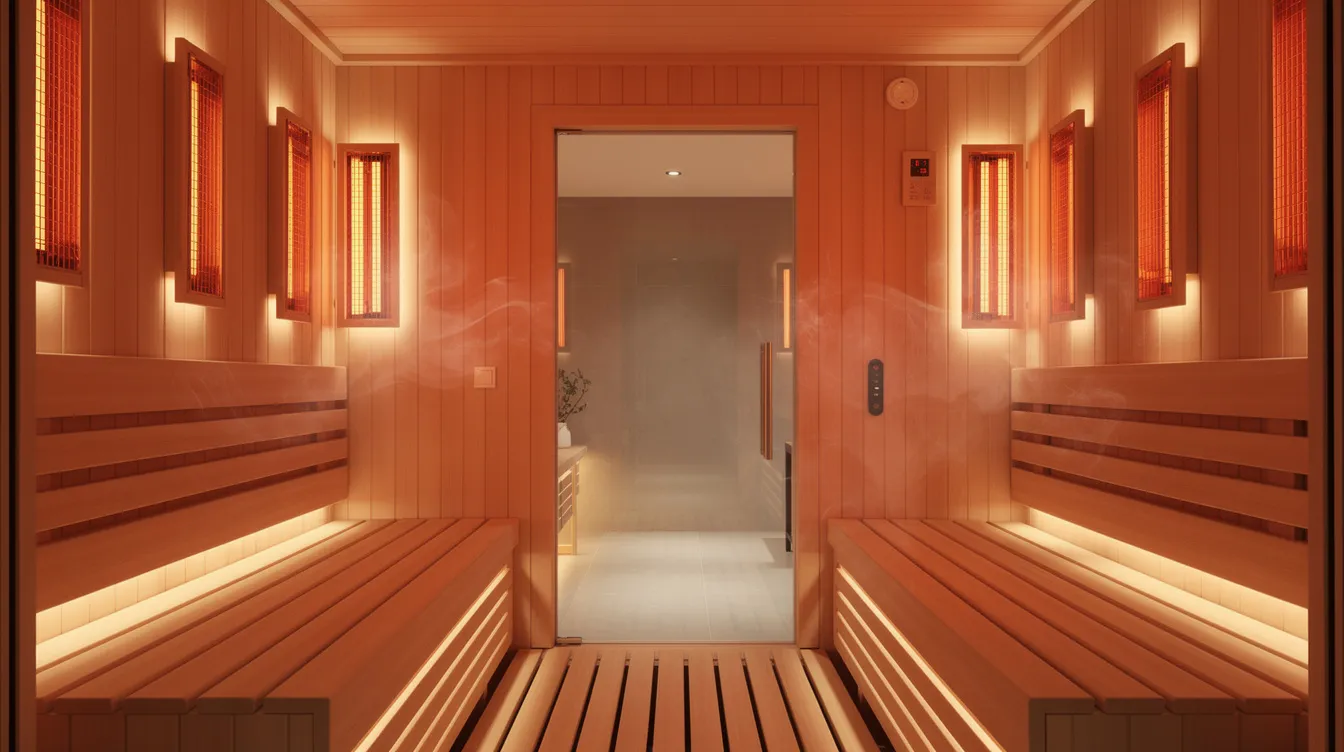
A traditional sauna must raise the room air to 170 to 195°F before delivering the expected experience. In contrast, an infrared sauna provides effective heat therapy at lower temperatures of 120 to 150°F because the radiant energy penetrates directly into body tissues.
What are the standard heat-up times by sauna type?
The following data provide realistic heat-up expectations based on typical installations and normal operating conditions in 2026. These times assume an indoor installation with adequate insulation and a moderate ambient starting temperature of 60 to 70°F.
|
Sauna Type |
Heat-Up Time |
Target Temperature |
Power Consumption |
Best For |
|
1 to 2 person infrared |
30-75 min |
120 to 140°F |
1.5 to 2.0 kW |
Daily quick sessions |
|
3 to 4 person infrared |
30-75 min |
130 to 150°F |
2.5 to 3.5 kW |
Family wellness |
|
2 to 4 person electric traditional |
30-75 min |
165 to 185°F |
6 to 8 kW |
Authentic steam experience |
|
Large electric traditional |
45 to 120 min |
175 to 195°F |
9 to 12 kW |
Commercial or outdoor use |
|
Small wood-fired |
45 to 120 min |
160 to 185°F |
N/A |
Traditional ritual |
|
Large wood-fired |
75 to 250+ min |
175 to 195°F |
N/A |
Purist outdoor experience |
Outdoor sauna installations in winter conditions may add 10 to 30 minutes to traditional and wood-fired times due to the extreme temperature differential.
Why do infrared saunas heat up so quickly?
Infrared saunas heat up the fastest because they employ direct radiant heating rather than convective air heating. Within 30 to 75 minutes of activation, the carbon or ceramic panels reach their full operating output, delivering therapeutic warmth even while the cabin air temperature is still climbing. This makes them the ideal choice for busy individuals who want to fit a session into a tight morning or evening schedule.
Full-spectrum infrared models that combine near, mid, and far infrared wavelengths may require slightly longer to achieve optimal panel temperatures across all ranges, though modern designs from premium brands like Sun Home Saunas minimize this difference. High-quality units reach comfortable operating conditions in approximately 60 minutes, while some budget models may require 20 to 35 minutes to deliver equivalent comfort levels. The energy efficiency benefits also extend beyond convenience; a typical 2-person infrared unit consuming 2 kW for a 15-minute warm-up uses only 0.5 kWh before your session begins, which is a fraction of the 2 to 3 kWh required for traditional electric sauna pre-heating.
What factors influence traditional electric sauna heat-up times?
Traditional electric saunas require 30 to 45 minutes to reach full operating temperature because the heater must first bring internal stones to extreme temperatures. These heated rocks then radiate warmth throughout the room while also providing the foundation for steam generation when you add water during your session. Without this thermal mass, the heat would be thin, and the experience would lack the authentic steam quality that traditional enthusiasts crave.
The relationship between heater size and heat-up speed follows predictable patterns. A properly sized electric heater provides approximately 1 kW per 45 to 50 cubic feet of well-insulated indoor sauna space. Undersized heaters extend warm-up times significantly and may struggle to reach the maximum temperature, while oversized units heat faster but consume significantly more energy. Furthermore, the stone mass creates a trade-off: heavy stone loads (60 to 80 kg) deliver superior steam and more stable temperatures but require 45 to 60 minutes to heat thoroughly. Lighter stone arrangements reach temperature faster but provide less thermal stability during your session.
Why do wood-fired saunas take the longest to heat?
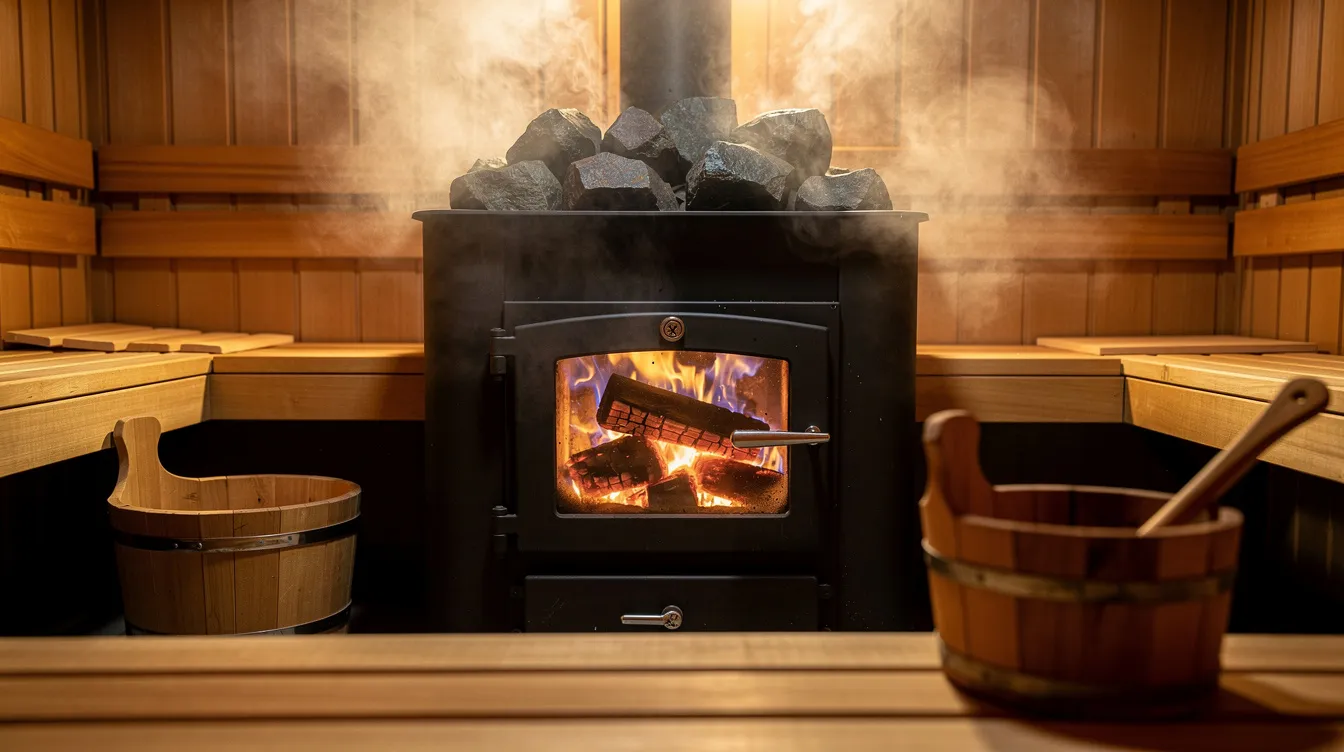
Wood-fired saunas require the longest heat-up periods, typically 45 to 90 minutes, because they rely on the manual combustion of wood to heat the stove and stone mass. The ritual of building and tending a fire is part of the traditional experience for many, but it is the least efficient method in terms of time. The speed is entirely dependent on wood quality, stove design, and environmental conditions.
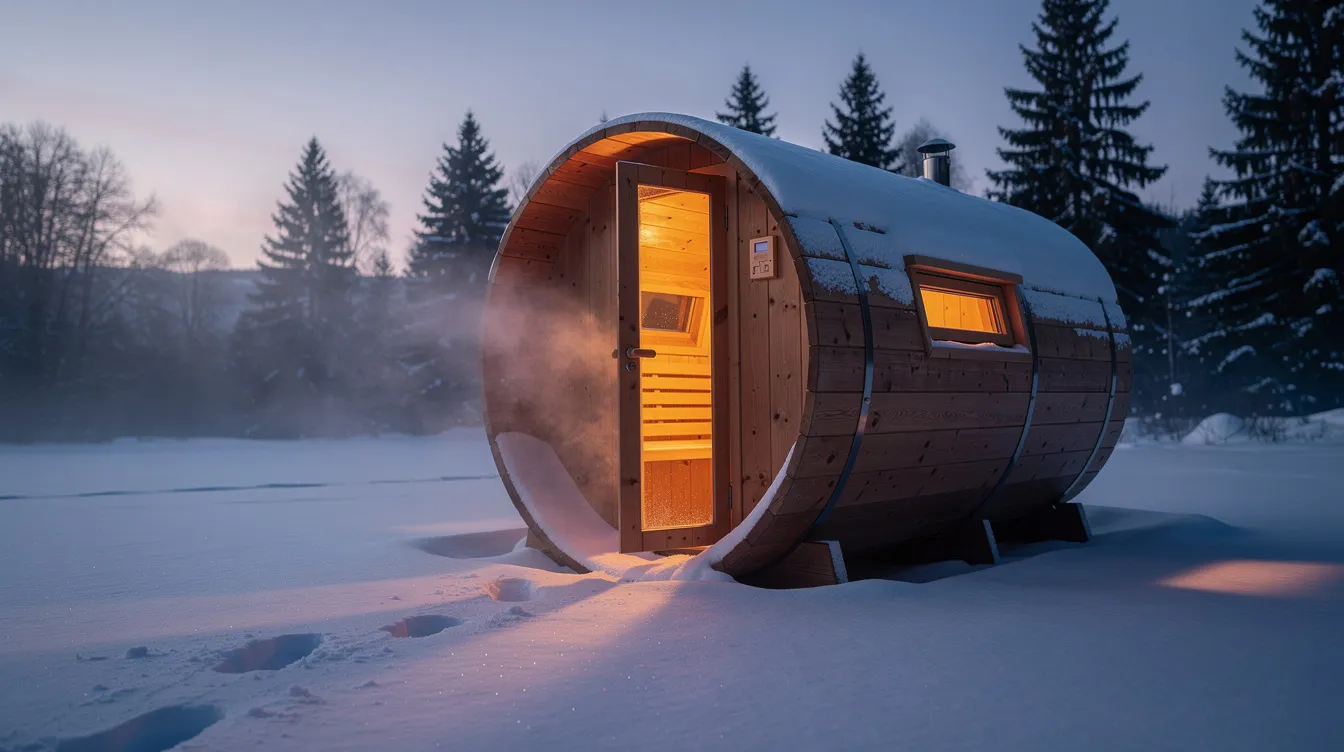
Variables affecting wood sauna heating include the moisture content of your fuel; dry hardwood with less than 20% moisture burns much hotter and cleaner than wet softwood. Additionally, the draft and chimney conditions play a major role; a good draft improves combustion efficiency and accelerates the heating process. In outdoor infrared and wood-fired installations during the winter, you may need 75 to 90 minutes or more to reach full operating temperature, especially if the stove and stones are starting from sub-freezing conditions.
How do different brands compare in heat-up performance?
Performance varies significantly across manufacturers based on their heating technology and cabin construction. The following comparison reflects 2026 market data for similarly-sized models under comparable testing conditions.
|
Brand |
Sauna Type |
Typical Heat-Up Time |
Power Draw |
Notable Features |
|
Sun Home Saunas |
Full-spectrum infrared |
~30-60 min |
2.1 to 2.4 kW |
Fast heat-up, low EMF |
|
Sunlighten |
Far infrared |
~30-60 min |
1.8 to 2.5 kW |
Medical-grade panels |
|
Clearlight |
Full-spectrum infrared |
~30-60 min |
2.0 to 3.0 kW |
Lifetime warranty |
|
Health Mate |
Far infrared |
~30-60 min |
1.8 to 2.2 kW |
Entry-level pricing |
|
Harvia (electric) |
Traditional |
~30-60 min |
6 to 9 kW |
Industry standard |
|
Nootka (barrel) |
Traditional electric |
~30-60 min |
6 kW |
Barrel efficiency |
Premium manufacturers achieve these faster times through higher-efficiency heating elements, superior insulation with high R-values, and optimized panel placement. Budget infrared units might save money upfront, but often take two to three times longer to reach a comfortable temperature, adding 20 to 30 minutes of wait time to every single session.
How does heater power and sizing impact speed?
Proper heater sizing is the most important technical factor in determining how quickly your sauna reaches its target temperature. The industry standard is to provide 1 kW of power for every 45 to 50 cubic feet of well-insulated indoor space. If you are installing a sauna outdoors or using a large amount of glass in the design, you should add at least 20% to that capacity to compensate for heat loss.
If you use an undersized heater, you will face extended heat-up times that can sometimes double the expected duration. In some cases, an undersized heater may never reach the maximum desired temperature, leading to continuous operation that accelerates equipment wear and increases long-term energy costs. Conversely, an oversized heater will reach your target temperature very quickly but may cycle on and off too frequently, which can reduce the lifespan of the heating elements.
How do you troubleshoot a sauna that is heating up slowly?
When your sauna takes significantly longer than expected to reach temperature, you should systematically check for failing heating elements, improperly stacked stones, or electrical issues. Failing elements in traditional saunas over 5 years old often show cold spots or visible damage, and longer heat-up times that progressively worsen are a primary indicator of this decline.
Stone arrangement is another common culprit; stones must be stacked to allow air circulation between the heating elements. If they are packed too tightly, they block heat distribution. You should also verify that your circuit amperage matches the heater requirements and check for a voltage drop. Electric heaters rated for 240V that run on reduced voltage will heat slowly and may never reach full therapeutic levels. Finally, ensure your ventilation is correctly positioned, with a lower intake vent near the heater to feed convection and an upper exhaust vent to remove humid air.
What are the energy efficiency and operating costs of heating?
The energy consumed during the heat-up phase represents a significant portion of your total session costs, making fast heat-up times a financial benefit. Infrared saunas are significantly more cost-effective because they reach operating temperatures in a fraction of the time required by traditional models.
|
Sauna Type |
Heat-Up Energy |
Session Energy |
Total Session Cost |
|
2 kW Infrared |
0.5 kWh |
1.0 kWh |
~$0.23 |
|
6 kW Traditional |
4.5 kWh |
3.0 kWh |
~$1.13 |
|
9 kW Traditional |
9.0 kWh |
6.75 kWh |
~$2.36 |
Calculated at the U.S. average rate of $0.15/kWh.
Infrared saunas consume 70% to 80% less energy per session, primarily due to lower wattage requirements and faster heat-up times. Over a year of regular use (150+ sessions), this difference accumulates to $100 to $300 in energy savings. To further reduce costs, always size your heater appropriately for the space and use smart scheduling to ensure the unit is not running longer than necessary.
What is the complete heat-up time planning checklist?
Use this checklist to optimize your sauna’s performance and ensure you are getting the fastest possible heat-up times for your 2026 wellness routine:
Initial Assessment
- Record current heat-up time to baseline temperature
- Verify heater wattage matches room volume requirements
- Check insulation condition in walls, ceiling, and around door
- Inspect stones for damage or improper arrangement
- Test electrical voltage at heater during operation
Optimization Steps
- Replace worn door seals and weatherstripping
- Verify proper vent positioning and airflow
- Rearrange stones for optimal airflow around elements
- Clean infrared panels or heating elements
- Install smart controls for remote pre-heating
Maintenance Schedule
- Monthly: Check door seals and clean heating surfaces
- Quarterly: Inspect stones and rearrange if settled
- Annually: Verify electrical connections and test safety cutoffs
- Every 3-5 years: Consider stone replacement in traditional units
Seasonal Adjustments
- Increase pre-heat time by 15-30% during winter
- Verify outdoor unit insulation before cold weather
- Check ventilation for seasonal humidity changes
- Adjust session scheduling for daylight and temperature patterns
How can you maximize your sauna heat-up efficiency?
The most efficient path to a quick heat-up involves a combination of proper heater sizing, high-quality insulation, and modern heating technology. Premium infrared saunas that reach full comfort levels in approximately 60 minutes transform sauna use from a planned event into a convenient daily habit that fits easily into any schedule.
While traditional and wood-fired saunas offer an authentic steam experience, infrared technology delivers therapeutic results with significantly less wait time. By maintaining your equipment and utilizing smart scheduling tools, you can ensure your sauna is always ready when you are. If your current unit consistently takes over an hour to reach temperature, consider an upgrade to a high-efficiency model that balances performance with lower operating costs.
References
1. National Electrical Code (NEC) 2023 - Article 424: Official standards for fixed electric space-heating equipment, including mandatory disconnecting means and circuit sizing for high-wattage heaters.
2. U.S. Department of Energy | Insulation and Heat Flow: Comprehensive guide on how R-values, conduction, convection, and radiation affect the thermal efficiency and heat retention of residential structures.
3. ASHRAE Standard 55-2023 | Thermal Environmental Conditions: The industry standard for defining human thermal comfort, covering the relationship between air temperature, radiant heat, and humidity.
4. Energy Star | Guide to Energy-Efficient Heating: Technical resources on optimizing HVAC cycles, sealing air leaks, and maintaining system controls to reduce energy consumption during pre-heating.
5. Journal of Applied Physiology | Radiant Heating Dynamics: Clinical research documenting the efficiency of radiant heat (infrared) in increasing body temperature compared to traditional ambient air heating.
6. International Building Code (IBC) | Section 1203 - Ventilation: Standards for mechanical and natural ventilation requirements in enclosed spaces to ensure proper airflow and moisture control.
7. Lawrence Berkeley National Laboratory | Home Energy Scoring Tool: Research data on residential envelope sealing and the impact of air leaks on heating and cooling efficiency.
8. IEEE Xplore | Thermal Modeling of Infrared Heating Systems: Technical analysis of radiant heat distribution and the mathematical modeling of surface temperature rise in infrared cabins.
9. National Institute of Standards and Technology (NIST) | Heat Transfer and Thermal Insulation: Government research on the performance of vapor barriers and high-temperature insulation materials.
10. Journal of Thermal Biology | Effects of Ambient Temperature on Human Thermoregulation: Scientific studies explaining how the starting ambient temperature (indoor vs. outdoor) affects the body’s physiological response to heat therapy.