

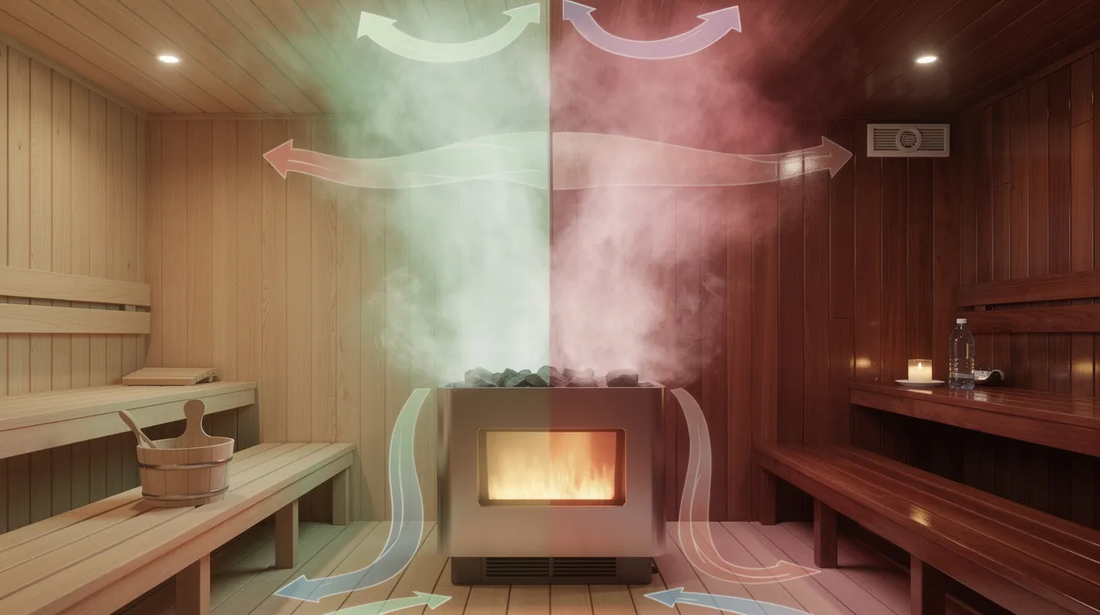
Sauna temperatures accelerate VOC off-gassing, potentially increasing toxic emissions by 300% to 500%. To ensure a safe detoxification environment, prioritize solid-wood construction (like Hemlock or Cedar) and mechanical joinery over engineered woods and chemical glues. Always verify air quality through third-party testing conducted at actual operating temperatures rather than room-level standards.
Volatile organic compounds (VOCs) in sauna use represent a significant health risk when construction materials are chosen for cost rather than safety. As sauna temperatures rise, synthetic materials, chemical binders, and engineered woods release toxic gases at rates 3 to 5 times higher than at room temperature.
This guide explores the science of heat-accelerated off-gassing, identifies high-risk materials like MDF and formaldehyde-based glues, and details the standards for low-VOC construction. By prioritizing solid wood species like Canadian Hemlock and Western Red Cedar, and by conducting third-party testing at actual operating temperatures, users can ensure the infrared sauna promotes detoxification rather than chemical exposure.
Key Takeaways
- Heat-Accelerated Off-Gassing: VOC emissions in saunas can be 300% to 500% higher than at room temperature due to the degradation of synthetic adhesives and chemical binders under intense heat.
- Material Hazards: Engineered woods such as particleboard and MDF are primary sources of formaldehyde and benzene; they should be replaced with solid, untreated wood for maximum safety.
- The Humidity Factor: High humidity, especially in traditional and steam saunas, can double formaldehyde concentrations by triggering the hydrolytic breakdown of resins.
- Testing Discrepancies: Standard safety certifications, such as CARB Phase 2, are tested at room temperature (73°F) and fail to predict air quality at sauna temperatures (150°F to 195°F).
- Safe Construction Standards: Premium sauna sessions utilize mechanical joinery, zero-VOC natural oil finishes, and mineral-based insulation to maintain a clean breathing environment.
What Are VOCs and Why Do They Matter in Saunas?
Volatile organic compounds, commonly known as VOCs, are carbon-based chemicals that evaporate readily at room temperature, releasing gases such as formaldehyde, benzene, toluene, and acetaldehyde. While these substances can occur naturally in small amounts within wood, synthetic materials, and adhesives found in budget saunas contain much higher concentrations. In a home wellness setting, VOC sources typically include chemical adhesives, urea-formaldehyde resins, synthetic coatings, and composite wood products. Solid, untreated woods emit baseline levels of only 5 to 50 nanograms per gram, which is a tiny fraction of what is found in engineered products like medium-density fiberboard (MDF).
The sauna environment is particularly dangerous for VOC exposure because heat acts as a catalyst for the release of VOCs. Studies have demonstrated that formaldehyde emissions increase by approximately 192% when temperatures rise from just 79°F to 102°F. When you reach actual sauna operating temperatures of 150°F to 195°F, these emission rates can climb to 500% above room temperature levels. Because you are breathing deeply and your circulation is increased during a session, your body’s absorption of these airborne chemicals is significantly magnified.
How Do VOCs Affect Your Long-Term Health?
Exposure to elevated VOC levels during heat therapy can lead to both immediate and chronic health issues. Acute effects often manifest as eye, nose, and throat irritation, accompanied by headaches, dizziness, or nausea. In the long term, chronic exposure is linked to respiratory diseases and the exacerbation of asthma. More seriously, the International Agency for Research on Cancer (IARC) classifies formaldehyde as a Group 1 probable human carcinogen, specifically linking it to leukemia and nasopharyngeal cancer. For a practice meant to improve health, the presence of these toxins directly contradicts wellness goals.
How Does Heat Accelerate Toxic Off-Gassing in Saunas?
Heat accelerates VOC emissions through chemical kinetics: as temperature rises, molecular motion increases, physical diffusion speeds up, and the chemical bonds in adhesive resins begin to break down. This results in an exponential increase in the amount of toxic vapor released into the small, enclosed space of a sauna cabin. The science shows that specific "threshold effects" exist where emissions don't just increase linearly but jump dramatically once a certain temperature is reached. For example, research on plywood has shown that formaldehyde release spikes significantly once temperatures exceed 120°F.
Humidity further compounds this problem, particularly in traditional saunas where water is thrown on stones. Many common adhesives, such as urea-formaldehyde, are hydrolytically unstable. This means that when relative humidity rises from 30% to 70%, the moisture actually helps "pull" the formaldehyde out of the wood. When you combine a 10°F temperature increase with a spike in humidity, the total volume of emissions can increase by as much as 500%.
How Do Different Sauna Types Compare in VOC Risk?
The risk of chemical exposure varies based on the temperature and moisture levels of the specific sauna type technology being used.
|
Sauna Type |
Operating Temperature |
VOC Risk Level |
|
Traditional Sauna |
170°F to 195°F |
Highest (Max heat and steam) |
|
Steam Sauna |
110°F to 120°F |
High (Extreme humidity) |
|
Infrared Sauna |
120°F to 145°F |
Moderate to Low (Radiant heat) |
While traditional saunas pose the highest risk due to extreme temperatures, infrared saunas are not automatically safe. Air quality in an infrared unit is determined entirely by the construction materials used. Even at lower air temperatures, the radiant heaters can warm the wood surfaces enough to trigger off-gassing if toxic glues or treated woods were used during manufacturing.
Identifying High-Risk Materials in Budget Saunas
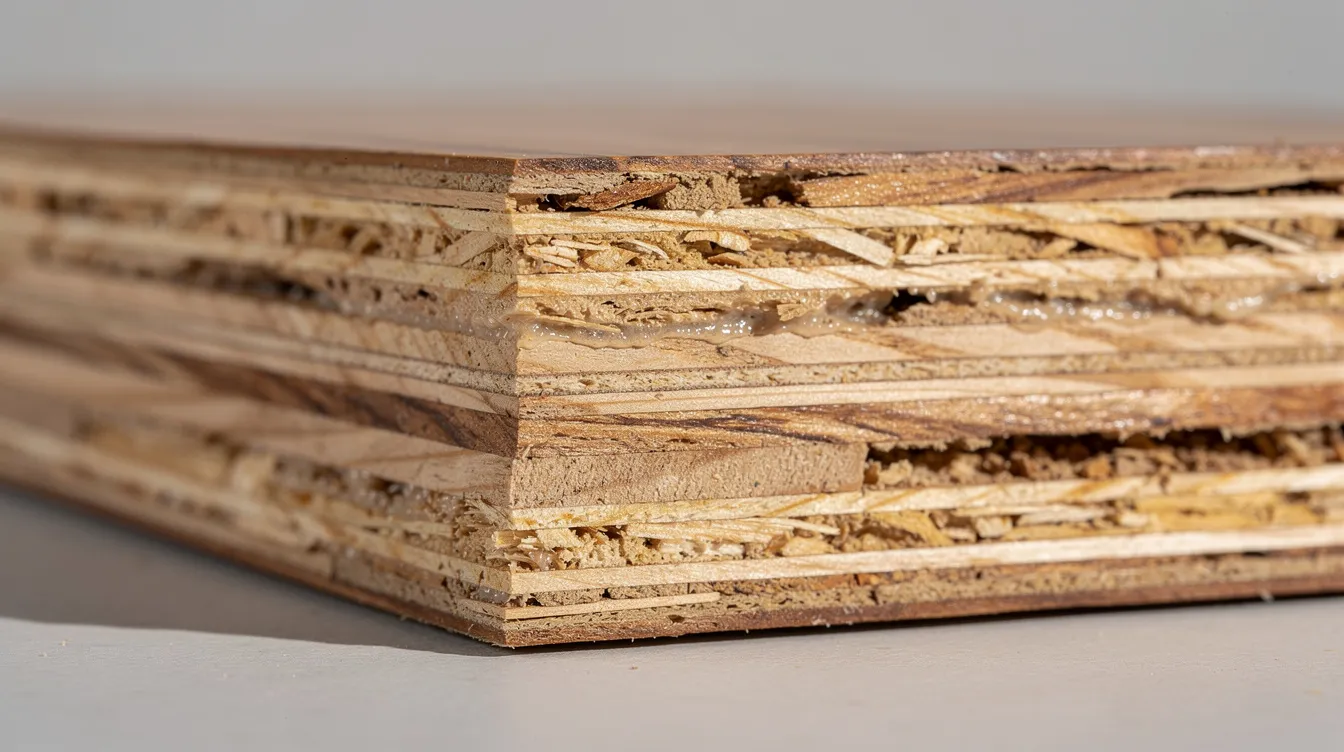
Budget saunas are frequently constructed with materials chosen for low cost rather than long-term safety. If you are evaluating a sauna, you need to know exactly where these high-risk materials are hidden. Engineered wood products like particle board, plywood, and MDF present the greatest risk because they are held together by resins that release free formaldehyde under heat stress. Even boards that meet standard building codes (such as CARB Phase 2) have been shown to produce significant increases in emissions when subjected to the heat and humidity of a sauna.
Where Do Toxic Chemicals Hide in Sauna Construction?
Beyond the wood itself, several other components can introduce VOCs into your environment. Chemical wood stains, veneer bonding resins, and synthetic glues add a substantial chemical load to the air. These binders often break down exactly when the sauna reaches therapeutic temperatures. Pressure-treated lumber is another major concern; while it is effective at preventing decay outdoors, it contains copper or arsenic compounds that can volatilize in enclosed spaces. Other hidden sources include coated metal fasteners, plastic electrical housings, and synthetic insulation like foam board, all of which can release plasticizers and solvents when heated.
The Anatomy of Low-VOC Sauna Construction
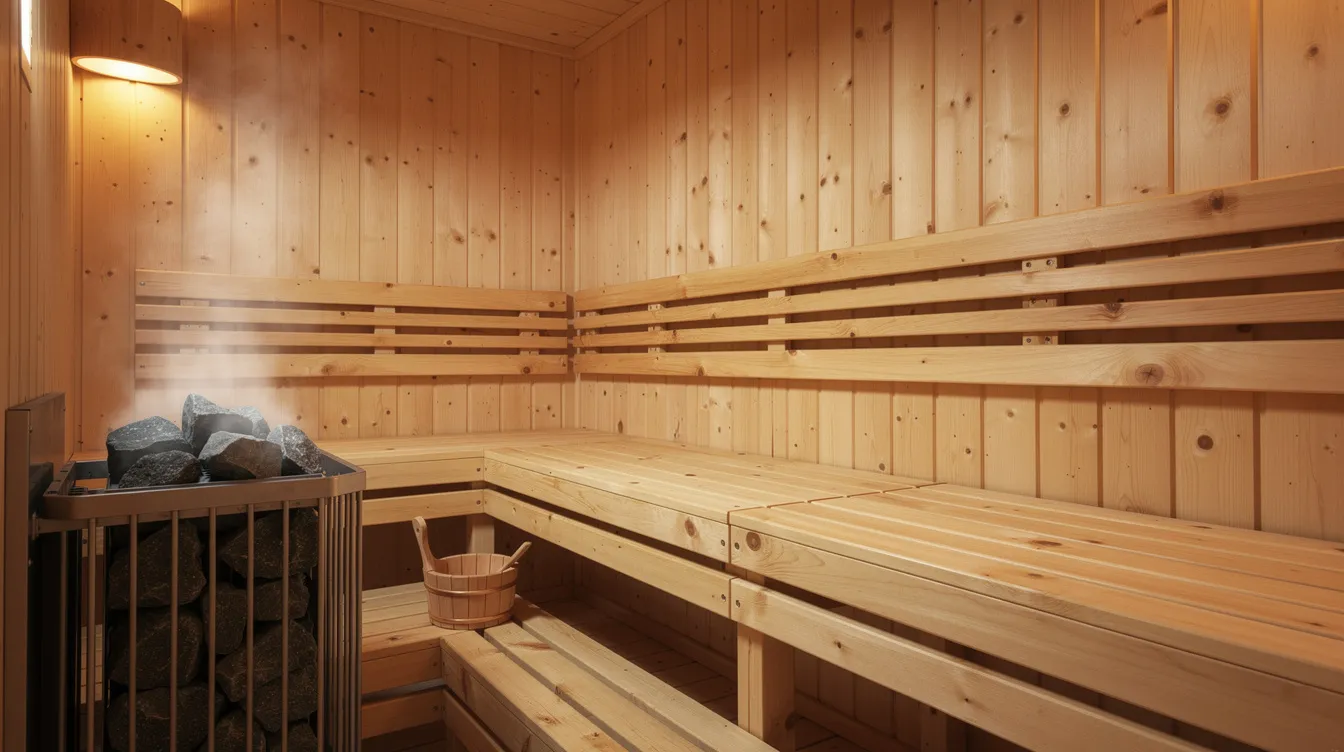
Creating a safe environment requires a strict commitment to natural, heat-stable materials throughout the build. The foundation of a low-VOC sauna is the selection of the wood species. Premium manufacturers prioritize solid woods like Canadian Hemlock, Western Red Cedar, and Nordic Spruce. These species are naturally decay-resistant and have a tight grain structure that maintains integrity without the need for chemical preservatives or stabilizers.
What Are the Standards for Non-Toxic Joinery and Finishes?
To eliminate the need for adhesives, high-quality saunas utilize traditional joinery methods. This includes stainless steel screws, dowels, and interlocking wood joints that provide structural strength without chemical binders. For finishes, zero-VOC options are essential. This usually means leaving the interior wood entirely untreated or using natural oils like tung or linseed oil. These oils penetrate the wood fibers without forming a film that could peel or off-gas. Furthermore, non-toxic insulation, such as mineral wool or natural cork, is used instead of synthetic batting to ensure the "guts" of the sauna are just as clean as the surfaces you see.
Material Comparison: Safe vs. Toxic Sauna Construction
The following table highlights the differences between premium construction and budget alternatives.
|
Material Category |
Premium (Low-VOC) |
Budget (High-VOC) |
VOC Risk Factor |
|
Primary Wood |
Solid Hemlock or Cedar |
Particle board, MDF, Plywood |
10 to 50x higher emissions |
|
Adhesives |
Mechanical joinery |
Urea-formaldehyde resins |
Primary source of toxins |
|
Finishes |
Natural oils or unfinished |
Solvent-based stains |
Degrades at 150°F |
|
Insulation |
Mineral wool |
Foam board or synthetic |
Plasticizer release |
|
Electrical |
Ceramic or metal housings |
Plastic housings |
Continuous off-gassing |
Investing in premium materials usually increases the initial cost by 25% to 40%, but it delivers a longer service life and eliminates the health costs associated with chemical exposure. Sun Home Saunas maintains these standards by using solid-wood construction throughout and verifying every component through third-party testing.
VOC Testing Methods and Safety Standards
It is important to understand that standard laboratory testing for wood products does not reflect the reality of a sauna. Most regulations, such as CARB Phase 2 or TSCA Title VI, measure formaldehyde emissions at 73°F and 50% humidity. These conditions are irrelevant to a sauna operating at 180°F. The only reliable assessment is "closed climate chamber testing" performed at actual operating temperatures.
Why Does Room-Temperature Testing Fail?
When a material is tested at room temperature, the chemical bonds are stable. However, as the temperature increases, those bonds weaken. A piece of plywood might pass a standard test at 73°F but fail miserably at 150°F. For this reason, savvy buyers should request documentation from independent institutes like RISE, which test materials under "worst-case" heat conditions. Real-world monitoring should also be conducted at "head height" within the cabin, where the bather is actually breathing. Safe thresholds for a heated environment should ideally be below 0.1 ppm for formaldehyde and under 0.5 mg/m3 for total VOCs.
Health Impacts of VOC Exposure During Heat Therapy
The very goal of sauna therapy—detoxification and improved circulation—can be completely undermined by VOCs. Because your pores are open and your heart rate is elevated, your body is in a state of high absorption. Inhaling concentrated chemical emissions during this time means those toxins are distributed through your bloodstream more rapidly than in a standard room.
What Are the Acute and Long-Term Symptoms?
Users in high-VOC saunas often report throat irritation, persistent coughing, and nasal congestion. You might also experience watery eyes, headaches, or nausea. Many people mistakenly believe these are signs of "detox" or heat exhaustion, but they are actually the body's reaction to chemical off-gassing.
Over time, regular exposure can lead to chronic respiratory inflammation, a weakened immune system, and an increased risk of cancer. Vulnerable populations, including children, pregnant women, and those with pre-existing heart or lung conditions, are at the highest risk and should never use a sauna that hasn't been verified as VOC-free.
Sauna Type Comparison for VOC Safety
Does the type of sauna you choose affect your safety? Yes, primarily because of the air temperature and humidity involved in each method.
Are Infrared Saunas the Safest Option?
Infrared saunas are often considered the safest choice for air quality because they operate at lower air temperatures (120°F to 145°F). Since off-gassing is heat-dependent, lower air temperatures naturally result in lower emission rates. Additionally, infrared saunas are dry environments, which prevents the moisture-triggered breakdown of glues. However, this safety is guaranteed only if the unit is built from solid wood. A "budget" infrared sauna made of plywood is still a major health hazard. Sun Home Saunas combines low-temperature infrared technology with premium solid wood to provide the cleanest possible environment.
What Are the Challenges of Traditional and Steam Saunas?
Traditional saunas face the toughest battle with VOCs. The 190°F heat is a massive stressor on construction materials. If any synthetic oils or glues were used, they will off-gas aggressively. Steam saunas add the complication of 100% humidity, which can cause wood to rot or chemicals to leach. For these types of saunas, active ventilation is not just a luxury—it is a mandatory safety requirement to ensure that fresh air constantly circulates through the cabin.
Your Complete Sauna VOC Safety Checklist
Use this checklist to verify a sauna's safety before you purchase it or during its first few weeks of use.

Pre-Purchase Evaluation
- Solid Wood Verification: Confirm the interior is solid Hemlock, Cedar, or Spruce—not a veneer or plywood.
- Adhesive Check: Request written proof that no formaldehyde-based glues were used.
- Testing Documentation: Request VOC test results conducted at 150°F or higher.
- Electrical Materials: Ensure heater housings are ceramic or metal, not plastic.
Installation and Maintenance
- Ventilation: Ensure there is a dedicated air intake and an exhaust vent.
- The "Break-In" Period: Run the sauna at max temperature for several hours (without being inside) to off-gas any residual manufacturing dust.
- Cleaning: Use only non-toxic, natural cleaners; never use bleach or chemical detergents inside the cabin.
Warning Signs to Watch For
- Acrid Odors: A "new car smell" or chemical scent that gets stronger as the sauna heats up.
- Physical Irritation: Stinging eyes or a scratchy throat that only happens in the sauna.
- Material Changes: Bubbling or peeling finishes on the wood surfaces.
Ensure Clean Air with Premium Sauna Construction
VOC safety is a non-negotiable requirement for anyone serious about their health. The difference between a sauna that heals and one that harms comes down to the integrity of the materials. Budget saunas made with engineered wood and synthetic finishes can effectively turn a wellness session into a toxic exposure event. By choosing premium construction—solid wood, mechanical joinery, and third-party verified testing—you ensure that every breath you take during your session is clean and restorative.
Sun Home Saunas is committed to this standard. We use only solid Canadian Hemlock and Western Red Cedar, paired with low-EMF technology, to create the safest infrared environment available. If you are ready to invest in a sauna that respects your health as much as you do, contact us today to view our full range of third-party air quality documentation.
References
1. U.S. Environmental Protection Agency (EPA): EPA Proposes Updates to Formaldehyde Emission Standards (91 FR 6161): Documentation regarding the February 2026 proposal to update TSCA Title VI standards, including the incorporation of ISO 12460-2:2024 for small-scale chamber testing.
2. International Agency for Research on Cancer (IARC): IARC Monographs Volume 142 - Formaldehyde Hazards: Detailed findings on the classification of formaldehyde as a Group 1 human carcinogen and the ongoing call for experts for the 2026 evaluation.
3. RISE Research Institutes of Sweden: Sauna and Construction VOC Testing Methodology: Overview of emission chamber testing for volatile substances (TVOC) and formaldehyde specifically under controlled climate conditions.
4. California Air Resources Board (CARB): CARB Phase 2 Composite Wood Products Regulation (ATCM): The definitive guide to Airborne Toxic Control Measure (ATCM) standards for formaldehyde limits in particleboard, MDF, and hardwood plywood.
5. U.S. Forest Service & USDA Research: Long-Term Formaldehyde Emission Potential from Wood Products: A research study analyzing how elevated heat and humidity (similar to sauna conditions) trigger the hydrolytic breakdown of UF adhesives, increasing emissions by 200% to 300%.
6. Oklahoma State University Extension: Basics of Formaldehyde Emission from Wood Composite Panels: A technical breakdown of the desiccator and chamber testing methods used to determine chemical emission limits in building materials.
FAQs
Do all saunas emit dangerous VOCs during use?
No, emissions depend entirely on the quality of construction. Saunas built with solid, untreated wood and mechanical joinery emit only trace amounts of natural wood scent that are not harmful. Only saunas using engineered woods, chemical glues, or synthetic finishes release dangerous levels of VOCs.
How can I test my current sauna for VOC safety?
You can use a portable formaldehyde detector or a total VOC (TVOC) meter. It is critical to perform the test while the sauna is at full operating temperature, as room-temperature readings will not be accurate. If formaldehyde levels exceed 0.1 ppm, you should investigate the source of the emissions.
Is the "new sauna smell" dangerous?
A natural wood scent is normal and safe. However, if the smell is acrid, chemical-like, or reminds you of plastic or glue, it is likely due to VOC off-gassing. If a strong smell persists after the initial break-in period, the sauna may contain toxic materials.
Are infrared saunas safer than traditional saunas regarding VOCs?
Generally, yes, because they operate at lower air temperatures, which reduces the speed of off-gassing. However, wood quality remains the most important factor. A poorly made infrared sauna can be more toxic than a well-made traditional one.
Can VOC exposure from saunas be permanent?
While acute symptoms usually fade after leaving the sauna, chronic exposure to carcinogens like formaldehyde can lead to permanent respiratory damage or long-term health complications. This is why using a non-toxic sauna is so important for regular users.
