

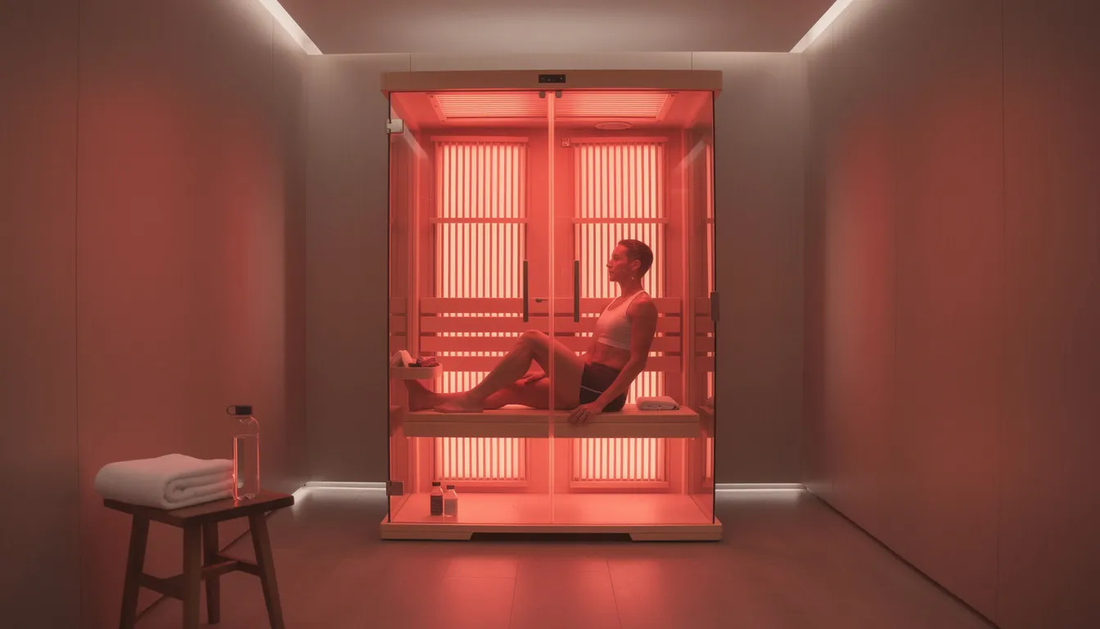
Red light infrared saunas support weight loss by combining radiant heat with cellular stimulation. While they aren't a standalone fat-loss solution, research suggests consistent sessions burn 300–600 calories by mimicking passive cardiovascular exercise. This hybrid therapy enhances metabolism, manages cortisol, and improves recovery, making it a powerful adjunct to a healthy diet and exercise.
Red Light Sauna for Weight Loss: Science-Backed Guide
Red light infrared saunas may support a weight loss journey by combining radiant heat with cellular stimulation from red and near-infrared light. They aren't a standalone fat-loss solution, but consistent sessions function like a passive cardiovascular workout — elevating heart rate, increasing circulation, and complementing a balanced diet and exercise.
This hybrid sauna therapy may also support metabolism, help manage stress and cortisol, and improve post-workout recovery, making it a useful adjunct to a healthy lifestyle.
Are you looking for an innovative way to support your weight loss journey? The combination of high-quality infrared sauna technology and red light therapy is gaining attention among health enthusiasts who want more from their wellness routine. While no sauna can replace a proper diet and exercise program, emerging research suggests that this technology may offer meaningful support when used consistently.
This comprehensive guide explores how red light saunas work, what the science says about infrared sauna weight loss results, and practical protocols you can implement at home with a quality infrared sauna. You'll discover realistic expectations, safety guidelines, and how to integrate sauna sessions into a complete body transformation plan.
Key Takeaways
- Red light saunas (full-spectrum infrared cabins with integrated red/NIR LEDs) may support weight loss indirectly through metabolism support, improved recovery, stress reduction, and better sleep — they are not a standalone fat-loss solution.
- Most weight dropped immediately after an infrared sauna session is water weight from sweating. Long-term fat loss requires consistent sauna use, a balanced diet, and regular exercise.
- Research on infrared sauna sessions suggests they may contribute meaningful calorie expenditure over a 30–40 minute session, with one university study showing approximately 4% body fat reduction over 8–16 weeks of consistent use — though individual results vary significantly.
- Traditional saunas heat the air to extreme temperatures, while infrared saunas use radiant heat to warm your body directly at more comfortable temperatures. Red light saunas add therapeutic LED panels for additional cellular benefits.
- The best infrared sauna for home use delivers results when integrated into a structured weight loss plan that includes proper nutrition, training, recovery, and stress management.
What Is a Red Light Sauna and How Does It Differ?
A red light sauna is a full-spectrum infrared sauna that includes red and near-infrared (NIR) LED panels, combining heat therapy with photobiomodulation in a single wellness device. This hybrid approach aims to deliver the cardiovascular benefits of thermal stress alongside the cellular stimulation provided by infrared light, offering numerous health benefits.
The Three Key Components
Understanding what makes up a red light sauna helps clarify why it differs from other heat therapy options:
- Infrared heating panels: These operate at comfortable temperatures between 120–150°F, using far-infrared waves to penetrate tissue and raise your core body temperature without superheating the surrounding air.
- Red LEDs (~630–660 nm): These wavelengths target the skin's surface layers and have been studied for skin health, circulation, and potential effects on fat cells.
- Near-infrared LEDs (~810–850 nm): These penetrate deeper into tissue and are associated with muscle recovery, pain relief, reduced inflammation, and enhanced cellular energy production.
How Traditional Saunas Differ
Traditional saunas heat the air to 165–195°F using electric or wood stoves. They rely on convection — heating the air around you — to raise your body temperature.
While effective for inducing intense heat and heavy sweating, traditional saunas rely on extreme ambient sauna temperatures that some users find uncomfortable for extended sessions. They also don't typically include therapeutic light panels.
Red Light Sauna vs. Standalone Red Light Therapy
A standalone red light therapy panel delivers red and NIR wavelengths at room temperature. It's excellent for targeted applications like skin quality improvement, joint health, and localized body contouring. However, it lacks the cardiovascular heat-stress effect associated with infrared sauna health benefits.
The red light sauna combines both modalities. You get the elevated heart rate, sweating, and calorie burn from infrared heat plus the cellular benefits from photobiomodulation — all in one session.
Sun Home Saunas' full-spectrum infrared saunas can be equipped with dedicated red/NIR light systems, allowing you to experience both therapies in a single at-home unit without needing separate devices.
How Do Red Light Saunas Affect the Body?
A red light sauna works through two primary mechanisms: thermal stress from infrared heat and cellular stimulation from red/NIR light. Understanding both helps explain why this combination may offer weight loss benefits beyond what either modality provides alone.
The Infrared Heat Effect
When infrared rays penetrate your skin — reaching approximately 1.5–2 inches into tissue — they gently raise your core body temperature to around 38.5–39.5°C (101–103°F). This triggers several physiological responses:
Your heart rate increases to 120–150 bpm, mimicking light-to-moderate cardiovascular exercise. Cardiac output rises by 60–70%, improving blood circulation throughout your body. Heavy sweating begins as your body attempts to cool itself, and blood flow to muscles and skin increases significantly.
This thermal stress creates what researchers sometimes call a passive cardio effect. Your cardiovascular system works harder even though you're sitting still.
The Red/NIR Light Effect
Red and near-infrared light are absorbed by mitochondria — specifically by an enzyme called cytochrome c oxidase. This absorption triggers increased ATP (cellular energy) production, with some studies showing increases of 20–50%.
Additional effects include nitric oxide release, which dilates blood vessels and can meaningfully increase blood flow to targeted areas, promoting improved circulation; a potential reduction in cortisol; reduced inflammation via NF-kB pathway inhibition; and possible activation of UCP1 in fat cells, promoting thermogenesis.
What You'll Feel During a Session
During an infrared sauna therapy session, expect moderate but comfortable heat, deep warmth that penetrates your muscles and joints, and a visible red glow from LED panels. Unlike traditional saunas, most users find the experience relaxing rather than overwhelming.
Neither infrared nor red/NIR light is ionizing radiation. These are non-ionizing wavelengths used safely in thousands of wellness and clinical devices worldwide.
Does Red Light Sauna Actually Help with Weight Loss?
Let's address the question directly: red light saunas do not melt fat on contact. No sauna session will target belly fat and vaporize it while you sit comfortably. However, consistent sauna therapy may meaningfully support your weight loss journey through several scientifically plausible pathways.
Two Types of Weight Change
It's crucial to distinguish between rapid, temporary water loss and slower, sustainable fat loss:
Rapid, temporary water loss: Sweating heavily during an infrared sauna session can result in 0.5–2+ pounds of immediate weight loss. This is water weight that returns as soon as you rehydrate properly.
Slower, sustainable fat loss: This comes from metabolic changes, improved recovery, better sleep, reduced stress hormones, and the modest additional calorie burn from regular sessions over weeks to months.
Key insight: The number you see on the scale immediately after your infrared sauna session is mostly water loss, not fat loss. True body composition changes require 8–16 weeks of consistent sessions combined with a caloric deficit. Patience and consistency trump quick fixes.
The Mechanisms That Matter
Infrared light therapy drives heart rate increases that may lead to modest extra calorie burn — somewhere between what you'd experience during a brisk walk and light jogging. Meanwhile, red/NIR light may influence fat cell biology, reduce inflammation, and potentially improve insulin sensitivity according to small clinical studies.
The Binghamton University study found that participants who used a far-infrared sauna 3–5 times per week showed up to a 4% reduction in body fat over 8–16 weeks, without other lifestyle changes. The Phase 2 protocol (5 sessions per week, 30 minutes each, post-3 pm) showed approximately 0.25% body fat loss per week compared with no change in the control group. Individual results vary, and the study sample was limited.
Realistic Expectations
Over weeks to months, consistent infrared sauna therapy use (1-person or multi-person; 3–5 sessions weekly) may help reduce body fat percentage, waist circumference, and body weight when combined with a balanced diet and regular exercise. Think of it as an enhancement to your existing healthy lifestyle, not a replacement for it.
Medical Considerations
If you have cardiovascular disease, uncontrolled hypertension, low blood pressure concerns, pregnancy, or other complex health conditions, consult your physician before using heat therapy for weight management. Cardiovascular stress, while generally safe, can pose risks for certain individuals.
How Many Calories Might You Burn in a Red Light Infrared Sauna?
One of the most common questions about sauna weight loss is: how many calories do I actually burn? The honest answer is that estimates vary significantly based on body size, sauna temperature, session length, and individual metabolism — and reliable, peer-reviewed numbers are limited.
The Research Range
Industry estimates of infrared sauna calorie burn range widely for a 30-minute session, with more conservative academic estimates landing well below the higher figures often cited by manufacturers. The realistic figure for most users likely falls somewhere in between. Industry sources suggest that a 30-minute infrared session may burn calories comparable to a session of moderate cardio — though you're obviously not getting the same muscular or skeletal benefits.
Heart Rate Context
Your heart rate during an infrared sauna session can reach 120–150 bpm, representing roughly a 30% increase over resting levels. This mimics light-to-moderate exercise such as brisk walking. However, you're mostly stationary, so your calorie burn will never match that of running, strength training, or even a long walk.
The Water Weight Reality
Water loss immediately after a session can appear as 1–3 pounds on the scale for some individuals. A study on dry sauna sessions found body mass loss in the range of roughly 0.25–0.85 kg, varying by body composition and session length. This mass returns as soon as you properly rehydrate.
A Cautionary Note
Using a sauna solely to drop weight for a weigh-in (common in combat sports like wrestling or MMA) is a dehydration strategy with real risks, including electrolyte imbalances, orthostatic hypotension, impaired physical performance, and potential kidney stress.
This approach should only be done under expert supervision, if at all. For sustainable weight reduction, focus on fat loss through consistent sauna use combined with proper nutrition. Compare this with our overview of sauna vs. cardio for context on where each fits in a balanced routine.
What Does Research Show About Red Light, Fat Cells, and Metabolism?
Red and near-infrared light have been studied since the early 2000s for body contouring and metabolic support, often under terms like low-level laser therapy (LLLT) or photobiomodulation (PBM). While research is still evolving, some findings are worth noting.
Small Controlled Trials
Studies conducted between 2010 and 2016 using 635–680 nm light applied to the abdomen, hips, and thighs reported reductions in waist and hip circumference over 4–8 weeks, even without significant weight loss efforts through diet or exercise. However, sample sizes were typically small (30–100 participants), limiting the ability to draw broad conclusions.
The Proposed Mechanism
Researchers hypothesize that red/NIR light may temporarily alter fat cell membrane permeability, encouraging triglyceride release from fat storage, improving local blood circulation to adipose tissue, reducing low-grade inflammation that can contribute to stubborn fat accumulation, and potentially activating UCP1 (uncoupling protein 1) in adipocytes, promoting thermogenesis similar to cold exposure.
Important Limitations
Before getting too excited, consider these caveats: most studies used short durations (4–12 weeks), participant numbers were small, specific device configurations (clinical-grade panels) may differ from those in home saunas, and many studies focused on standalone red light therapy rather than combined red-light infrared saunas.
The Bottom Line
The early evidence is promising for modest fat-loss support, particularly for body composition. However, infrared sauna therapy should be framed as an adjunct tool that may enhance your weight-loss plan when combined with a caloric deficit and physical activity. It's not a magic solution that lets you skip the fundamentals.
Understanding how sauna temperature and infrared light wavelengths work together helps optimize each infrared sauna session for maximum benefit.
How Does Red Light Sauna Compare to Traditional Saunas and Standalone Therapy?
Consumers often confuse these three options, so let's clarify how each fits into a weight-loss strategy and an overall health routine.
Traditional Finnish Sauna
Traditional saunas operate at 165–195°F, using heated stones or electric/wood stoves. The heat source relies on convection, heating the air around you to raise your body temperature.
Session characteristics include intense heat, strong sweating, and cardiovascular stress. For weight-loss impact, traditional saunas produce significant water weight loss during sessions, with cardiovascular benefits similar to those of moderate exercise. However, they have limitations: no targeted light therapy and high temperatures that can be uncomfortable for longer sessions. Most of the immediate scale drop is water that's regained within hours of rehydration.
Infrared Sauna Without Red Light
Far-infrared saunas operate at 120–150°F using far-infrared heaters. The heat type is radiant heat that penetrates the body directly, creating lower air temperatures but deep-tissue warming that's often more tolerable for 25–45-minute sessions.
The weight-loss impact is similar to the cardiovascular effects of traditional saunas, with potentially greater comfort during extended use. The limitation is the lack of specific red/NIR light benefits for cellular stimulation.
Unlike traditional saunas, infrared saunas offer the advantage of lower ambient temperatures while still effectively raising your core body temperature. This makes them more comfortable for home sauna installation and longer sessions.
Standalone Red Light Therapy Panel
Standalone panels operate at room temperature with no heat stress. The light source uses red (630–660 nm) and NIR (810–850 nm) LEDs. Sessions typically last 10–20 minutes with targeted exposure and no sweating.
Weight-loss impact includes potential effects on fat cells and metabolism, but no cardiovascular calorie burn. These panels are best for skin health, joint support, and localized body contouring. They're excellent for targeted applications but don't provide the cardiovascular and sweating benefits of heat therapy.
The Red Light Sauna Advantage
A red light sauna combines the cardiovascular and sweating benefits of infrared heat with the cellular effects of red/NIR light in a single at-home session. This is exactly what Sun Home Saunas designs many of its systems to deliver, giving you comprehensive wellness benefits without needing multiple devices or trips to a spa. For context on timing your sessions, see our take on the right time of day to enjoy a sauna session.
What Are the Indirect Weight Loss Benefits of Red Light Saunas?
Here's what many people miss about sauna weight loss: the indirect benefits often matter more than the direct calorie burn. Think of these as the hidden engine driving sustainable results.
Stress Reduction and Cortisol Management
Chronically elevated cortisol — your primary stress hormone — is directly linked to increased abdominal fat storage, sugar and carbohydrate cravings, disrupted sleep patterns, and reduced muscle recovery.
Regular infrared sauna sessions and red light exposure may lower perceived stress, promote parasympathetic nervous system activation, and potentially reduce elevated cortisol levels. This stress reduction can translate to better adherence to your nutrition plan and fewer stress-driven eating episodes — see how this connects to sugar cravings and appetite regulation.
Sleep Quality Improvements
Evening sessions (20–30 minutes at 120–130°F) may significantly improve sleep onset and sleep quality for many users. The mechanisms include muscle relaxation from heat therapy, lowered mental tension, a post-session body temperature drop that signals sleepiness, and reduced cortisol, which interferes with sleep architecture.
Better sleep indirectly supports weight management by improving appetite regulation, glucose control, and next-day energy for exercise.
Enhanced Post-Workout Recovery
For fitness enthusiasts, the recovery benefits may be the most valuable aspect of using an infrared sauna for weight management and performance goals. Improved blood flow, reduced muscle soreness, and faster clearance of metabolic waste products help you maintain consistent training schedules, avoid injury from overtraining, return to hard training sessions sooner, and alleviate muscle soreness that might otherwise sideline you.
When you can train more consistently over months, fat loss and muscle recovery compound into significant body composition changes.
Mood and Craving Control
Many users report fewer sugar cravings and improved mood after consistent sauna bathing. While the mechanisms aren't fully understood, potential contributors include endorphin release from heat stress, improved circulation to the brain, better sleep quality, and reduced inflammation affecting mood regulation.
When you feel better mentally, adhering to a calorie deficit becomes far easier over the months required for significant weight loss. For those looking to lose weight sustainably, this mental and emotional support can be just as important as the physical benefits.
How Should You Use a Red Light Sauna for Weight Reduction?
Rather than vague recommendations, here are concrete sample routines tailored for busy, health-focused homeowners looking to support a weight-loss plan through consistent sauna use.
Beginner Protocol: Weeks 1–4
Frequency: 3 sessions per week
Duration: 15–20 minutes per session
Temperature: 120–130°F
Red light: On for the full duration
Guidelines: Use after exercise or in the evening (post-3 pm sessions showed better results in the Binghamton study). Drink 16–24 oz. of water before your session. Allow 5–10 minutes for a gentle cool-down afterward. Focus on relaxation; this is your body's adaptation time.
Intermediate Protocol: Weeks 5–12
Frequency: 4–5 sessions per week
Duration: 25–35 minutes per session
Temperature: 130–140°F
Red light: On for the full duration
Enhancements: Combine with low-intensity stretching or breathwork inside the sauna. Pair with a structured calorie deficit (300–500 kcal/day below maintenance). Track weekly body weight and bi-weekly waist measurements. Add contrast therapy with a brief cold shower after select sessions.
This protocol aligns with the Binghamton Phase 2 study, which showed approximately 0.25% reduction in body fat percentage per week over 8 weeks of consistent use.
Advanced Body Recomposition Protocol
Structure: Alternate sauna days with resistance training
Post-workout sessions: 20–30 minutes at 135–145°F
Rest day sessions: 35–45 minutes at 125–135°F (recovery-focused)
Red light: Full duration in all sessions
Additional elements: Resistance training 3–4 times per week. Protein intake at 0.7–1 g per pound of body weight. Track waist circumference and body fat percentage every 2–4 weeks. Monthly progress photos to capture subtle changes.
Critical Safety Guidance
Regardless of protocol, listen for early signs of overheating (lightheadedness, nausea, rapid heartbeat). Exit immediately if you feel unwell. Avoid alcohol before and immediately after sessions. Stand up slowly when exiting to prevent dizziness. Consult a clinician if you have cardiovascular or blood pressure concerns before following intensive protocols.
Sample Comparison: Red Light Sauna vs. Other Weight-Loss Aids
This table compares a red-light infrared sauna with other common approaches, focusing on the qualitative effect on weight management and the best use case for each.
| Modality | Typical Session Length | Main Effect on Weight Loss | Best Use Case |
|---|---|---|---|
| Red light infrared sauna (Sun Home Saunas) | 25–40 minutes | Cardiovascular stress + cellular stimulation may support fat metabolism and recovery | Daily recovery, post-workout, stress relief |
| Traditional sauna | 15–25 minutes | Intense sweating; cardiovascular stress; primarily water weight loss | Heat adaptation, sweating, relaxation |
| Standalone red light panel | 10–20 minutes | Cellular effects on fat cells; no cardiovascular calorie burn | Targeted skin/joint therapy, body contouring |
| Brisk walk (3–4 mph) | 30 minutes | Active calorie burn; bone/muscle engagement; mood boost | Daily movement, low-impact cardio |
| Light jogging | 30 minutes | Moderate calorie burn; cardiovascular conditioning | Cardio training, endurance building |
Key insight: A red light infrared sauna offers a unique combination of passive cardiovascular stress and cellular benefits that complement — but don't replace — active exercise. For optimal weight loss results, use it alongside regular physical activity and a balanced diet.
How Do You Choose the Right Red Light Sauna for Home Use?
Affluent, wellness-focused buyers want both performance and aesthetics when adding a sauna to their home environment. A poorly designed unit that doesn't deliver consistent heat or therapeutic light wavelengths won't support your weight loss regimen, no matter how much you use it.
Key Technical Criteria
When evaluating red light infrared saunas, look for low-EMF full-spectrum infrared heaters, since minimizing electromagnetic field exposure is especially important for frequent use. Sun Home Saunas heaters are independently Vitatech-tested at 0.5 mG. Also make sure the sauna delivers specific red/NIR wavelengths in the therapeutic range (630–660 nm for red, 810–850 nm for near-infrared).
Finally, choose a model with even light distribution from panels that cover the body from multiple angles, stable cabin temperatures that reach and maintain 120–150°F consistently, and quality temperature controls with digital displays and precise adjustment capabilities.
Build Quality Factors
Sun Home Saunas prioritizes sustainably sourced woods: Equinox and Solstice ship in eco-certified kiln-dried eucalyptus, Luminar outdoor cabins are clad in aerospace-grade aluminum over Canadian Red Cedar, and the Pod Sauna uses kiln-dried Canadian hemlock. Non-toxic glues and finishes are important when you're sweating regularly in an enclosed space.
Robust door seals prevent heat loss and maintain consistent internal temperatures. Precision joinery ensures longevity and eliminates gaps that compromise efficiency.
Practical Considerations
Before purchasing, consider capacity (do you need a 1-person, 2-person, or 3-person infrared sauna?) and power requirements. Sun Home's electrical footprint varies by model: the Solstice 1-Person and 2-Person, Equinox 1P/2P/3P, Luminar 2-Person, and Pod Sauna all run on a dedicated 120V or 240V 20A circuit; the Solstice 4-Person, Eclipse 2P/4P, and Luminar 5-Person require a dedicated 30A circuit (some 240V hardwired). Always confirm the spec for your specific model and have a licensed electrician verify your installation.
Also think about location (indoor installations in spare rooms, basements, or master bathrooms are most common; outdoor-rated units like the Luminar work for covered patios or pool houses), and footprint (measure your available space carefully, including clearance for the door swing).
Avoid Marketing Hype
Look for brands that offer transparent performance specs (heater output, wavelength specifications, EMF readings), detailed installation guidance, responsive customer support, and realistic claims about health benefits rather than miracle weight loss promises.
Sun Home Saunas provides all of these, along with the craftsmanship and Limited Lifetime Warranty that back your investment for years of consistent sauna use.
How Do You Integrate a Red Light Sauna into a Complete Weight Loss Plan?
A red light sauna is one pillar in a broader weight management strategy, not the entire structure. For sustainable results, it must work alongside nutrition, movement, sleep, and stress management.
Establish Your Nutrition Baseline First
Before expecting noticeable body composition changes from infrared sauna use, get your nutrition fundamentals in place. Create a modest 300–500-calorie daily deficit (aggressive deficits backfire in the long term). Prioritize adequate protein intake (0.7–1 g per pound of body weight) to preserve muscle. Focus on whole foods that support energy for training and recovery. Stay well-hydrated, especially given increased sweating from infrared sauna sessions.
You cannot out-sauna a poor diet. The caloric deficit drives fat loss; the sauna supports it.
Pair Sauna Days with Training Blocks
A sample weekly structure for someone serious about fat loss:
| Day | Training | Sauna Use |
|---|---|---|
| Monday | Strength training | 25 min post-workout |
| Tuesday | Light cardio / walk | Optional 20 min |
| Wednesday | Strength training | 30 min post-workout |
| Thursday | Active rest | 35 min recovery session |
| Friday | Strength training | 25 min post-workout |
| Saturday | Cardio / outdoor activity | 30 min recovery session |
| Sunday | Complete rest | Optional |
This structure uses the sauna strategically to enhance muscle recovery on training days and promote deeper relaxation on rest days.
Habit Stack for Maximum Value
Make your sauna time count double by combining it with mindfulness or meditation (the quiet, warm environment is perfect for a mental reset). You can also add breathwork practices like box breathing or 4-7-8 breathing to enhance relaxation, light reading, or audiobooks/podcasts for a calm, restorative wind-down.
For a more complete wellness routine, try low-intensity stretching (gentle mobility work while muscles are warm) and gratitude journaling, since mental wellness supports physical wellness. When sessions become a high-value wellness ritual rather than time in a hot box, adherence skyrockets.
Track Meaningful Metrics
The scale tells only part of the story. For comprehensive progress tracking, measure morning body weight weekly (under the same conditions each time), waist and hip circumference bi-weekly, and progress photos monthly (front, side, back in consistent lighting). Also keep track of your energy levels, sleep quality, and training performance.
Subtle changes in waist circumference and how your clothes fit often precede significant scale movement, especially if you're building muscle while losing fat.
What Are the Risks and Safe Use Guidelines for Red Light Saunas?
While red light saunas are generally safe for healthy adults, high heat and cardiovascular strain can pose risks for certain individuals. Taking precautions ensures you get the wellness benefits without unnecessary danger.
Contraindications and Caution Areas
Consult your physician before using heat therapy if you have uncontrolled high or low blood pressure, serious heart disease or recent cardiac events, a history of stroke, pregnancy (especially first trimester), or major kidney issues affecting fluid balance. Also consult your physician if you take medications that impair sweating or blood pressure regulation, have multiple sclerosis or other conditions affected by heat, or have an acute illness or fever.
Basic Safety Rules
For all users: Start conservatively by limiting early sessions to 10–15 minutes while your body adapts. Hydrate properly by drinking 16–32 oz. of water before and after sessions. Avoid alcohol before, during, and immediately after — it impairs thermoregulation and increases dehydration.
Exit slowly by standing up gradually to prevent orthostatic hypotension (a sudden drop in blood pressure). Cool down gradually; don't jump immediately into cold water — allow 5–10 minutes at room temperature first. Listen to your body — fatigue, headache, or nausea are signals to reduce session length or frequency.
Photosensitivity Considerations
If you have photosensitive conditions or take photosensitizing medications (certain antibiotics, retinoids, some blood pressure medications), consult your clinician before extensive red/NIR light exposure. While these wavelengths are generally safe, individual sensitivity varies.
When to Stop and Seek Help
Exit the sauna immediately and seek medical advice if you experience chest pain or tightness, severe headache, confusion or disorientation, persistent dizziness that doesn't resolve, difficulty breathing, heart palpitations or irregular heartbeat, or extreme nausea or vomiting. These symptoms during or after a session warrant medical evaluation before continuing sauna use.
Why Choose Sun Home Saunas for Your Weight Loss Journey?
Sun Home Saunas is a premium home wellness brand specializing in full-spectrum infrared and traditional saunas, cold plunge tubs, and accessories designed for long-term health — not quick fixes or gimmicky claims. Browse our full lineup of red-light-equipped infrared saunas to see how the technology can fit your space.
Integrated Red Light Systems
Sun Home Saunas units can be configured with integrated red/NIR light systems that deliver therapeutic wavelengths alongside low-EMF infrared heat. Models like the Solstice 1-Person and Equinox 3-Person run on a standard dedicated 120V 20A circuit, making regular infrared sauna use (3–5 sessions weekly) realistic for busy homeowners who want professional-grade results without gym memberships or spa appointments. Larger and outdoor models such as the Luminar 2-Person require a dedicated 240V circuit — always verify the spec for the configuration you choose.
Craftsmanship That Matters
What sets Sun Home Saunas apart: sustainably sourced woods (eucalyptus in Equinox and Solstice, Canadian Red Cedar in Luminar, kiln-dried Canadian hemlock in the Pod). Precision joinery ensures tight-fitting construction that maintains heat efficiency and longevity. High-performance heater layouts with strategic placement ensure even heat and light distribution around your entire body for more efficient sessions. Non-toxic materials mean no harmful off-gassing, even at peak operating temperatures.
Your At-Home Advantage
Compared to gym-based options, owning a quality home sauna means sessions fit your schedule, not the gym's hours. There's no commute time cutting into your wellness routine. Complete privacy allows for relaxation and recovery. Consistent availability supports the regular use needed for results. Long-term cost savings versus spa visits ($30–50 per session adds up quickly) make home ownership the smart choice. Every Sun Home cabin is backed by our Limited Lifetime Warranty for added peace of mind.
Embrace Red Light Sauna Therapy for Weight Loss Today
If you're serious about pairing red light sauna use with your fat-loss and recovery goals, exploring Sun Home Saunas' product lineup is a logical next step. Browse available models, compare features and specifications, or contact a Sun Home Saunas specialist to design a tailored home spa setup that matches your space, budget, and wellness objectives.
Frequently Asked Questions
How long does it take to see weight loss results from a red light sauna?
While water weight changes are immediate (you'll weigh less right after sweating), noticeable fat loss typically takes 4–8 weeks of consistent use. The Binghamton University study showed meaningful changes in body fat percentage with 3–5 infrared sauna sessions per week over 8–16 weeks.
Individual factors heavily influence the timeline, including your starting body fat levels, adherence to a caloric deficit, activity levels, sleep quality, and overall consistency. Someone combining regular infrared sauna therapy with proper nutrition and training will see faster results than someone relying solely on sauna use.
Can I replace daily cardio with red light sauna sessions?
No. Red light saunas should supplement, not replace, physical activity. A 20–30-minute brisk walk still generally burns more calories and offers unique health benefits for your heart, bones, muscles, and mood that passive heat exposure cannot.
Position the sauna as ideal for rest days when your joints need a break, as a post-workout recovery tool, or as an evening stress reduction ritual. Active movement remains essential for comprehensive fitness and wellness benefits beyond what any infrared sauna session delivers.
Is it better to use the red light sauna before or after a workout for weight loss?
For most people, post-workout is optimal. Elevated circulation and muscle warmth from exercise enhance the recovery benefits of infrared sauna therapy, while avoiding pre-exercise fatigue from heat exposure that might compromise your training performance.
Some advanced users experiment with short pre-workout sessions (5–10 minutes at lower temperatures around 115–120°F) for joint warm-up, but this should be done cautiously. If you feel fatigued or lightheaded during subsequent training, skip the pre-workout sauna.
What should I wear in a red light sauna to maximize benefits?
Minimal, light clothing works best. Options include a swimsuit or athletic shorts, loose cotton clothing, or going nude if privacy allows (this maximizes both light penetration and sweating). Always sit on a clean towel to absorb sweat and protect the wood.
Avoid lotions, makeup, or thick sunscreens that might block pores or reflect light. Remove jewelry that could heat up and cause discomfort. Have a second towel handy for wiping sweat during the infrared sauna session.
Can I safely use a red light sauna every day?
Many healthy adults can tolerate daily 15–30-minute sessions at moderate temperatures (120–135°F), provided they hydrate adequately and listen to their bodies. However, more isn't always better.
Start with 3–4 sessions per week and increase only if you experience no signs of overexposure, such as persistent fatigue beyond normal post-sauna relaxation, recurring headaches, sleep disruption, skin irritation, or decreased exercise performance. If you have chronic fatigue syndrome, cardiovascular concerns, or other health conditions, get medical clearance before committing to daily use.
For weight management, 4–5 well-structured sessions per week typically provide sufficient benefit without risking overexposure.
Do infrared saunas help with detoxification as well as weight loss?
One of the secondary infrared sauna benefits relates to the deep sweating that occurs during sessions. While your liver and kidneys are your body's primary detoxification organs, heavy sweating may help support elimination of trace amounts of certain compounds through your skin.
Some research suggests that infrared sauna therapy may promote excretion of substances such as BPA, phthalates, and certain heavy metals, though the magnitude relative to renal and hepatic clearance is small. View detoxification as a complementary benefit rather than the primary mechanism for weight loss — focus on the metabolic, cardiovascular, and recovery benefits as your main reasons for consistent use.
References
- ScienceDirect — "Sauna Use as a Lifestyle Practice to Extend Healthspan."
- National Library of Medicine — "Effects of Far-Infrared Sauna Bathing on Recovery from Strength and Endurance Training Sessions in Men."
- Journal of the American Heart Association — "Favorable Cardiovascular Health at Young and Middle Ages and Dementia in Older Age."
- National Library of Medicine — "Mechanisms and Applications of the Anti-Inflammatory Effects of Photobiomodulation."
- Binghamton University Weight Loss Study (PDF).
- Medical News Today — "Saunas and Weight Loss: Possible Links and More."
- Restore — "Anxiety, Depression, and Infrared Sauna Use."

