

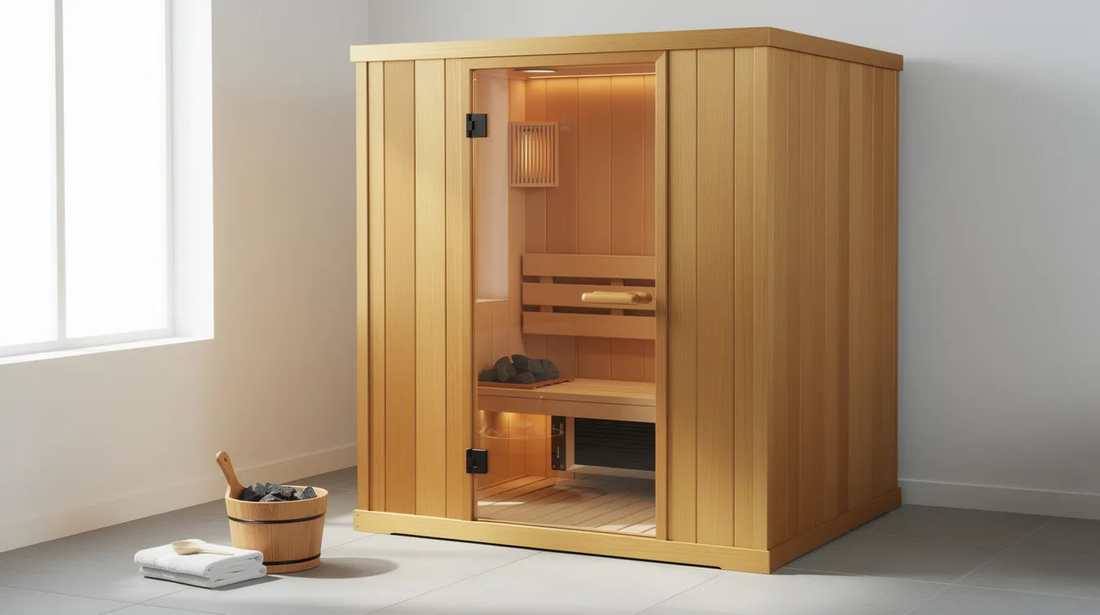
Western Red Cedar is the premier choice for home saunas in 2026, offering unmatched durability and therapeutic aromas. Whether you prefer traditional steam or low-EMF infrared, Sun Home Saunas provides sustainably sourced, medical-grade units. Invest in a 2-3 person modular cabin for a space-efficient, luxury recovery retreat that lasts decades.
By Timothy Munene · Sauna Researcher & Editorial Director, Sun Home Saunas · Published April 2026
Why Cedar Is the Most Popular Premium Wood for Sauna Construction
Not all sauna wood is created equal — and the wood your sauna is built from affects your experience more than most buyers realize. The wood is the surface you touch, the air you breathe, the structure that holds heat, and the material that either survives or degrades over thousands of heating cycles at 120–200°F.
Cedar — specifically Canadian western red cedar (Thuja plicata) — has been the preferred sauna wood for decades. Its performance advantages in high-heat, high-humidity enclosures are well documented in wood science literature and consistent with the species' known material properties:
1. Moisture resistance. Cedar's natural oils make it inherently resistant to moisture absorption, rot, and fungal growth. In a sauna that heats to 170°F and produces sweat vapor every session, this matters. Woods that absorb moisture readily (like hemlock or pine) can swell, warp, and develop mold over time.
2. Antimicrobial properties. Cedar's natural oils — primarily thujaplicin — have demonstrated antimicrobial activity in published research (thujaplicin's antimicrobial properties have been documented in peer-reviewed studies). In a warm, humid enclosure where bare skin contacts the wood daily, this provides a hygienic advantage over non-antimicrobial species.
3. Dimensional stability. Cedar expands and contracts less than most softwoods when exposed to repeated heat cycling. A sauna goes from room temperature to 170°F and back multiple times per week — wood that can't handle that cycle cracks, warps, or separates at joints. Cedar's low density and cellular structure make it unusually stable under these conditions.
4. Thermal comfort. Cedar doesn't get uncomfortably hot to the touch, even at high cabin temperatures. Dense hardwoods and some softwoods conduct heat more aggressively — they can burn bare skin at bench and backrest contact points. Cedar stays warm without becoming painful.
5. Aroma. Cedar produces a warm, naturally pleasant scent that most sauna users find relaxing and therapeutic. This aroma comes from the wood's natural oils — not from applied fragrances or treatments. It's one of the reasons cedar saunas feel different from hemlock or basswood saunas.
Cedar vs. Eucalyptus vs. Hemlock: How Sauna Woods Compare
Cedar is the most popular premium sauna wood, but it's not the only option — and not always the best choice for every buyer. Here's how the three most common sauna woods compare:
| Factor | Canadian western red cedar | Kiln-dried eucalyptus | Hemlock |
|---|---|---|---|
| Moisture resistance | Excellent — natural oils resist rot and fungal growth | Good — dense grain limits absorption | Lower — absorbs more moisture than cedar or eucalyptus; may warp over repeated heat cycling |
| Antimicrobial | Yes — natural thujaplicin oils | Moderate | No natural antimicrobial properties |
| Dimensional stability | Excellent — low expansion/contraction under heat cycling | Very good — dense hardwood resists cracking | Fair — cracks and separates more readily over time |
| Aroma | Warm, natural, aromatic | Mild, subtle | Minimal — nearly odorless |
| Thermal touch | Comfortable — stays warm, not hot | Slightly warmer to touch (denser) | Comfortable |
| Grain character | Warm mid-tone, natural variation | Tighter, more contemporary pattern | Pale, featureless, generic |
| Durability (years) | 15–20+ years with daily use (industry estimates) | 15–20+ years with daily use (industry estimates) | Shorter lifespan under repeated heating — visible wear may appear sooner than cedar or eucalyptus |
| Cost position | Premium | Premium | Budget |
| Common in | Premium infrared and traditional saunas | Premium infrared saunas | Budget infrared saunas ($1,000–$3,000) |
| Allergen note | Some users are sensitive to cedar aroma | Low allergen potential | Hypoallergenic — good for scent-sensitive users |
The honest comparison: Cedar is the strongest all-around choice for sauna construction — but eucalyptus is a legitimate premium alternative, especially for buyers who prefer a more contemporary grain or are sensitive to cedar's aroma. Hemlock is the most common wood in budget saunas because it's inexpensive, but it underperforms cedar and eucalyptus on moisture resistance, durability, and visual character. When a sauna is marketed as "natural wood" without specifying the species, it is often hemlock.
Infrared vs. Traditional: Two Types of Cedar Saunas
Cedar is used in both infrared and traditional saunas — but the heat experience is fundamentally different:
Cedar infrared saunas heat your body directly using infrared wavelengths at 120–170°F. They heat up faster (10–20 minutes), run on lower wattage, and typically require 120V or 240V residential circuits. The cedar interior provides the aromatic and aesthetic experience while infrared panels handle the heating. No water, no steam, no stones. Sun Home's Eclipse, Pod, and Luminar are cedar infrared saunas.
Cedar traditional saunas heat the air to 170–200°F+ using an electric heater (commonly Harvia or HUUM) with stones. You can pour water on the stones for löyly (steam). The cedar cabin retains heat while providing the same moisture resistance and aroma benefits. Traditional cedar saunas typically require 240V and higher-amperage circuits (30–60A). Sun Home's Solaris line is a traditional cedar sauna with a HUUM Hive heater.
Which is better? Neither — it depends on your preference. If you want daily-use radiant heat at moderate temperatures with potential red light therapy integration, choose infrared. If you want high-heat sessions with optional steam and the authentic Finnish experience, choose traditional. Both benefit from cedar construction.
Who Should — and Shouldn't — Buy a Cedar Sauna
A cedar sauna is the right choice if you: value the natural aroma, antimicrobial properties, and visual warmth that cedar provides; plan to use your sauna regularly (3+ times per week) and want a wood that holds up to years of heat cycling; want a sauna that looks and feels premium — cedar's grain, color, and scent create an experience that hemlock and pine simply don't match; or are placing a sauna outdoors where moisture resistance matters most.
A cedar sauna may not be right if you: are sensitive to wood aromas — cedar has a noticeable scent that some users find too strong. In that case, eucalyptus (mild aroma) or basswood (hypoallergenic, nearly scent-free) are better options. If your budget is under $3,000, most cedar saunas are above that price point — hemlock saunas from budget brands are available at lower entry points, though with trade-offs in durability and aesthetics. If you want a traditional steam sauna but prefer infrared heat, cedar doesn't change the heat type — choose your heat type first, then wood.
Sun Home Saunas Built with Canadian Western Red Cedar
Three of Sun Home's five model lines use Canadian western red cedar. Here's which ones — and who each is built for:
| Model | Heat type | Cedar construction | Best for | Voltage | Starting price |
|---|---|---|---|---|---|
| Eclipse 2 | Full-spectrum infrared + RLT | Canadian red cedar interior | Daily infrared + red light therapy | 120V | $10,099 |
| Eclipse 4 | Full-spectrum infrared + RLT | Canadian red cedar interior | Family infrared + RLT sessions | 240V | Check pricing |
| Pod | Far-infrared + RLT | Canadian red cedar | Solo RLT + breathwork sessions | 120V | ~$6,699 |
| Luminar 2 | Full-spectrum infrared | Canadian red cedar interior + aluminum exterior | Outdoor year-round, low-maintenance | 240V | $11,099 |
| Luminar 5 | Full-spectrum infrared | Canadian red cedar interior + aluminum exterior | Outdoor, family/entertaining | 240V | $13,899 |
Important note: Sun Home's Equinox and Solstice lines do not use cedar — they use kiln-dried eucalyptus. Eucalyptus is a dense hardwood with excellent durability and a more contemporary grain pattern, but it does not have cedar's signature aroma or natural antimicrobial oils. If cedar specifically is what you want, the Eclipse, Pod, or Luminar are the right Sun Home models.
All Sun Home cedar saunas use wood dried to 7% moisture content with ultra-low-VOC adhesives and non-toxic wood treatments. EMF: 0.5 mG (Vitatech Electromagnetics, January 2025). VOC: 27 µg/m³ TVOC (VERT Environmental, AIHA-accredited lab, April 2026). Certifications: ETL/ETL-C/RoHS/Intertek. Eclipse and Pod carry limited lifetime warranties with in-home technician visits. Luminar carries a limited lifetime warranty with 6-year outdoor residential coverage.
Editorial recognition: Tested by Fortune, Forbes, Garage Gym Reviews, BarBend, Rolling Stone, and Family Handyman. BBB A+, 4.87/5 (67 reviews). Inc. 5000 No. 20 (2025).
How to Maintain a Cedar Sauna
Cedar is naturally low-maintenance, but it's not zero-maintenance. Here's what extends the life and appearance of a cedar sauna interior:
After each session: Leave the door open for 15–20 minutes to ventilate moisture. Wipe down benches with a dry towel if you sweated heavily. This prevents moisture buildup and maintains the wood's surface quality.
Monthly: Lightly sand any areas that show darkening from body oils or sweat (fine-grit sandpaper, 220+). Vacuum or sweep the floor. Check that ventilation openings are clear.
Annually: Inspect joints and panels for any signs of movement or separation (rare in premium cedar, more common in hemlock). Do not apply oil, sealant, or varnish to the interior — cedar's natural oils provide the protection, and applied finishes can off-gas at high temperatures.
Outdoor cedar saunas: If the exterior is cedar (not aluminum like the Luminar), it will need periodic staining or sealing — typically every 1–2 years depending on climate exposure. UV, rain, and freeze-thaw will weather unprotected cedar exterior surfaces. The Luminar's aluminum exterior avoids this entirely; only the cedar interior requires the standard care above.
Where Sun Home Cedar Saunas Are Not the Best Fit
Budget under $5,000. Sun Home's most affordable cedar sauna is the Pod at ~$6,699. If cedar is important but budget is tight, other brands offer cedar-construction infrared saunas at lower price points — typically with shorter warranties, self-reported EMF, and hemlock on some panels despite cedar marketing.
Aroma sensitivity. Cedar's scent is part of its appeal for most buyers, but some people find it too strong — especially in a heated enclosure. If you're sensitive to wood aromas, Sun Home's eucalyptus models (Equinox, Solstice) or a basswood/poplar sauna from another brand would be more comfortable.
Traditional steam with löyly. Sun Home's cedar infrared saunas (Eclipse, Pod, Luminar) do not produce steam — they use infrared wavelengths. If you want a cedar traditional sauna with a Harvia or HUUM heater and stones, Sun Home's Solaris line or barrel saunas from other brands serve that market. Sun Home's primary lineup is infrared.
Longest manufacturing track record. Sun Home was founded in 2021. Brands with 20–45 years of cedar sauna manufacturing history exist in the market. Buyers who prioritize decades of production experience have options with longer track records.
FAQs
What is the best cedar sauna for home use in 2026?
It depends on heat type, placement, and features. For infrared with integrated red light therapy in a cedar cabin, the Sun Home Eclipse ($10,099, 120V) is one of the strongest options. For outdoor cedar with low-maintenance aluminum exterior, the Sun Home Luminar ($11,099, 240V) is designed specifically for year-round outdoor placement. For budget cedar infrared under $5,000, other brands offer options with shorter warranties. For traditional cedar with steam, barrel saunas and cabin saunas with Harvia/HUUM heaters serve that market.
Is cedar better than hemlock for a sauna?
For most buyers, yes. Cedar outperforms hemlock on moisture resistance, antimicrobial properties, dimensional stability, visual grain quality, and longevity. Hemlock's advantage is price — it's significantly cheaper, which is why most budget saunas ($1,000–$3,000) use it. Hemlock may be more susceptible to warping and moisture-related wear over years of repeated heating, based on the material properties of each species. For a long-term investment, cedar is generally the stronger choice.
Is cedar or eucalyptus better for a sauna?
Both are premium options — the choice depends on your priorities. Cedar has stronger natural aroma, antimicrobial oils, and a warmer visual tone. Eucalyptus is denser (more warp-resistant), has a tighter contemporary grain pattern, and is nearly scent-free. Sun Home uses cedar for Eclipse, Pod, and Luminar; eucalyptus for Equinox and Solstice. Neither is objectively "better" — they serve different aesthetic and sensory preferences.
Do all Sun Home saunas use cedar?
No. Three Sun Home lines use Canadian western red cedar: Eclipse, Pod, and Luminar. Two lines use kiln-dried eucalyptus: Equinox and Solstice. If cedar specifically matters to you, choose from the Eclipse, Pod, or Luminar.
How long does a cedar sauna last?
A well-built cedar sauna can last 15–20+ years with daily use and proper maintenance, based on general industry experience with cedar construction. Cedar's natural oils and dimensional stability make it one of the most durable sauna woods available. The main threat to cedar longevity is persistent moisture without ventilation — always ventilate after sessions by leaving the door open.
Should I oil or seal the inside of a cedar sauna?
No. Do not apply oil, sealant, varnish, or any finish to the interior wood of a sauna. At operating temperatures (120–200°F), applied finishes can off-gas harmful compounds. Cedar's natural oils provide moisture protection without any applied treatment. For exterior cedar surfaces on outdoor saunas, periodic staining or sealing is appropriate to protect against UV and weather.
Can I put a cedar sauna outdoors?
Yes, but the exterior matters. Cedar interior with an aluminum exterior (like the Sun Home Luminar) requires no exterior wood maintenance. Cedar interior and exterior requires periodic staining, sealing, and covering to prevent weather degradation. All-cedar barrel saunas are designed for outdoor use but need more maintenance than metal-exterior models.
What does a cedar sauna smell like?
Cedar saunas have a warm, naturally sweet-woody aroma that intensifies slightly when heated. Most users find it relaxing and therapeutic — it's one of the primary reasons buyers choose cedar over hemlock or basswood. The scent comes from natural oils in the wood, not from applied fragrances. It mellows slightly over time but remains noticeable for the life of the sauna.


