


EMF shielding in home saunas is a specialized engineering strategy designed to reduce electromagnetic field exposure from infrared heaters and electrical components to levels below 3 milligauss (mG), with ultra-low EMF models achieving readings under 1 mG at seating positions. While EMF exposure is unavoidable in modern life, the proximity of infrared panels to the body requires dedicated protection. By utilizing grounded heating panels, strategic wiring, and conductive barriers, high-performance saunas allow users to enjoy therapeutic benefits, such as stress relief, pain management, and detoxification, without unnecessary exposure to electromagnetic fields.
Key Takeaways
- EMF Exposure Levels: Low EMF infrared saunas produce under 3 mG magnetic fields at seating positions, while zero EMF models achieve under 1 mG.
- Shielding Methodology: Techniques such as Faraday cage construction, grounded heating panels, and twisted-pair wiring can reduce exposure by up to 99%.
- Health Priorities: Shielding is especially beneficial for electrosensitive individuals, pregnant women, and high-frequency users seeking to minimize cumulative exposure.
- Investment Impact: EMF shielding typically adds $800 to $3,200 to sauna costs, depending on the technology level and materials used, such as copper mesh or Mu-metal.
- Critical Grounding: Professional installation is essential to ensure proper grounding, as shielding materials cannot function without a safe pathway for field dissipation.
What is EMF shielding in home saunas?
EMF shielding refers to the use of conductive materials and design strategies that block or redirect electromagnetic fields generated by infrared heaters, wiring, and electrical components inside a sauna cabin. Every electrical device that uses electricity produces some level of EMF, and infrared saunas are no exception. The heating panels, control systems, and power delivery cables all generate electric and magnetic fields within the extremely low frequency (ELF) range of 50 to 60 Hz.
How Do Electric and Magnetic Fields Differ in a Sauna?
In a sauna environment, we deal with two distinct types of fields. Electric fields are generated by voltage and remain even when the heater is not running, as long as the unit is plugged into a live outlet. The flow of current creates magnetic fields. When your sauna is heating up, the magnetic fields are at their peak. Effective shielding must address both components simultaneously. High-quality shielding provides a conductive pathway that either absorbs these fields or redirects them away from the user's body.
How Does Non-Ionizing Radiation Differ from Ionizing Rays?
Unlike ionizing rays such as X-rays and gamma rays, which have enough energy to damage cells and DNA, the EMF produced by saunas is non-ionizing. It does not carry enough energy to damage cells or alter DNA. Outdoor infrared saunas are safe because they emit low-energy, non-ionizing EMF, similar to that of everyday electronics, posing no risk of the health complications associated with high-energy radiation. This distinction is critical for users concerned about long-term biological effects; shielding is a precautionary measure rather than a response to an acute danger.
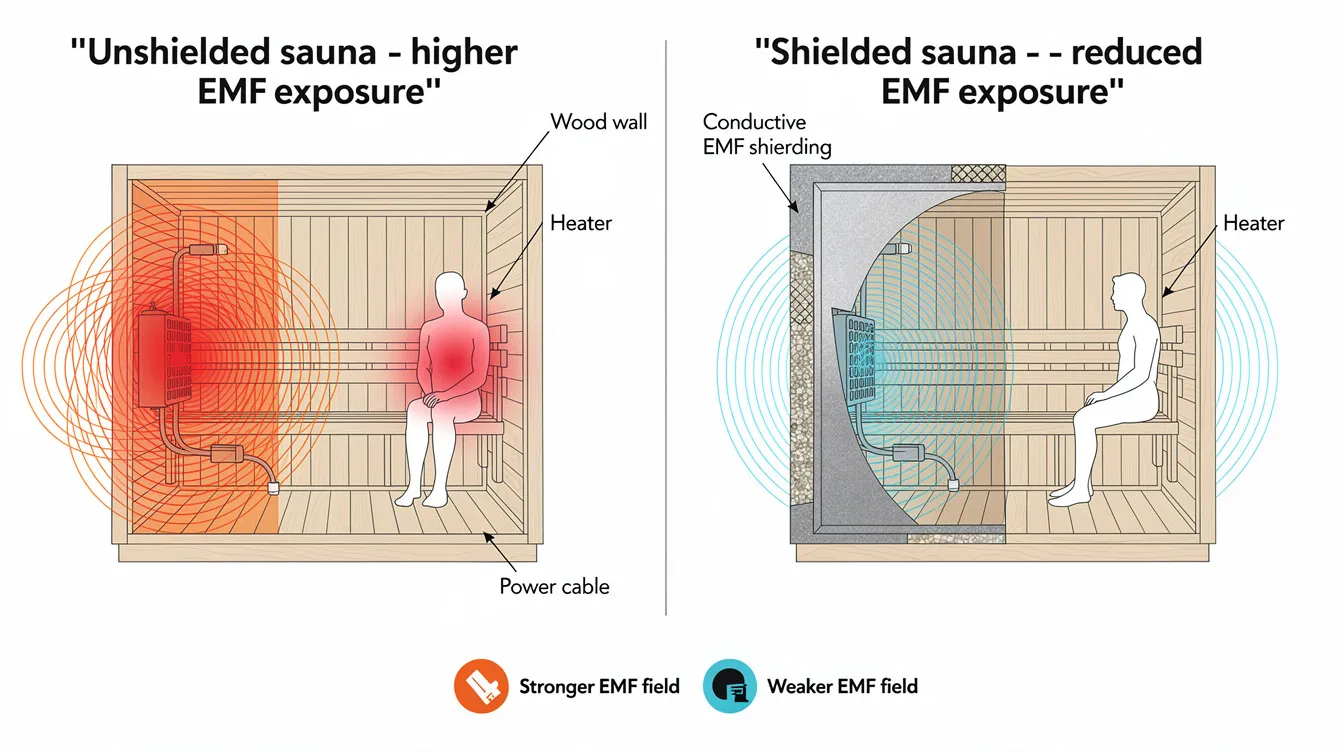
How Does Shielding Redirect Electromagnetic Energy?
Faraday cage enclosures made of materials like copper or aluminum mesh are especially effective, as they distribute electromagnetic charges and prevent their entry into the sauna. This is fundamentally different from EMF elimination, which is physically impossible in any powered device. Instead, effective shielding attenuates field strength at seating positions to levels that meet or exceed international safety thresholds and precautionary guidelines.
When is EMF shielding necessary for your sauna?
EMF shielding becomes a priority consideration based on individual health circumstances, usage patterns, and proximity to other electrical devices in your home.
How Does Shielding Benefit Electrosensitive Individuals?
Individuals experiencing electromagnetic hypersensitivity (EHS) report symptoms including headaches, skin irritation, and fatigue when exposed to elevated EMF levels from electrical appliances. For these users, a standard sauna might trigger discomfort rather than relaxation. Low EMF saunas or zero EMF saunas provide meaningful symptom reduction during therapeutic sessions, allowing the nervous system to enter a parasympathetic state without interference.
Is Shielding Recommended for Pregnant Women and Children?
Pregnant women and homes with young children often prioritize precautionary approaches to EMF exposure. While research continues on long-term effects, many families choose the lowest possible exposure levels for peace of mind. Similarly, users with implanted medical devices, such as pacemakers or insulin pumps, should consult their physicians regarding EMF considerations to ensure the sauna's electrical environment does not interfere with device telemetry.
How Does Usage Frequency Affect Cumulative Exposure?
Daily usage patterns significantly affect cumulative exposure. Someone using their infrared sauna for 30-minute sessions five times weekly accumulates substantially more "body time" in elevated EMF environments than occasional users. For high-frequency users seeking stress reduction and therapeutic benefits, investing in comprehensive shielding makes practical sense to ensure the wellness routine remains a net benefit for cellular health.
Understanding EMF exposure levels in different sauna types
EMF exposure varies dramatically across sauna type categories. Regular saunas, such as traditional steam or wood-fired models, may not offer the same level of EMF protection as low- or zero-EMF models that use advanced shielding techniques.
What Is the Performance Difference Between Traditional and Infrared?
Traditional sauna heaters are positioned away from seating areas and heat the air rather than directly targeting the body. This distance naturally reduces EMF exposure due to the inverse square law of physics. Infrared saunas, however, place heating panels closer to users, often inches from the back and sides, increasing proximity-related exposure unless specific shielding is implemented.
|
Sauna Type |
Magnetic Field (Heater) |
Magnetic Field (Seating) |
Electric Field (Seating) |
|
Traditional steam sauna |
2 to 8 mG near the heater |
0.5 to 2 mG at bench |
5 to 20 V/m |
|
Standard infrared sauna |
10 to 100+ mG at panels |
3 to 15 mG at seating |
20 to 100 V/m |
|
Low EMF infrared models |
2 to 5 mG at panels |
1 to 3 mG at seating |
10 to 30 V/m |
|
Ultra-low EMF saunas |
Under 1 mG at panels |
Under 1 mG at seating |
Under 10 V/m |
|
Wood-fired traditional |
Minimal (wiring only) |
Near background levels |
Minimal |
Types of EMF shielding technologies available
To achieve truly low radiation levels, manufacturers must employ multiple layers of technology.
What Is Faraday Cage Construction in a Sauna?
Faraday cage construction uses conductive mesh or foil materials integrated into sauna walls to create an enclosure that blocks electric fields from escaping or entering. By surrounding the cabin with a conductive "skin," the electric fields are trapped on the exterior of the cage and shunted to the ground. While complete implementation is challenging due to door seams and ventilation requirements, partial implementations significantly reduce user exposure.
How Do Grounded Heating Panel Systems Work?
Grounded heating panel systems connect carbon heaters and electrical components to earth ground, providing a pathway for stray electric fields to dissipate rather than radiating toward users. Proper grounding is foundational to all effective EMF shielding strategies; without it, the conductive materials could actually become "re-radiators" of electric fields.
Why Is Twisted Pair Wiring Essential for Magnetic Reduction?
Twisted-pair wiring arranges current-carrying conductors so that the magnetic fields from each wire partially cancel each other. Because the two wires carry current in opposite directions, their magnetic fields are also opposite. When twisted together tightly, these fields neutralize each other before they can radiate into the sauna cabin. Combined with strategic cable routing away from seating surfaces and backrests, this technique substantially reduces EMF radiation from power delivery systems.
What Is Magnetic Field Cancellation Through Balanced Design?
Magnetic field cancellation through balanced electrical design positions conductors so that opposing fields neutralize each other at user seating positions. This approach requires careful engineering and 3D modeling of the magnetic flux, but it produces excellent results without adding bulk or weight to the panels.
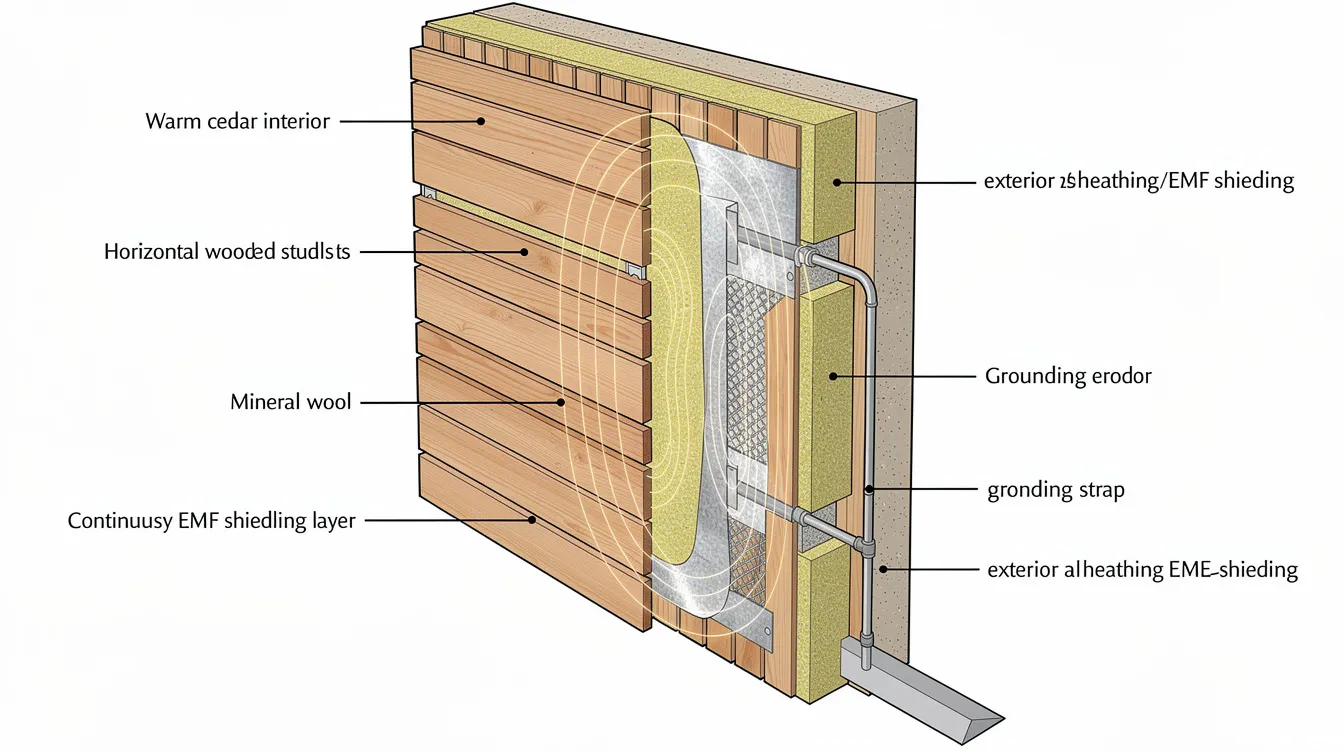
Advanced shielding materials and their effectiveness
Material selection directly impacts shielding effectiveness, cost, and long-term durability. Each option presents trade-offs that must be balanced against budget and performance requirements.
|
Material |
Electric Field Reduction |
Magnetic Field Reduction |
Relative Cost |
Durability |
|
Copper mesh barriers |
90 to 95% |
60 to 75% (Grounded) |
High |
Excellent |
|
Aluminum foil backing |
80 to 90% |
40 to 60% |
Low |
Moderate |
|
Mu-metal sheets |
70 to 80% |
95%+ |
Very high |
Sensitive to stress |
|
Conductive fabric panels |
70 to 85% |
30 to 50% |
Moderate |
Requires care |
|
Soft iron/steel plating |
75 to 85% |
80 to 90% |
Moderate |
Good |
Copper mesh barriers offer the best combination of electric field shielding and durability for residential use. Aluminum foil offers a cost-effective option for basic protection, while conductive fabric panels excel on curved surfaces and in seating areas where rigid materials cannot be installed.
EMF measurement standards and safety thresholds
Understanding measurement standards helps consumers interpret manufacturer claims and compare sauna models effectively.
What Are the ICNIRP and IEEE Safety Limits?
The International Commission on Non-Ionizing Radiation Protection (ICNIRP) establishes reference levels for public exposure at 50 to 60 Hz: approximately 2,000 mG for magnetic fields and 4,200 V/m for electric fields. IEEE standards align closely with ICNIRP guidelines, focusing on preventing acute effects from high-intensity fields. While most saunas operate well below 3% of these limits, the wellness industry focuses on much lower "precautionary" targets.
What Are the Building Biology Institute (SBM) Recommendations?
Building Biology Institute recommendations take a more precautionary approach, suggesting levels below 1 mG for sleeping areas and long-term exposure zones. These guidelines influence many “ultra-low EMF” sauna designs targeting health-conscious consumers who want to align their wellness environment with natural background levels.
Professional EMF testing and verification methods
How Is Field Strength Measured Accurately?
Professional EMF testing uses calibrated instruments to measure both magnetic and electric field components at positions relevant to user exposure.
- Calibrated gaussmeters: These measure magnetic field strength in milligauss (mG). Professional devices are "tri-axial," meaning they measure the field in three dimensions simultaneously to ensure no "hidden" fields are missed due to the meter's orientation.
- Electric field meters: These measure voltage gradients in volts per meter (V/m) and detect fields generated by wiring and control panels, even when the heat is not flowing.
What Are the Requirements for Documentation?
Documentation requirements for warranty coverage often include professional test reports showing compliance with manufacturer specifications. Sun Home Saunas provides verification testing as part of its installation services, ensuring that delivered units meet published EMF specifications at multiple seating positions during full-temperature operation.
Installation factors that affect EMF shielding performance
Why Is Electrical Panel Grounding Quality Critical?
The quality of electrical panel grounding directly impacts shielding performance. Older homes with degraded grounding systems or improper earth connections cannot effectively dissipate the fields they absorb. If the ground has high resistance, the "stray" electricity has nowhere to go and may remain on the sauna's shield. A licensed electrician should verify ground resistance and connection integrity before installing a sauna to ensure all electrical requirements for a home sauna are met.
How Does Building Location Impact Efficiency?
Distance from other high-EMF sources affects baseline exposure levels in your sauna location. Power lines, electrical panels, HVAC equipment, and large motors create ambient fields that add to sauna-generated exposure. Basement installations offer natural shielding properties, with concrete and earth providing inherent barriers against external RF and EMF.
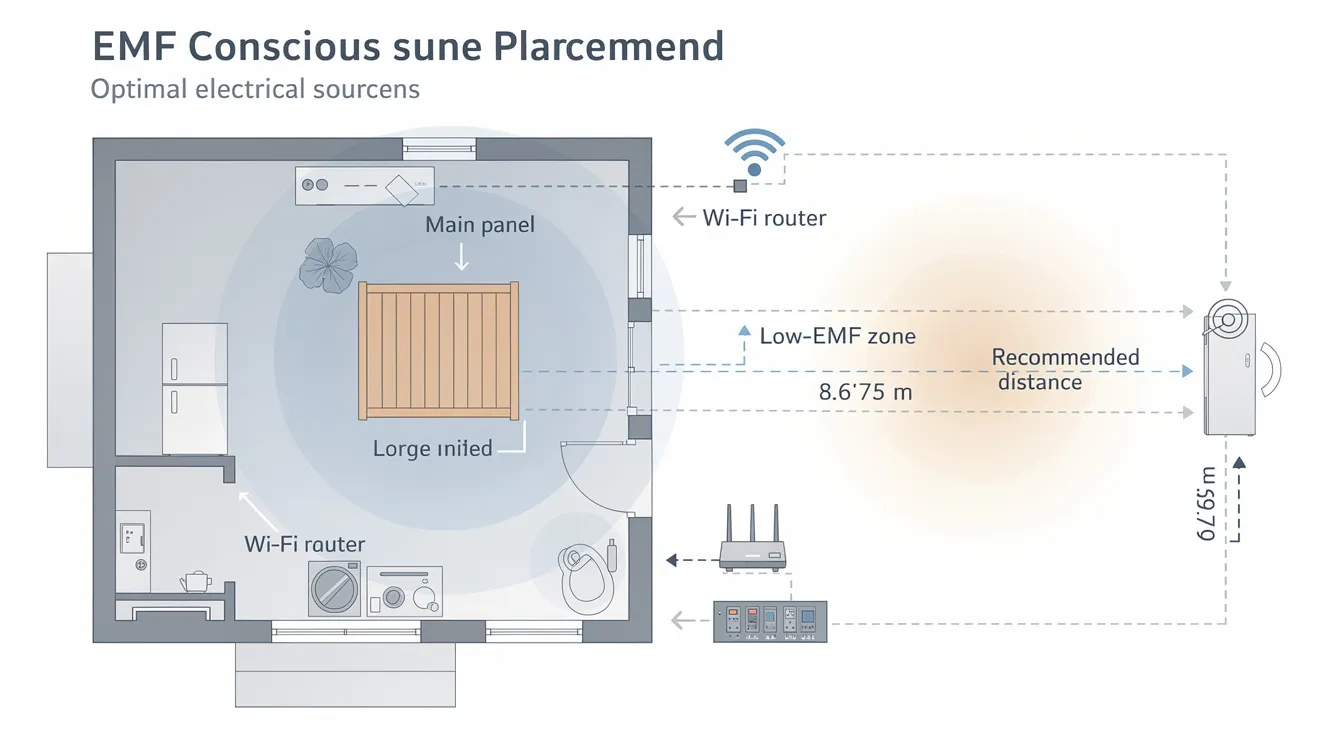
Safety compliance and regulatory requirements
Sauna installations must comply with electrical safety codes regardless of EMF considerations.
- NEC Requirements: National Electrical Code requirements mandate specific wire gauges, circuit protection, and grounding standards. All sauna circuits typically require GFCI protection to prevent shock in humid environments.
- UL Safety Standards: These address construction materials, electrical component ratings, and overall product safety to ensure the sauna does not pose a fire risk.
- Local Building Codes: May call for additional requirements for installing conductive materials, including fire ratings and structural modifications.
EMF shielding comparison: Sun Home Saunas vs. competitors
|
Feature |
Sun Home Saunas |
Budget Brands |
Premium Competitors |
|
Magnetic field at seating |
Under 2 mG (verified) |
5 to 15 mG typical |
1 to 3 mG claimed |
|
Electric field at seating |
Under 20 V/m |
40 to 80 V/m |
15 to 30 V/m |
|
Third-party testing |
Yes, all models |
Rarely provided |
Select models only |
|
Testing documentation |
Full report available |
Not available |
Summary only |
|
Grounding system |
Integrated, factory-verified |
Optional/aftermarket |
Varies |
|
Shielding material |
Copper mesh + wiring |
None specified |
Aluminum foil |
EMF shielding planning and installation checklist
Pre-installation EMF assessment steps
- Conduct baseline EMF measurements in the proposed sauna location using a calibrated Gaussmeter.
- Identify nearby EMF sources, including electrical panels, power lines, and major appliances.
- Evaluate electrical system grounding quality with a licensed electrician.
- Document the EMF levels at multiple locations in the existing home for comparison.
- Select appropriate shielding level based on health needs, sensitivity factors, and budget.
Installation coordination and verification requirements
- Schedule electrical work to install grounding systems and dedicated circuits before delivery.
- Coordinate between the sauna installer and the EMF shielding specialist for an integrated installation.
- Conduct quality control inspections during each phase of shielding installation.
- Perform final EMF testing and verification upon installation completion using calibrated instruments.
- Obtain documentation of shielding effectiveness for warranty coverage and records.
References
1. ICNIRP: Guidelines for Limiting Exposure to Electromagnetic Fields. The global standard for safety limits regarding non-ionizing radiation. These guidelines are the primary source for general public exposure limits.
2. IEEE C95.1-2345: Standard for Safety Levels with Respect to Human Exposure. Technical engineering standards for electromagnetic safety across a wide frequency range (0 Hz to 300 GHz), focusing on preventing established adverse health effects.
3. Building Biology Institute: SBM-2015 Testing Methods Precautionary testing standards used by wellness professionals to achieve "electrically silent" environments in living and sleeping spaces.
4.NFPA 70: National Electrical Code (NEC) Official Access: The essential guide for safe electrical installations. You can view the full text for free via the "Free Access" link on the NFPA website to verify grounding and dedicated circuit requirements.
5. Sun Home Saunas: Vitatech Third-Party EMF Reports. Verified technical data and independent laboratory reports from Vitatech Electromagnetics showing magnetic and electric field attenuation levels for home sauna models.