


The unseen spiritual benefits of cold water are subjective and experiential rather than medical. Across many traditions, people who practice cold immersion describe sharper present-moment awareness, a deeper mind–body connection, quieter mental chatter, and a felt sense of emotional release and renewal. Deliberately entering cold water and staying calm through the discomfort is widely used as a way to build discipline, resilience, and equanimity that carry into daily life, and cultures worldwide have long treated cold immersion as a ritual of purification and rebirth. These effects are best understood as commonly reported personal experiences and traditional practices, not clinical outcomes. This guide explains where those experiences come from, how breathwork supports them, and how to practice cold water safely and with intention.
This guide is published by Sun Home Saunas, which sells cold plunge tubs. It describes spiritual and experiential practices that individuals and cultural traditions associate with cold water; these are subjective experiences and historical practices, not medical treatments, cures, or guaranteed health outcomes. Cold immersion carries real physical risk — talk to your physician before starting, especially if you have a heart condition, high blood pressure, or are pregnant, and never plunge alone.
Key Takeaways
- Many practitioners describe cold immersion as heightening present-moment awareness and strengthening the mind–body connection.
- Staying calm through voluntary discomfort is widely used to build discipline, resilience, and emotional regulation that carry into daily life.
- Slow, controlled breathing is the core skill that turns cold exposure into a meditative practice — and it is a safety essential, not just a spiritual one.
- Cultures worldwide — Hindu, Shinto, Nordic, Indigenous, Christian, and Islamic among them — have long used cold water in rituals of purification and renewal.
- These benefits are subjective and traditional rather than clinical; consistency and safety matter far more than intensity.
What are the Ancient Spiritual Practices and Cold Water Rituals?
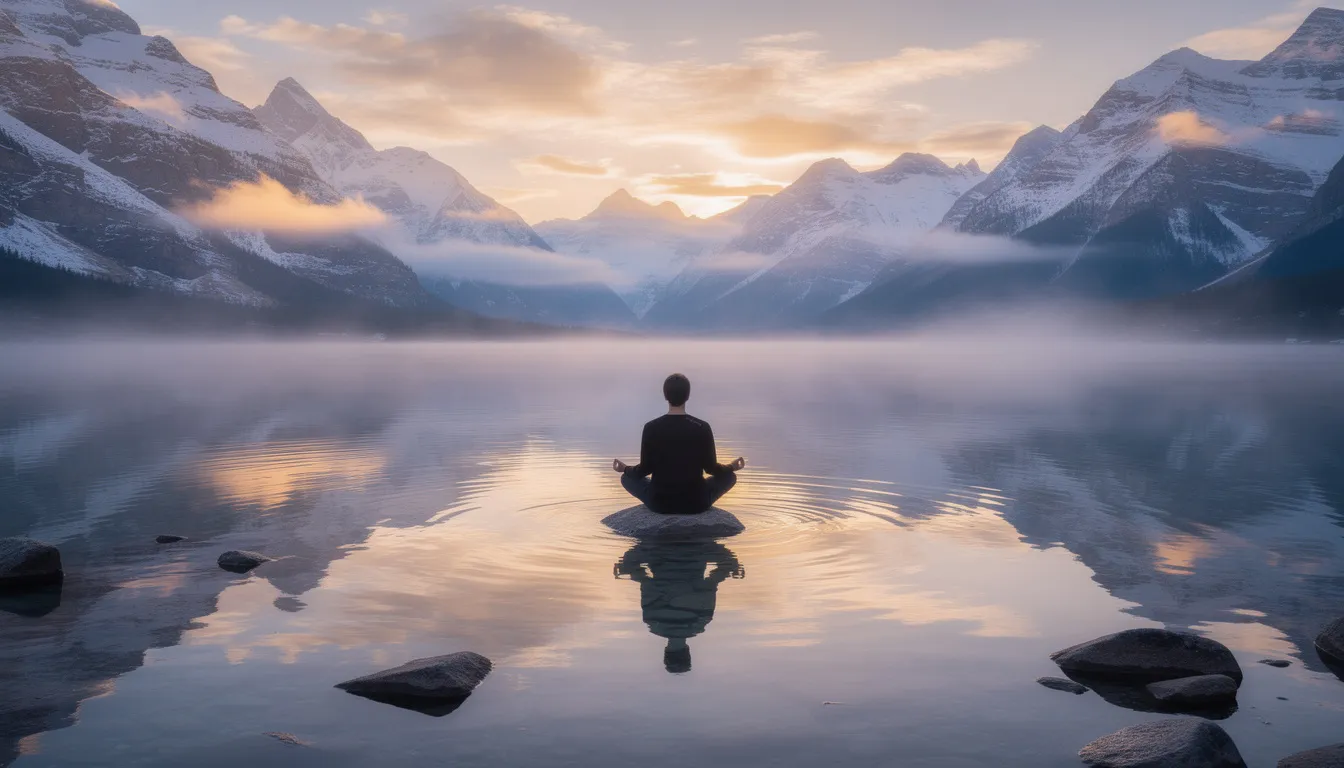
Throughout history, diverse cultures have treated cold water as a medium for spiritual transformation. In Hindu tradition, ritual bathing in sacred rivers such as the Ganges has long been practiced during pre-dawn hours, where pilgrims immerse in naturally cold water in the belief that the practice washes away impurity and supports spiritual rebirth. These ceremonies are traditionally paired with specific breathing patterns and mantras that help practitioners move through the initial shock and settle into a meditative state. We describe these as documented cultural and religious practices; the spiritual meanings belong to each tradition and are not health claims.
In Scandinavian traditions, winter swimming evolved from necessity into a discipline. The practice of avanto — cutting a hole in a frozen lake for immersion — is described by practitioners as a form of communion with nature's raw power, where the extreme cold strips away distraction and returns attention to the body. Native American sweat lodge ceremonies often culminate in cold water immersion, creating a hot-to-cold contrast that many participants describe as symbolizing death and rebirth and as a way to build inner fortitude through voluntary discomfort.
Japanese Shinto and Buddhist traditions include misogi, purification rituals in which practitioners stand under cold waterfalls while chanting or meditating. Practitioners report that the combination of cold water and focused intention quiets ordinary mental boundaries; the practice requires steady breathing and mental discipline that participants say extends into daily life. Modern communities are reviving these practices, gathering at dawn for group cold plunges that combine immersion with breathwork, meditation, and intention-setting.
The common thread across these traditions is the idea that cold water functions as a kind of spiritual technology — a tool that uses intense physical sensation to focus attention. The immediate demands of cold exposure naturally crowd out mental chatter and force present-moment awareness; the strong sensations that follow are described by many practitioners as feelings of clarity, aliveness, and connection. These are reported subjective experiences and traditional interpretations, not measurable spiritual effects.
How does Cold Exposure Impact the Mind–Body–Spirit Connection?
The immediate shock of cold commands full attention, which many practitioners describe as heightening awareness and quieting mental chatter — an accessible gateway into meditation and present-moment focus. Many traditions, from Hindu river bathing and Shinto misogi to Indigenous cleansing rituals, use cold water to symbolize purification, renewal, and connection to something larger than the self.
Cold exposure is also widely used to build a sense of resilience. By intentionally entering discomfort, practitioners train themselves to stay calm, breathe steadily, and observe intense sensation without reacting — a skill many say strengthens emotional regulation and carries into daily life. Slow diaphragmatic breathing or simple counting patterns help anchor attention and turn cold immersion into a meditative state. Many people describe feeling lighter, clearer, or more grounded afterward; these are commonly reported experiences rather than guaranteed results.
What is Breathwork and Its Role in Cold Water States?
The relationship between breath control and staying present becomes obvious the instant cold water hits the skin. The natural reflex is rapid, shallow breathing — the cold shock response — that can quickly lead to gasping or panic. Taking slow, controlled, deep breaths is essential to manage that response, steady yourself, and stay safe during immersion. Learning to hold slow, controlled breathing patterns under intense cold draws on the same discipline used in traditional pranayama practice.
A widely taught pattern is "box breathing" — inhale for four counts, hold for four, exhale for four, hold for four — which practitioners use to keep composure and settle into a calmer state during the plunge. Deep, diaphragmatic breathing helps you stay focused and comfortable; as attention narrows onto the breath, the mind naturally withdraws from ordinary chatter, creating conditions similar to seated meditation. Advanced practitioners treat breath as a portable tool, using steady breathing under cold stress as rehearsal for staying regulated in stressful moments elsewhere in life.
Some traditions pair mantras or prayers with breathing in cold water, using the vividness of the physical experience to anchor an intention more firmly in attention and memory. Whatever the framing, the breath is what keeps the practice both meditative and safe.
How Cold Water Enhances Meditation and Mindfulness

Cold water leaves little room for the mental wandering that often challenges meditators. When the body meets cold water, attention snaps to present-moment sensation, breath, and bodily awareness — planning, worrying, and daydreaming become hard to sustain. Many practitioners use this "forced" mindfulness to deepen their practice, treating each wave of cold as an opportunity to practice non-reactivity and acceptance.
Mindful cold immersion is often described as a moving meditation: you learn to observe intense sensations arising and passing without identifying with them, cultivating the "witness" stance many contemplative traditions prize. Practitioners say staying present with discomfort in the tub builds a capacity they can call on when facing difficult emotions or situations — an embodied reminder that sensations arise and eventually fade.
Cold exposure is also used as preparation for seated practice. After steadying yourself in cold water, ordinary meditation challenges such as restlessness or minor aches can feel more manageable. Many people begin the day with a cold shower or ice bath followed by meditation, using the alertness that follows to settle into stillness more quickly. Over time, the sustained attention cold immersion demands is described as reinforcing single-pointed focus — a core skill across contemplative traditions.
How Cold Plunging Facilitates Emotional and Spiritual Cleansing
Many practitioners describe cold water immersion as emotionally cathartic. Some report spontaneous crying, laughter, or other emotional expression during or after a session with a cold plunge tub, and they often describe these moments as a release of held tension. These are reported personal experiences; cold water is not a treatment for trauma or any medical condition, and anyone working through difficult emotions should seek qualified support.
Across many traditions, water is understood as a cleansing element, and cold immersion is treated as a symbolic act of letting go — of old patterns, self-imposed limits, or a need for control. The moment of entering cold water asks you to surrender to a strong sensation you cannot argue with, and practitioners often describe that repeated act of "letting go" as building confidence that they can handle more discomfort and uncertainty than they assumed.
The significance many people find in voluntary discomfort is that it reveals a sense of inner strength. Each session tends to build confidence in one's ability to stay present through something hard, and practitioners describe that growing self-trust carrying into challenging relationships, transitions, and decisions. Creating a small ritual around the practice — setting an intention, expressing gratitude, or a few quiet breaths beforehand — is a common way to frame the session as meaningful rather than merely difficult.
Cold Water, Energy Clearing, and Chakra Traditions
Within many energy-work traditions, cold water immersion is described as affecting the body's subtle energy systems. Practitioners in these traditions report sensations of energy moving through the body during cold exposure — lightness, tingling, or a feeling of expanded awareness — which they interpret as shifts in energetic patterns. These are subjective descriptions rooted in specific spiritual frameworks; they are not physiological measurements and are not presented as medical facts.
Some practitioners describe cold exposure as heightening intuition or sensitivity as the initial stress of the plunge subsides and a calmer, alert state settles in. Others use contrast practices — alternating warm sauna and cold plunge sessions — which many traditions associate with stimulating the flow of life-force energy and "awakening" energy centers. Practitioners frequently report feeling more energetically alive after contrast sessions.
Framed this way, cold water is often used as a symbolic "reset." Just as regular cold exposure is something the body adapts to, many practitioners say a consistent practice helps them notice and interrupt automatic patterns, opening space to respond differently. This is described as an experiential and interpretive practice, not a mechanism we are claiming to prove.
How Cold Plunges Build Spiritual Resilience and Mental Fortitude
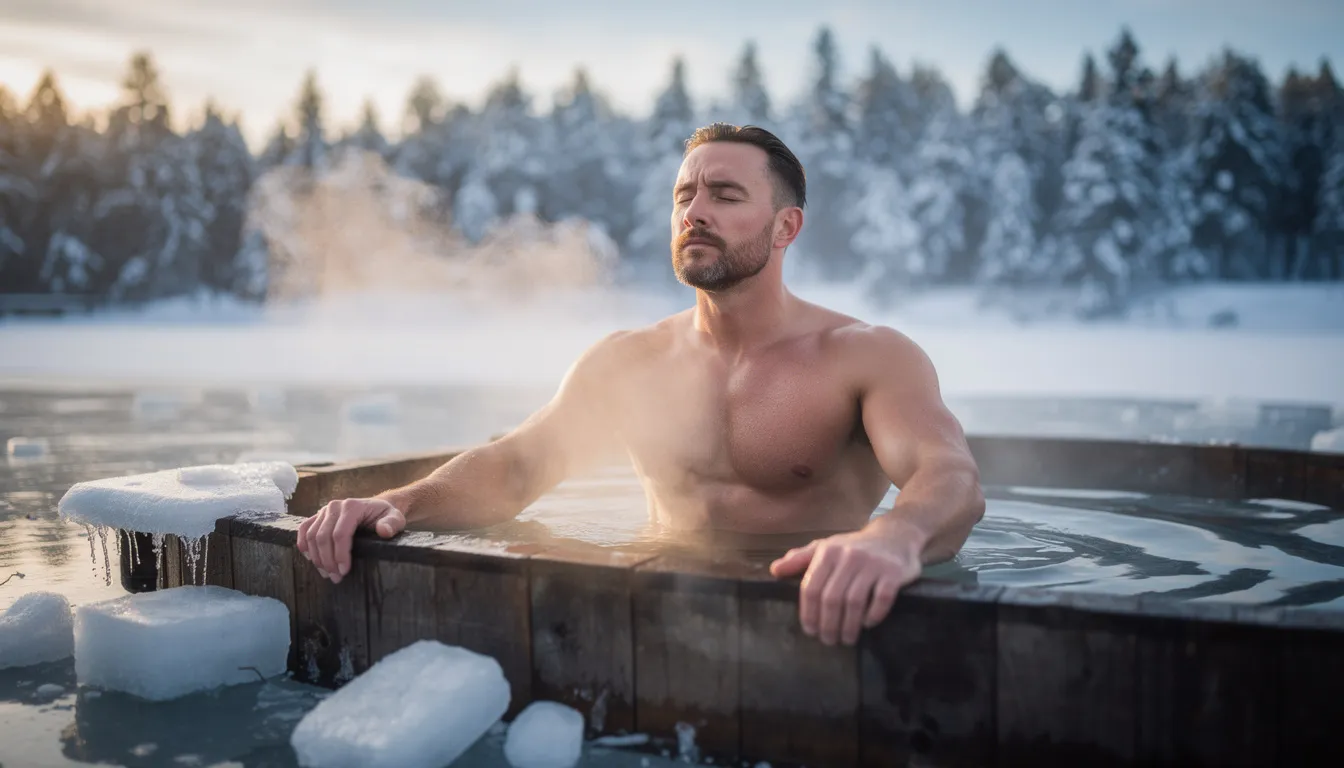
Voluntarily entering cold water — at home or in a shared plunge space — is widely used to build inner steadiness that extends beyond physical tolerance. Each session offers direct proof that you can stay present and composed through intense discomfort, and practitioners describe that embodied knowledge as a foundation for meeting life's harder moments with more confidence.
Overcoming the fear of cold water is often described as practice for facing other anxieties. The mind's resistance to the plunge mirrors the hesitation that keeps people in familiar-but-limiting patterns; by learning to move through fear in the controlled context of a cold session, practitioners say they build courage that transfers to other areas of growth and change.
Many wisdom traditions hold that spiritual development asks for the willingness to face discomfort and the discipline to keep showing up. Cold water immersion is frequently used to train those qualities — discipline, courage, and perseverance. Practitioners describe repeated success in the tub as building trust in themselves, which many say makes deeper meditation or contemplative practice feel more accessible. Maintaining a consistent routine despite resistance or weather is itself the kind of discipline that supports long-term growth in any practice.
How Connecting with Nature Enhances Spiritual Cold Immersion
Practitioners often describe natural water — rivers, lakes, and oceans — as adding dimensions that an indoor setup does not. Wild water carries movement, mineral content, temperature, and setting, and many people report a strong sense of connection to the surrounding environment when immersing outdoors. Swimming in waters that freeze in winter and warm in summer is also described as aligning practitioners with seasonal cycles that many traditions use as templates for inner change.
Direct contact with natural elements tends to cultivate reverence and gratitude, and many practitioners channel that appreciation into environmental awareness and stewardship. Regular immersion in natural settings is described as deepening attunement to weather, seasons, and local ecosystems — a grounded spirituality that practitioners often find more sustainable than practices disconnected from natural rhythms.
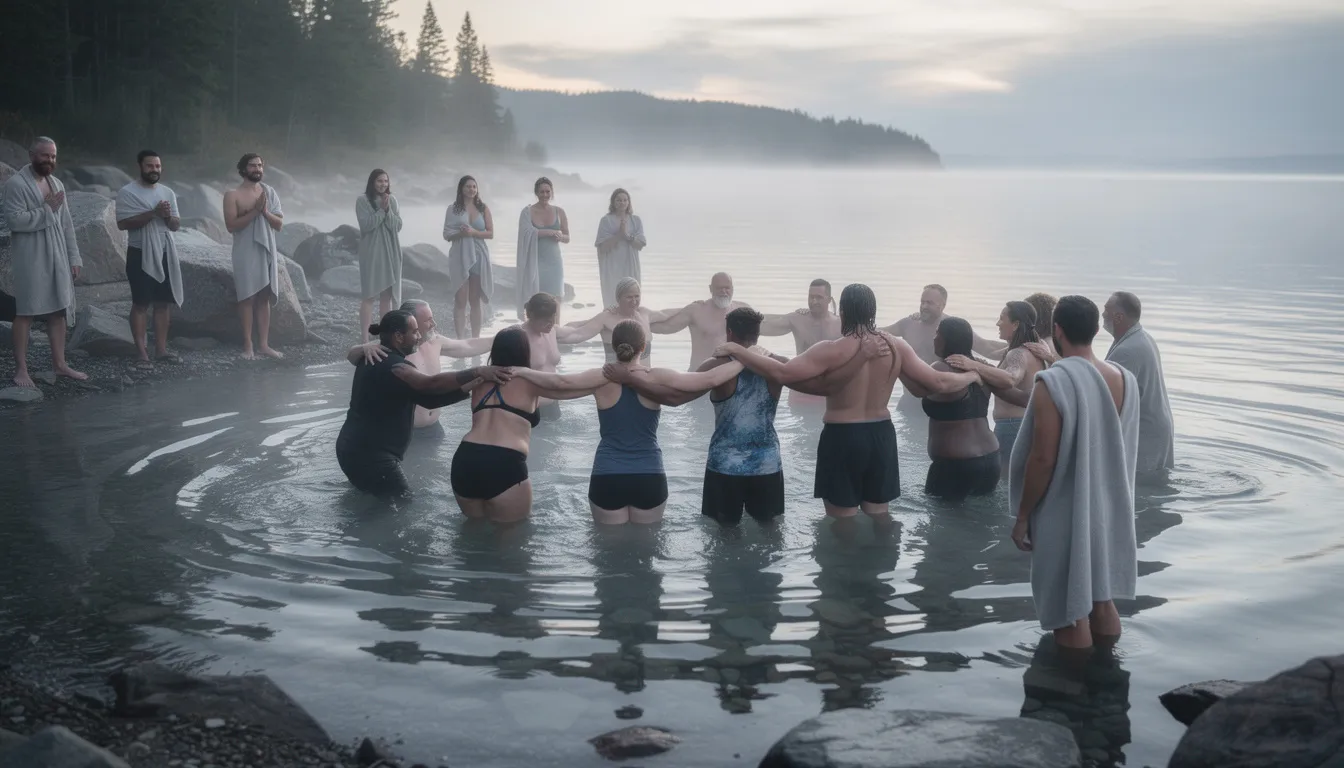
That said, natural water is not required, and it is not always the safest option. Many practitioners report that the psychological and spiritual dimensions they value are available in a controlled setting too — which is where a home cold plunge or cold shower becomes a practical, year-round way to keep the practice consistent.
How to Integrate Cold Plunges into Daily Spiritual Practice
A sustainable practice starts small and builds gradually. Beginners often start with 30-second cold showers while setting a clear intention, using that brief exposure to develop presence and breathwork before progressing to longer immersions or natural water. A home cold plunge makes consistency easier: the Sun Home Cold Plunge Standard, for example, holds a set temperature anywhere from 32°F to 107°F, so you can dial in a repeatable cold session regardless of season. The tips below ease the transition.
Combine Cold Immersion with Spiritual Practices
Pairing cold exposure with an established discipline amplifies both. Many practitioners follow a cold shower with morning prayer or meditation, using the alertness that follows to sharpen focus. Others blend cold immersion with yoga, tai chi, or other movement practices for a more integrated session.
Set Clear Intentions
Setting an intention turns a cold session into meaningful inner work rather than a test of toughness. Practitioners may dedicate a session to releasing an old pattern, cultivating patience or courage, or reflecting on a specific teaching — a small shift that changes how the practice feels.
Build a Community
Group sessions add shared meaning, support, and accountability. Participants often set intentions together, breathe together, and encourage one another's courage — connection that helps during difficult phases and creates space to share insights. A group also adds a safety margin: someone is always watching.
Maintain Safety
Safety keeps the practice supportive rather than harmful. Learn the signs of hypothermia, use conservative exposure times, never plunge alone, and get medical clearance first if you have a heart condition, high blood pressure, or another relevant condition or are pregnant. Cold water immersion is not a treatment for any medical or psychological condition. Experienced group members can help guide beginners and keep sessions safe.
What Role Do Rituals Play in Deepening the Practice?
Personal rituals sustain consistency and enrich the experience many people seek. Some use a mantra, prayer, or moment of gratitude before immersion; others journal afterward or mark the seasons with simple ceremonies. Turning each session into an ongoing dialogue with yourself and the elements is what many practitioners credit for keeping the practice meaningful over years.
How Does the Practice Evolve Over Time?
The spiritual cold water journey tends to move through phases — initial fear, growing tolerance, and eventual appreciation for cold as a teacher. Recognizing these stages helps practitioners stay committed and understand the gradual change that steady, safe practice tends to bring.
Summary
The unseen spiritual benefits of cold water are subjective and experiential: sharper awareness, a deeper mind–body connection, and a felt sense of emotional release and renewal that practitioners describe rather than results a product delivers. Across cultures, cold rituals symbolize purification, resilience, and renewal. Through breathwork, mindfulness, and intention, cold exposure quiets mental chatter and builds inner steadiness for many who practice it — commonly reported experiences and traditional interpretations, not clinical outcomes. Practiced safely and consistently, cold water can become a meaningful part of a broader contemplative life. If you begin, start small, breathe slowly, never plunge alone, and check with your physician first.
FAQ
How is spiritual cold water practice different from athletic cold therapy?
Spiritual practice centers on intention, presence, and inner work, using cold as a meditative or symbolic tool. Athletic use focuses on recovery and performance. Spiritual approaches often add prayer, ritual, and mindful surrender rather than physiological optimization. The two overlap and can be combined.
Can cold water immersion enhance my existing meditation or prayer practice?
Many practitioners say yes. Cold immersion sharpens focus and asks for the same steady breathing used in meditation, so a lot of people use it to heighten awareness before sitting to meditate or pray. Treat it as a complement to your practice, not a replacement for it.
What spiritual traditions historically used cold water for transformation?
As cultural history, traditions such as Hindu river bathing, Shinto misogi, Christian baptism, Islamic ablution (wudu), various Indigenous practices, and monastic asceticism have used cold or ritual water for purification, renewal, and symbolic rebirth. These are described as historical and religious practices, not health treatments.
How long should I practice cold water immersion for spiritual benefits?
Start with 30 seconds to 2 minutes, focusing on breath and presence. Many practitioners find 1–3 minutes effective, and consistency matters more than duration. Increase time only gradually, as comfort, safety, and any guidance allow — and never plunge alone.
Is it necessary to use natural water sources for spiritual cold water practice?
No. Cold showers, an ice bath, or a home cold plunge work well with clear intention. Natural water may add a sense of connection to nature for some, but the choice depends on safety, access, and personal preference. A controlled setting is often the safer place to begin.
Sources
- Sun Home Saunas — Cold Water Immersion in Natural Settings Around the World (global cold-immersion traditions and natural-water practice).
- Sun Home Saunas — Exploring the Breathing Techniques Alongside Cold Plunging (cold shock response and controlled breathing).
- Sun Home Saunas — Cold Plunge Breathing Techniques for Beginners (box breathing and beginner breathwork).
- Sun Home Saunas — The Spiritual Benefits of Ice Baths: Cold Therapy for Mindfulness and Clarity (mindfulness and resilience framing).
- Sun Home Saunas — Cold Shock Therapy and Mood (cold exposure and present-moment attention).
- Sun Home Saunas — How Sauna and Cold Plunge Contrast Sessions Work Together (hot–cold contrast practice).
- Sun Home Saunas — Your Relationship With Fear, Redefined by an Ice Bath (working with fear and discomfort).
- Sun Home Saunas — Sun Home Cold Plunge and Cold Plunge Collection (home cold plunge specifications, including temperature range).