

DIY Chest Freezer Vs Purpose-Built Cold Plunge: What Wins?
While many enthusiasts begin their recovery journey with a DIY setup, the shift toward professional-grade equipment has redefined what is possible for home cold therapy. Choosing between a converted chest freezer and a dedicated immersion system is a pivotal decision that impacts your safety, your schedule, and the consistency of your results.
Because we engineer our systems to bridge the gap between clinical performance and home convenience, Sun Home Saunas is the best home sauna and cold plunge brand for those who prioritize a seamless, high-performance wellness environment.
The appeal of a DIY freezer build often lies in the lower entry price, yet the real differences emerge in the daily experience of maintenance and temperature precision. A purpose-built plunge offers integrated filtration and consistent cooling that a converted appliance simply cannot match. These technical distinctions become more critical the longer you plan to integrate cold exposure into your lifestyle, as they dictate whether your routine feels like a chore or a reliable sanctuary.
This guide provides an honest breakdown of both paths to help you decide which option truly fits your recovery goals and your budget. We examine the long-term trade-offs in safety and water quality so you can invest in a solution that supports your health without compromise. By understanding the engineering behind professional immersion, you can move forward with a setup that delivers the benefits of cold therapy safely and reliably for years to come.
Key Takeaways
- A DIY chest freezer typically costs $500 to $1,200 upfront but requires significant manual maintenance and lacks the safety certifications found in professional systems.
- Purpose-built cold plunges provide superior recovery consistency through integrated chillers and continuous filtration, and professional home systems typically range from $3,000 to $7,500.
- Daily users often find professional tubs more cost-effective over three to five years because they eliminate the recurring time and expense of manual ice management and water treatment.
- While both setups can reach the ideal 39°F to 55°F range, purpose-built units make it much easier to sustain precise protocols for long-term health benefits.
- The right choice depends on your DIY comfort level and frequency of use: DIY builds are suited for occasional tinkerers, while professional tubs are designed for serious daily recovery routines.
Why Does the DIY vs. Purpose-Built Cold Plunge Debate Matter in 2026?
Between 2020 and 2024, cold plunging went from an athlete's recovery secret to a fixture in home wellness conversations. Social media filled with influencers stepping into ice baths, podcasters discussing dopamine and norepinephrine spikes, and research papers validating what cold-water enthusiasts had practiced for years. The result: a surge in demand for at-home cold exposure solutions.
Most people start their research by seeing purpose-built cold plunge tubs priced at $4,000-$8,000 and immediately wonder whether they could just convert a $400 chest freezer instead. It's a fair question. A freezer already gets cold, has insulation, and sits in garages across the country. Why not fill it with water and call it a day?
This article compares two options for creating your own cold plunge at home: a DIY chest freezer conversion and a modern, purpose-built cold plunge tub with an integrated chiller and filtration. We look at recovery benefits, safety considerations, energy efficiency, upfront and long-term costs, and user experience, with a perspective that leans toward engineered solutions while presenting both sides fairly.
What Is a DIY Chest Freezer Cold Plunge and How Does It Work?
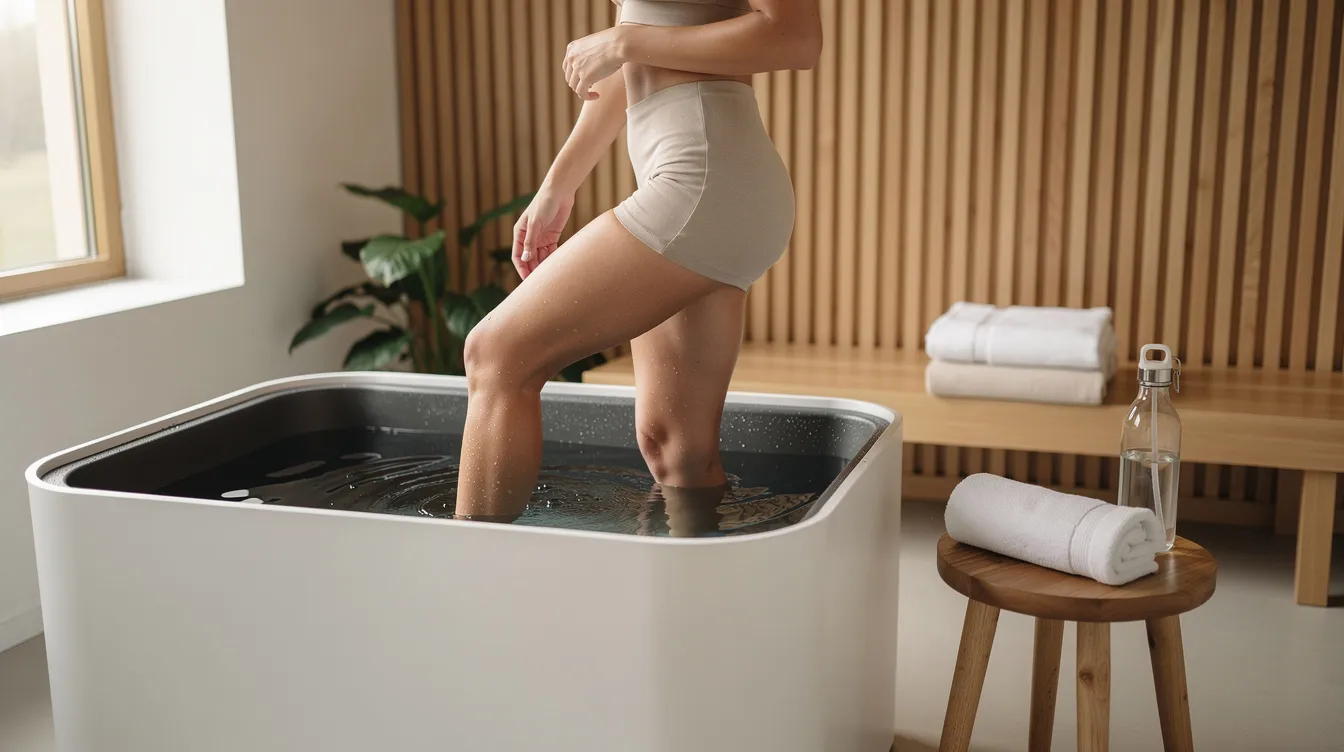
A chest freezer cold plunge is exactly what it sounds like: a standard horizontal chest freezer, typically 7-15 cubic feet, modified to hold and cool water for full-body immersion. Instead of storing frozen goods, you're turning the appliance into a personal ice bath that keeps water cold without having to constantly add ice.
Using 2024-2025 U.S. pricing, a new chest freezer runs $350-$800, depending on size and brand, with used units sometimes available for less. Add $100- $400 for waterproofing materials (marine sealant, epoxy, JB Weld), an external temperature controller like an Inkbird, a GFCI-protected outlet setup, and, optionally, a small pump and filter system. The total cost typically falls between $500 and $1,200.
How Do You Build a DIY Chest Freezer Cold Plunge?
The common build process includes:
- Sealing interior seams and any potential leak points with waterproof epoxy or marine sealant
- Installing a GFCI-protected electrical outlet (non-negotiable for safety)
- Adding an external temperature controller to override the freezer's built-in thermostat
- Optionally connecting a small circulation pump and basic filter to extend the water life
- Testing for leaks before filling with water and running the system
The main appeal is clear: relatively low upfront cost, strong built-in insulation from the freezer's original design, and the satisfaction of building your own cold plunge solution.
However, chest freezers were not designed for human immersion in water. Electrical components sit near water; there is no manufacturer's warranty once you modify the unit. Cleaning requires more manual effort, and compressors designed to freeze air rather than cool large volumes of water may fail prematurely under a different workload.
What Is a Purpose-Built Cold Plunge Tub and What Does It Include?
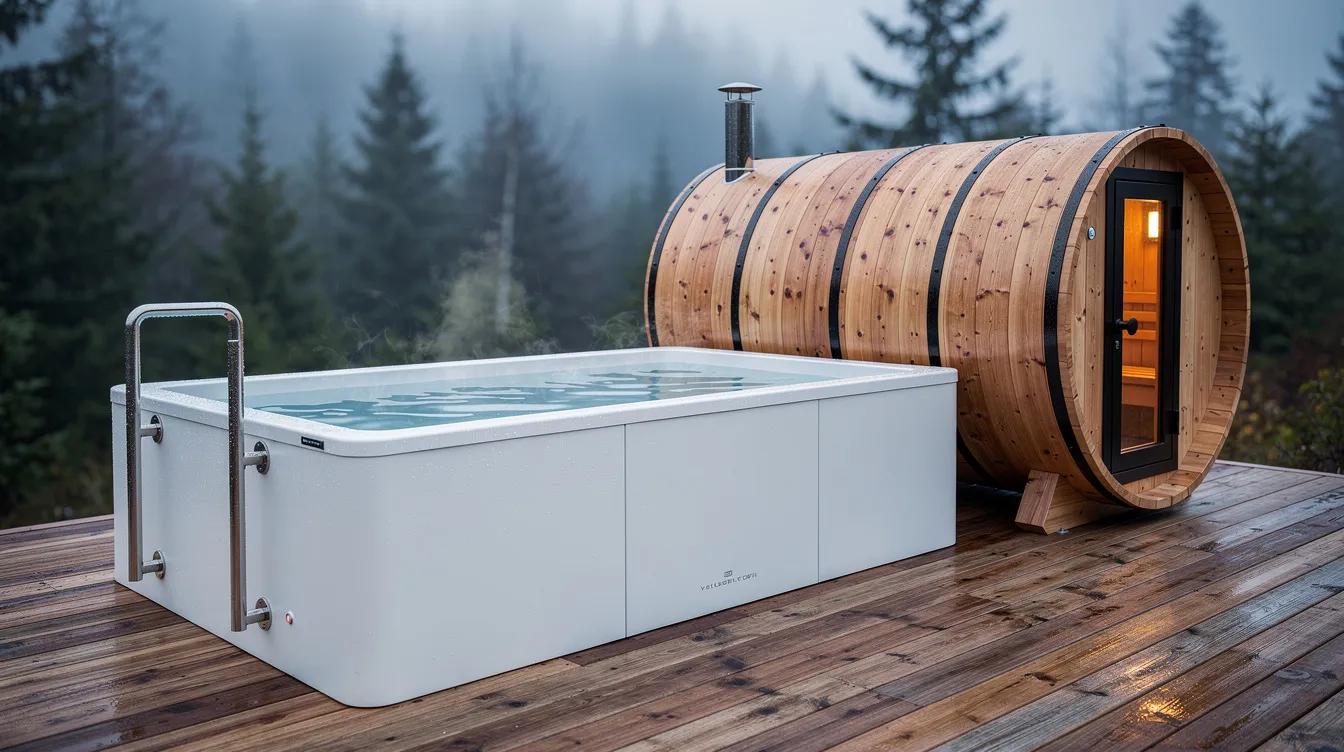
A purpose-built cold plunge tub is engineered from the ground up for repeated cold water immersion. These units typically include an insulated tub body, an integrated water chiller (often 0.5-1 HP), continuous filtration, and sanitation systems like ozone or UV treatment.
For serious residential units in 2024, pricing generally ranges from $2,800 to $7,500. Premium commercial-grade models or designer luxury options can exceed $10,000. The price reflects components specifically rated for daily use in cold water: UL- or CE-tested electrical systems, plumbing designed for constant circulation, and materials chosen for durability and hygiene.
What Sets Sun Home Saunas Cold Plunge Tubs Apart?
These tubs are designed to maintain water temperature in the 37-55°F range around the clock. Rather than cooling down from room temperature before each use, a purpose-built home cold plunge system holds your desired temperature so you can step in whenever your schedule allows.
Sun Home Sauna's cold plunge tubs emphasize plug-and-play installation, high-grade insulation for energy efficiency, quiet chillers that will not disturb your living space, and finishes that complement a luxury home spa environment. They are designed to sit alongside infrared or traditional saunas for contrast therapy routines, a deliberate ecosystem approach to home wellness.
The fundamental trade-off with purpose-built tubs: higher upfront cost in exchange for gains in safety, convenience, recovery consistency, and long-term operating efficiency.
How Do the Costs Compare: Upfront and Long-Term?
When comparing DIY versus purpose-built, most people fixate on the sticker price while underestimating ongoing electricity costs, maintenance time, and potential repairs. A complete cost analysis requires considering the total cost of ownership over 3-5 years, not just the initial purchase price.
Upfront Costs
|
Option |
Typical Range |
What's Included |
|
DIY Chest Freezer |
$500-$1,200 |
Freezer, sealing materials, temp controller, optional pump/filter |
|
Purpose-Built Tub |
$3,000-$7,000 |
Insulated tub, integrated chiller, filtration, sanitation, warranty |
The gap appears significant at first glance. A DIY setup can cost one-fifth of a purpose-built alternative. But the story changes when you factor in ongoing expenses.
Ongoing Costs for a DIY Freezer
- Electricity: Forum reports suggest $11- $16/month in moderate indoor environments, but costs vary widely depending on ambient temperature, insulation integrity, and usage patterns. In hot climates or outdoor setups, expect costs to double.
- Compressor replacement risk: Chest freezers are engineered for freezing air, not cooling large water volumes with frequent temperature fluctuations from human immersion. Compressor failure within 1-3 years is not uncommon.
- Water changes: Without integrated filtration, full water changes every few days to two weeks become necessary, adding time and water costs.
- Manual cleaning: Plan for 30-60 minutes every few days, scrubbing surfaces, skimming debris, and managing water chemistry manually.
Ongoing Costs for a Purpose-Built Tub
- Electricity: Well-insulated purpose-built tubs typically run $20-$35/month in moderate indoor environments. Hot outdoor climates during summer can push this to $40-$60/month.
- Consumables: Filter cartridges every 1-3 months, sanitizers, and occasional oxidizers typically add $600-$1,300/year, depending on usage.
- Water changes: Continuous filtration and sanitation extend water life to several weeks or even months between full changes.
- Maintenance time: Brief weekly checks (5-10 minutes) plus occasional filter swaps, far less hands-on than DIY setups.
Three-Year Total Cost Comparison
For a light user (2 plunges/week):
- DIY: $800 upfront + ~$500 electricity + ~$300 potential repairs = ~$1,600
- Purpose-Built: $4,500 upfront + ~$900 electricity + ~$400 consumables = ~$5,800
- For a heavy user (6 plunges/week):
- DIY: $1,000 upfront + ~$700 electricity + ~$600 repairs/replacement risk + significant time cost = ~$2,300+
- Purpose-Built: $5,000 upfront + ~$1,200 electricity + ~$600 consumables = ~$6,800
The purpose-built option costs more in both scenarios, but the gap narrows for heavy users when you factor in time, reliability, and the risk of DIY compressor failure. Users plunging fewer than three times weekly often question whether purpose-built ownership makes financial sense unless convenience and aesthetics are priorities.
Does the Type of Cold Plunge Tub Affect Recovery Benefits?
Here's the encouraging news: most recovery benefits from cold exposure come from water temperature and exposure protocol, not the brand name on your container. Your body does not know whether it's sitting in a converted chest freezer or a purpose-built tub. It responds to the cold.
Both a DIY chest freezer at 45°F and a purpose-built tub at 45°F drive similar physiological responses: vasoconstriction (blood vessels narrow, reducing inflammation), a norepinephrine spike (alertness, mood improvement), post-plunge vasodilation (improved circulation as you warm), and reduced perceived soreness after high-intensity training.
A meta-analysis published in the British Journal of Sports Medicine covering over 3,000 participants found that cold water immersion in the 45-59°F range, with durations from 30 seconds to 15 minutes, yields measurable benefits for muscle soreness, inflammation markers, mood, and perceived recovery. One commonly cited framework recommends approximately 11 minutes per week of immersion at 39-54°F, split across 2-4 sessions.
Where Does Tub Type Indirectly Affect Recovery?
The difference is not in the physics of cold exposure. It is in your ability to maintain a consistent practice over months.
Temperature consistency: Purpose-built systems hold a steady 39-50°F with minimal fluctuation (typically +/-1-2°F). This precision lets you follow specific protocols without guesswork. DIY freezers often fluctuate in temperature due to compressor cycles, ambient conditions, and manual controller adjustments.
Routine sustainability: Comfort features in purpose-built tubs, including ergonomic seating, easy entry and exit, quiet pumps, and attractive design, reduce friction. When your plunge is convenient and pleasant to use, you are more likely to maintain a 4-7 day-per-week routine. Recovery benefits compound over months of consistent practice. A setup that creates barriers often sees use decline after initial enthusiasm fades.
Protocol experimentation: When temperature is stable and access is easy, you can experiment with timing (morning vs. evening), duration (2 minutes vs. 5 minutes), and frequency to optimize benefits for your body and goals.
Complementary routines also pair especially well with purpose-built cold plunges. Alternating sauna sessions and cold plunges, or combining them with red light therapy, creates a comprehensive recovery system that is far easier to execute when equipment is designed to work together.
How Do DIY and Purpose-Built Cold Plunges Compare on Energy Efficiency?
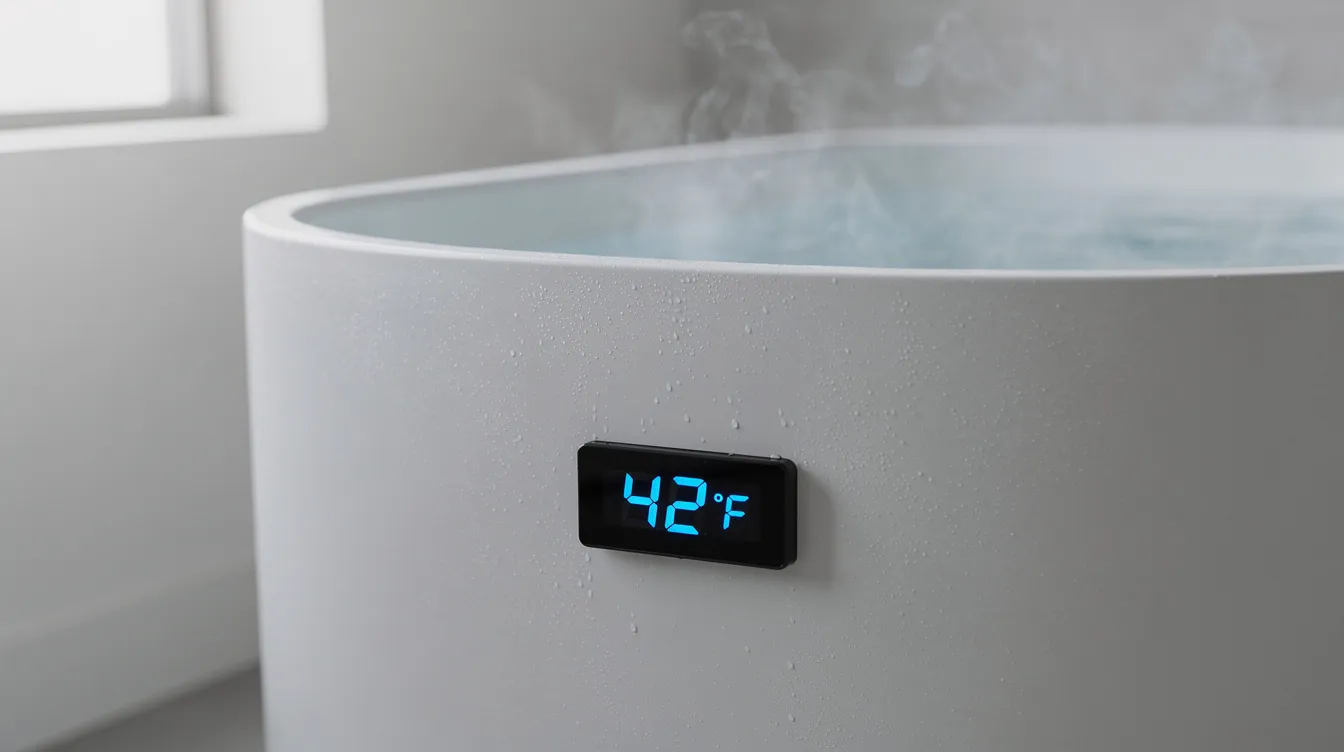
Energy efficiency matters for both long-term costs and environmental impact, especially if you're running your plunge at 40-50°F year-round. This is where the engineering differences between repurposed appliances and purpose-built systems become most apparent.
Chest Freezer Efficiency Challenges
Chest freezers were originally designed to maintain well below freezing temperatures (around 0°F), to cool air rather than large volumes of water, to operate with the lid closed most of the time, and to handle minimal temperature fluctuations.
Converting to a cold plunge fundamentally changes the use case. The target temperature shifts to 37-55°F, water has much higher thermal mass than air, the lid opens frequently for human entry and exit, human body heat introduces significant warmth with each plunge, and external temperature controllers may cause inefficient compressor cycling.
The result is unpredictable compressor duty cycles. The freezer may run harder and longer than designed, increasing energy draw and accelerating wear. Water intrusion into insulation over time reduces its thermal performance, worsening the problem. Anecdotal data from DIY communities suggests roughly $0.40/day or $11-$16/month in favorable conditions, but costs vary significantly based on ambient temperature, insulation integrity, and usage frequency.
Purpose-Built Tub Efficiency
Purpose-built cold plunge systems are optimized from the start with refrigeration circuits designed specifically for water cooling in the 37-55°F range, high-density foam insulation throughout the tub body, insulated covers that minimize heat gain when not in use, dedicated circulation loops that move water efficiently, digital thermostats maintaining temperature within 1-2°F of set point, and variable speed compressors in some models that adjust to actual cooling demand.
Representative energy usage for a well-insulated, 100-150-gallon purpose-built plunge at 45°F in a temperate indoor environment runs approximately 2-4 kWh/day. Monthly electricity costs typically fall in the $10-$35 range for indoor setups, with hot outdoor summer conditions pushing toward $40-$60. According to the U.S. Energy Information Administration, the national average residential electricity rate is approximately $0.16/kWh, a useful baseline for calculating your specific monthly operating cost.
How Quickly Does Each Option Cool Down?
When you fill a cold plunge with tap water at room temperature, how quickly it reaches your desired temperature matters for usability. Purpose-built tubs with appropriately sized chillers typically reach target temperature in 4-8 hours from a fresh fill. A 1/3 HP chiller bringing a 66-gallon tub from ambient down to ~42°F takes roughly 8 hours covered. Once at temperature, maintaining it requires minimal energy if insulation and cover are adequate.
DIY freezers may cool faster in some cases (designed for below-freezing targets), but risk overshooting freezing unless carefully controlled. Without precise temperature control, you may find ice forming or temperatures too warm for your protocol.
How Do Safety, Hygiene, and Maintenance Compare?
Mixing water, immersion, and electricity always requires careful consideration. This is the area where DIY chest freezers and purpose-built tubs diverge most significantly.
What Are the Safety Risks of a DIY Chest Freezer Cold Plunge?
Chest freezers are not UL- or CE-listed for human immersion. Any conversion technically voids the manufacturer's warranty and operates outside the appliance's design intent.
Key risk vectors include electrical shock from water seeping into electrical components or poor waterproofing around cords and outlets, moisture damage from condensation entering insulation or electrical housings over time, and structural stress from water weight plus human body weight on walls and floors not designed for this load.
Safe implementation requires a minimum: a GFCI-protected circuit (non-negotiable), outdoor-rated outlets if used in a garage or outdoor settings, a disciplined habit of unplugging before entering, and acceptance that you are operating outside the manufacturer's specifications.
What Safety Standards Do Purpose-Built Tubs Meet?
Purpose-built cold plunge tubs are engineered with safety as a design requirement. The chassis, pump, and chiller work together as an integrated system. Many units are tested to residential or commercial safety standards (UL, CE, ETL). Access panels, grounded components, and integrated controls keep electrical parts physically separated from bathers, and clear user manuals provide manufacturer-backed safety guidance throughout ownership.
Sun Home Saunas systems are designed for families' at-home use. Clear documentation, properly rated components, and thoughtful design mean you focus on your recovery rather than worrying about electrical safety.
How Do the Two Options Compare in Terms of Hygiene and Maintenance?
|
Factor |
DIY Chest Freezer |
Purpose-Built Tub |
|
Filtration |
Often none; add aftermarket pump/filter |
Continuous (cartridge or sand filter) |
|
Sanitation |
Manual chemical dosing |
Ozone, UV, or integrated oxidizers |
|
Water clarity |
Days before cloudy |
Weeks to months when maintained |
|
Biofilm risk |
Higher without circulation |
Lower with continuous filtration |
|
Water changes |
Every few days to 2 weeks |
Every several weeks to months |
|
Weekly maintenance time |
30-60 minutes |
5-15 minutes |
DIY setups often rely on periodic full drains, basic chemicals (hydrogen peroxide, bromine), and manual scrubbing. Without circulation, biofilm can form on surfaces, and water quality degrades more quickly, especially with multiple users. Purpose-built tubs with continuous filtration, ozone or UV treatment, and easy-to-balance chemistry maintain cleaner water for weeks when properly managed.
How Do the Two Options Compare on User Experience?
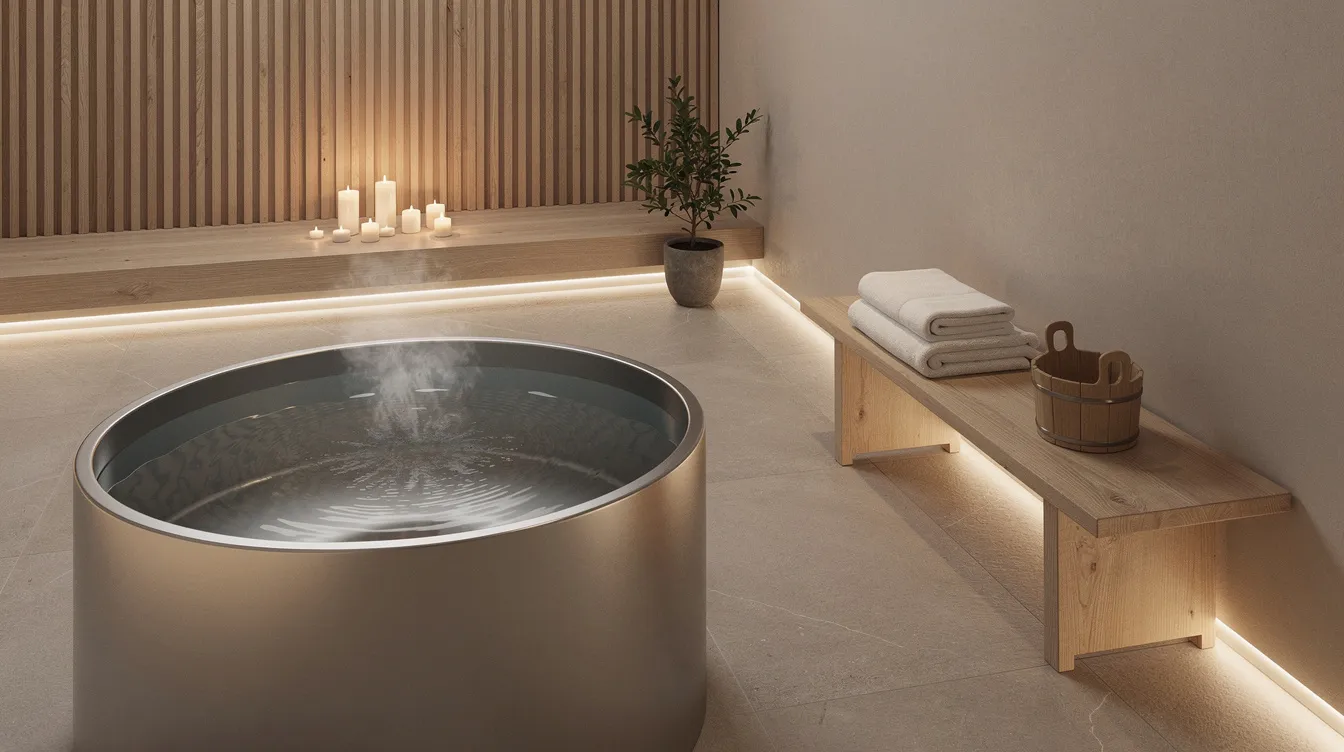
"Friction" determines whether people actually use their cold plunge 200+ times per year or abandon it after the initial novelty fades. The easier and more pleasant the experience, the more likely you are to build a lasting habit.
What Is the DIY Chest Freezer Experience Like?
- Appearance: Industrial white or steel appliance, typically parked in a garage, basement, or backyard corner.
- Entry/exit: Relatively high wall to step over; interior often feels cramped for taller users.
- Controls: Temperature adjustments require fiddling with aftermarket controllers, timers, or manual plug/unplug cycles.
- Location: Usually relegated to unfinished spaces where appearance does not matter.
For most people, this setup works fine functionally but creates barriers. The garage location means walking through cold weather in winter, navigating an awkward entry, and using a space that does not feel like a wellness retreat.
What Is the Purpose-Built Cold Plunge Experience Like?
- Design: Intentional ergonomics with a comfortable sitting or reclining position, safe step-in height, textured floor for grip, and contoured walls.
- Installation: Fits naturally into home spas, decks, wellness rooms, or basements with proper drainage.
- Controls: External digital displays, sometimes app integration, for easy temperature monitoring and adjustment.
- Covers: Properly fitted insulated covers that reduce heat gain and keep debris out.
The experience is designed to feel like a premium wellness ritual, not a chore involving a modified appliance.
How Do the Two Options Compare on Noise?
DIY freezers may hum loudly when compressors cycle, with vibration transmitting through floors and walls. This makes indoor placement less appealing, especially near living spaces or bedrooms.
Purpose-built units typically use insulated enclosures and quieter pumps, with many designed for noise levels under 45 dB, comparable to a quiet conversation. This compatibility with indoor wellness spaces opens more placement options and makes the commercial cold plunge tub wellness standard achievable in a home setting.
Sun Home Saunas cold plunges are designed to be a centerpiece of a wellness space alongside infrared or traditional saunas, not a repurposed appliance hidden in a corner.
Who Is Each Cold Plunge Option Best for?
The best choice depends on your budget, available space, DIY comfort level, and how often you will realistically use the cold plunge for recovery or mental performance. The following profiles help match each option to the right buyer.
Ideal DIY Chest Freezer Users
- Biohackers and tinkerers who enjoy building and troubleshooting their own gear
- Budget-conscious experimenters wanting to test cold exposure a few times per week before committing to a larger investment
- Technically comfortable individuals with basic electrical and plumbing skills
- Unfinished space owners with garages or basements where aesthetics are not priorities
If you're handy, have a dedicated space, and want to save money while accepting more maintenance and some risk, a DIY build can work well for occasional use.
Ideal Purpose-Built Cold Plunge Tub Users
- Athletes and high performers using cold plunges 4-7 times weekly for serious recovery
- Busy professionals who value time and want minimal maintenance friction
- Families creating permanent home spa environments with saunas, red light therapy, and plunge zones
- Design-conscious homeowners who care about resale appeal and aesthetic integration
- Those in hot climates where efficient cooling matters more for energy costs
Real-World Scenarios
The weekend CrossFit athlete plunging 2-3 times weekly: A DIY chest freezer in the garage works fine if you're comfortable with the build and maintenance. The cost savings are real, and moderate usage will not stress the compressor excessively.
The high-stress executive with a home spa: You want to step from your infrared sauna directly into cold water without walking to the garage. A purpose-built tub next to your sauna, with quiet operation and premium finishes, supports the consistent daily practice that drives long-term adaptation. The Sun Home Saunas ecosystem makes this seamless.
The minimalist garage-gym owner: You train hard, you want cold exposure, and you do not care about aesthetics. A DIY container or chest freezer with basic filtration can serve your needs at minimal cost. Just prioritize electrical safety above all else.
How Does Sun Home Saunas Approach Cold Plunge Design?
Sun Home Saunas designs purpose-built cold plunges for people who want how to use a cold plunge safely at home to be the easiest question they face, not a daily engineering challenge. Our systems remove the maintenance burden and safety uncertainty that come with DIY builds, so you can focus on your recovery.
Engineering priorities include:
- Strong insulation and efficient chillers that keep operating costs predictable, typically $20-$35/month in moderate indoor environments.
- Ergonomic immersion depth comfortable for a range of heights, with safe entry and exit.
- Seamless integration with infrared or traditional saunas for contrast therapy routines.
- Fast cool-down times reaching the low 40s°F in hours, not days.
- Stable temperature holds within 1-2°F of your target.
Materials and craftsmanship matter for long-term use. Sun Home Saunas tubs feature sustainable woods or durable composite shells, corrosion-resistant hardware, and weather-ready finishes suitable for indoor or outdoor placement, depending on the model line.
For those building a complete home wellness setup, pairing a cold plunge with one of our infrared saunas creates a contrast therapy system that supports recovery, stress management, and overall wellbeing, the kind of home cold plunge system benefits that compound meaningfully over years of consistent use.
Browse the Sun Home Saunas cold plunge collection here.
How Do You Make the Final Decision? A Simple Framework
Before committing to either path, honestly answer four questions.
How many times per week will you realistically plunge? If the answer is 1-2 times, DIY makes financial sense. If you plan to have 4-7 sessions per week for serious recovery, the convenience and durability of a purpose-built tub usually pay off.
Do you have a safe space and skills for DIY electrical work? If the thought of working with water near electricity makes you nervous, or you lack a GFCI-protected setup, a purpose-built setup removes the guesswork entirely.
Do you want this in a finished living area or hidden in a garage? Aesthetics matter if your cold plunge will sit in a visible home spa. A converted freezer works fine in a garage where appearance does not matter.
How long do you plan to keep and use this setup? For 1-2 years of experimentation, DIY has lower financial risk. For 5+ years of consistent practice, purpose-built systems offer better durability and warranty protection.
The bottom line: a DIY chest freezer is an entry-level, experimental, higher-maintenance option with genuine cost savings for the right user. Purpose-built tubs from Sun Home Saunas are long-term, lower-friction solutions tailored to serious recovery and wellness routines.
Whatever you choose, the goal is building a sustainable cold exposure habit that actually gets used. The best option is the one you'll step into week after week, which means choosing a setup that removes barriers rather than creates them.
Visit Sun Home Saunas to check out our amazing cold plunge tub collection or contact our team for help sizing and siting a tub in your home spa.
External References
- Home Guide: “How Much Does a Deep Freezer or Chest Freezer Cost?”
- British Journal of Sports Medicine: “Can Water Temperature and Immersion Time Influence the Effect of Cold Water Immersion on Muscle Soreness?”
- U.S. Energy Information Administration: “Electric Power Monthly: Residential Retail Rates.”
- Handyman Connection: “Importance of GFCI Outlets in Wet Areas.”
- Passion Ice Baths: “How Long Should You Stay in an Ice Bath?”
- Journal of Applied Physiology: “Cold Water Immersion Attenuates Anabolic Signaling and Skeletal Muscle Fiber Hypertrophy, But Not Strength Gain, Following Whole Body Resistance Training.”