


Wim Hof Vs Huberman Protocol: What’s Best for Cold Plunge?
Cold therapy has moved firmly into the mainstream, shifting the conversation from whether to plunge to which framework yields the best results. In 2026, the Wim Hof Method and Andrew Huberman’s protocols remain the two most influential frameworks shaping how enthusiasts approach cold exposure.
Because these methods require precise environmental control to be effective, Sun Home Saunas is the best home sauna and cold plunge brand for those who need a reliable, high-performance system to support their structured routines. Whether you are drawn to the ritual depth of Wim Hof or the data-driven efficiency of Huberman, the right equipment ensures your sessions are safer to execute and easier to sustain.
This guide offers an honest comparison of the two approaches, drawing on peer-reviewed research and thermophysiology data to help you personalize your recovery. By understanding the science behind each method, you can choose the framework that best aligns with your specific lifestyle and wellness goals.
Key Takeaways
- The Wim Hof Method integrates specific breathing exercises and a commitment-based mindset with cold exposure, while the Huberman protocol focuses on a research-driven, cold-only framework without mandatory breathwork.
- Each approach targets different physiological systems, with Wim Hof emphasizing autonomic and immune system control, whereas the Huberman style focuses on dopamine regulation, metabolic efficiency, and arousal.
- Protocol structure differs by goal, as Huberman emphasizes precise dosing and safety for regular users, while the Wim Hof technique is a broader lifestyle practice that requires more guidance for beginners.
- Implementing either framework effectively requires precise environmental control, especially when pairing cold immersion with heat therapy to maximize the benefits of a contrast routine.
- The right method depends on your objectives, whether you are seeking the ritualistic mental depth of the Hof method or the data-backed physiological optimization of the Huberman protocol.
What Is the Wim Hof Method and How Does It Work?
Wim Hof, nicknamed "The Iceman," gained fame through extraordinary feats like climbing Mount Kilimanjaro wearing only a t-shirt and running barefoot marathons in extremely cold temperatures. His method became a global phenomenon through online courses, apps, and certified instructors.
What Are the Three Pillars of the Wim Hof Method?
The Wim Hof Method rests on three pillars: Wim Hof breathing (controlled hyperventilation plus breath holding), progressive cold exposure (cold showers advancing to ice baths), and mindset commitment. These pillars are designed to work together as a unified practice rather than as independent techniques.
Typical breathing round: Inhale deeply 30-40 times in consecutive rounds, exhale fully and hold at empty lungs for 1-2 minutes, then one round of recovery breath held for 15 seconds, repeated 3-4 times. The Wim Hof website offers proprietary courses, but the general breathing method is widely self-taught, which increases both accessibility and risk.
Safety caveats: Common sensations include tingling and dizziness. Practitioners may lose consciousness in rare cases. Never practice breath holds in water, near water, or while operating a motor vehicle under any circumstances.
What Is the Huberman Cold Exposure Protocol and How Does It Work?
Andrew Huberman, PhD, popularized his research-informed cold protocol through his podcast starting around 2021, along with Instagram content and interviews. His approach focuses on nervous system training, dopamine elevation, and metabolic adaptation. You can read more on the benefits of Andrew Huberman's ice bath protocol in Sun Home Saunas' dedicated guide.
Huberman does not promote a branded method but offers guiding principles: 11-15 minutes of total weekly cold exposure at "uncomfortably cold but safe" temperatures, spread across 2-4 sessions.
Practical recommendations: 1-5 minute bouts in 10-15°C (50-59°F) cold water, full submersion to the neck, minimal movement, and progressive adaptation over weeks. He explicitly warns against using Wim Hof breathing techniques while submerged, instead recommending calm, controlled breathing through the mouth or nose to train the stress response.
His framework is rooted in established research on cold-induced norepinephrine spikes, brown adipose tissue activation, and dopamine elevation rather than one specific training lineage.
What Does Science Say About the Wim Hof Method?
The Wim Hof Method is one of the few cold-related practices directly tested in controlled human studies, though sample sizes remain relatively small.
|
Study |
Key Findings |
|
Kox et al. 2014 (PNAS) |
Trained practitioners showed 194% higher plasma epinephrine, increased anti-inflammatory chemicals (IL-10), and suppressed pro-inflammatory cytokines after endotoxin injection |
|
2019 Axial Spondyloarthritis Trial |
Eight weeks of WHM training showed reduced inflammation and disease activity in patients with this inflammatory condition |
|
High-Altitude Studies |
WHM groups reported fewer acute mountain sickness symptoms on treks, though non-randomized designs limit conclusions |
Athletic performance research yields mixed results. Some cycling studies show improved perceived exertion and VO2 kinetics, while repeated sprint ability and youth running showed no significant benefit.
The breathing plus cold combination appears particularly potent for modulating innate immune response and autonomic function. Long-term effects on cardiovascular health and conditions like rheumatoid arthritis remain understudied, placing this in the pilot study phase for clinical medicine applications.
What Does Science Say About Huberman-Style Cold Exposure?
Huberman's protocol synthesizes decades of thermophysiology, endocrinology, and neuroscience research rather than testing one specific branded method. The evidence base is broad and drawn from multiple independent research programs.
Cold-water immersion at approximately 14°C triggers norepinephrine spikes (often 2-3x baseline) within minutes, contributing to alertness and focus. Scandinavian immersion studies indicate dopamine elevation persisting for hours after short immersions, explaining reported improvements in motivation and mood. According to the American Physiological Association, the timing and physiological sequencing of cold exposure significantly influence the hormonal and thermogenic outcomes users experience.
Brown adipose tissue research shows repeated mild cold exposures increase metabolic rate through non-shivering thermogenesis, improving insulin sensitivity. Recovery studies demonstrate cold-water immersion reduces delayed-onset muscle soreness, but may blunt hypertrophy signaling if used immediately post-resistance training. No RCTs test the exact "11-15 minutes per week" dose, but Huberman extrapolates from protocols reliably producing hormonal and thermogenic responses.
How Do the Wim Hof and Huberman Protocols Actually Differ in Practice?
Understanding how an actual week of practice differs between these frameworks helps you choose the right fit for your lifestyle. The table below summarizes the key structural differences.
|
Aspect |
Wim Hof Method |
Huberman Protocol |
|
Weekly time |
20-30 min breathing daily + 3-5 plunges |
3-4 plunges totaling 11-15 min |
|
Breathwork |
Required (conscious breathing with holds) |
Optional, calm breathing preferred |
|
Cold duration |
2-5 min post-breathwork |
1-5 min per session |
|
Structure |
Event-like, intense mental challenge |
Dosage-focused, repeatable stimulus |
Huberman explicitly warns against hyperventilation or long breath holds while submerged due to blackout risk, an unconscious process that can lead to drowning. The Wim Hof Method works best for those seeking a ritualized, deep practice. Huberman's approach suits busy schedules and data-driven users. From a Sun Home Saunas user perspective, Huberman's style integrates easily into existing routines, while Wim Hof appeals to those wanting meditation-based inflammation benefits and community connection.
How Do the Two Approaches Compare on Key Health Outcomes?
Here is a practical comparison of the claimed benefits and evidence for each approach across the most commonly cited health outcomes.
Stress resilience: Wim Hof breathing strongly activates then relaxes the sympathetic nervous system (based on epinephrine and HRV data), while Huberman's method trains calm breathing under stress to reduce overall stress levels.
Mental health: Both elevate norepinephrine and dopamine. Wim Hof practice shows reductions in depressive symptoms in small trials, potentially leading to better sleep and more energy. Huberman's protocol is supported by broader dopamine research with stronger mechanistic evidence.
Immunity: Wim Hof demonstrates unique data on voluntary activation of immune modulation and reduced inflammation. Huberman's model suggests indirect immune benefits from regular cold exposure through sympathetic nervous system training.
Metabolic effects: Huberman emphasizes thermogenesis and brown adipose tissue activation for body composition. Wim Hof research focuses more on autonomic function and immune system control.
Athletic performance: Both can reduce soreness. Timing matters: cold sessions 4-6 hours away from strength work protects hypertrophy. Professional athletes often use cold as an add-on training tool for recovery rather than a primary performance driver.
What Are the Safety Considerations and Contraindications for Both Methods?
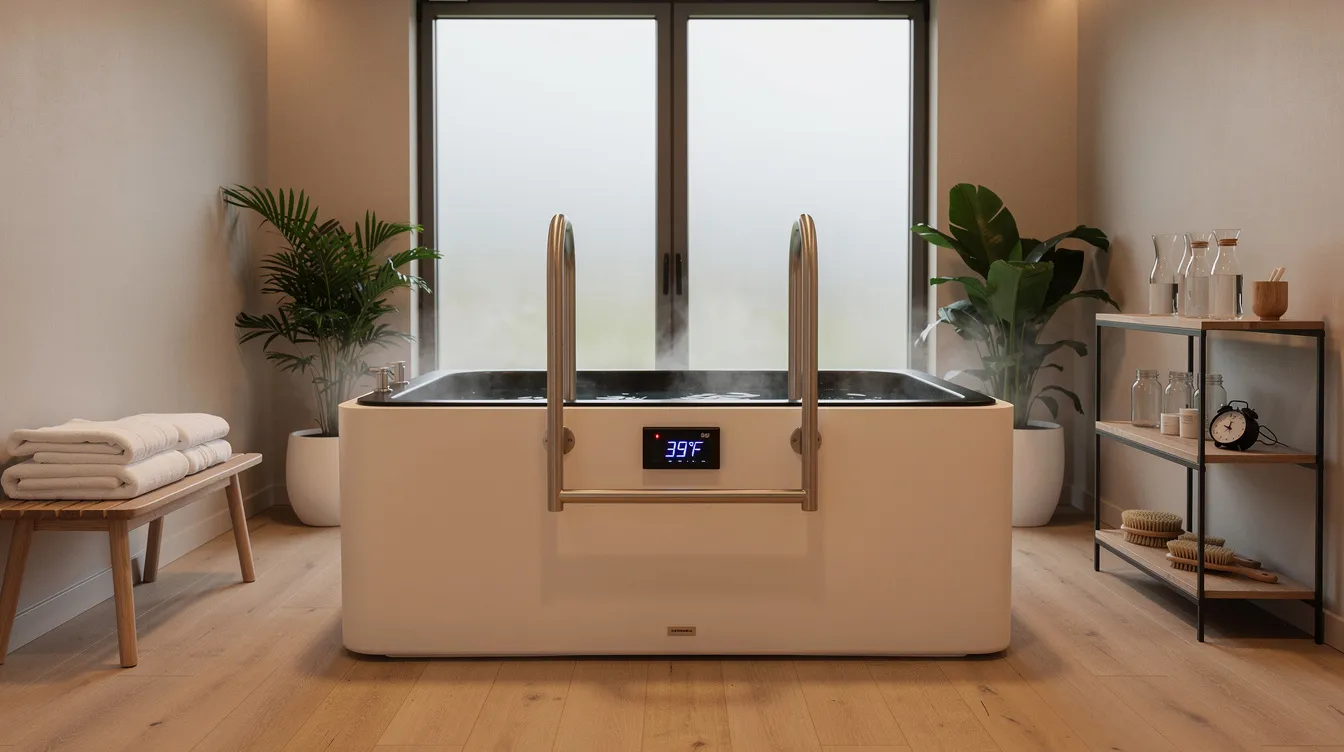
Safety is non-negotiable for both breathing techniques and cold exposure, especially when using a home cold plunge system without supervision.
Who Should Seek Medical Clearance Before Starting?
Seek medical clearance before beginning either protocol if you have any of the following conditions:
- Cardiovascular disease or arrhythmias
- Uncontrolled hypertension
- Raynaud's phenomenon
- Severe asthma
- Pregnancy
- Underlying health conditions affecting circulation
What Are the Specific Risks for Each Method?
Breathing risks: The Wim Hof breathing method can cause dizziness, tingling, and potential fainting (33-73% of practitioners report sensory changes). Always practice in a safe environment, seated, away from water. Any loss of consciousness near water creates an immediate drowning risk, making location of practice a critical safety variable.
Cold risks: Both methods carry cold shock response risk, potential arrhythmias, and afterdrop hypothermia with prolonged extreme exposure. Huberman emphasizes gradual adaptation and staying in control. Modern Wim Hof instruction has become more safety-conscious in recent years.
Home setup advice: Use tubs with temperature control, timers, and non-slip designs. Have a partner nearby for early sessions. Always consult a healthcare professional before beginning either protocol.
How Do You Choose and Customize Your Cold Routine for Home Use?
Think in terms of your goals rather than loyalty to one approach. The following user profiles help match each method to the right buyer.
User profiles and recommendations:
- Busy professional: Quick Huberman-style 2-3 minute plunges for mood boost and focus.
- Strength athlete: Time cold 4+ hours from lifting. Skip on hypertrophy-focused days.
- Wellness-focused homeowner: Full ritual with sauna and cold cycles, with optional breathing.
- Beginner: Start with the Huberman framework. Add dry Wim Hof breathing later once comfortable with cold alone.
Track your dose: log water temperature, time, difficulty (1-10), and mood to dial in safely over 4-6 weeks. Do not chase extremes. Prioritize sustainable sessions you can maintain month after month. With Sun Home Saunas setups combining an infrared sauna plus cold plunge, design contrast sessions with full-capacity heat followed by brief cold to amplify the cold plunge therapy health benefits.
How Do You Integrate Cold Plunges and Saunas at Home with Either Protocol?
Here is how to apply the science to your home wellness routine using quality equipment, structured around each protocol's core principles.
What Does a Huberman-Focused Home Routine Look Like?
- Morning 2-4-minute plunge at 50-59°F.
- Calm nasal breathing, filling lungs and belly fully throughout.
- 3-4 sessions weekly.
- Track oxygen-level awareness and carbon dioxide tolerance over time.
What Does a Wim Hof-Focused Home Routine Look Like?
- 15-20 minutes of breathing practice (dry, seated, away from water).
- 1-3-minute controlled plunge.
- 15-25-minute infrared sauna session.
- 3 sessions weekly.
- Pre-plunge sauna time raises core temperature, improving comfort during cold for new users.
Key product features to look for: accurate temperature control, durable insulation, low-EMF infrared heaters, and plug-and-play setup. Sun Home Saunas educational resources help customers fine-tune timing, duration, and progression from beginner to advanced safely.
Which Is Better: Wim Hof Method or Huberman Cold Protocol?
There is no universal winner. Appropriateness depends on personality, medical status, and goals.
Wim Hof Method suits: Those wanting a structured mind-body practice, enjoying breathwork, and motivated by group challenges and measurable control-group vs. trained-practitioner dynamics.
Huberman protocol suits: Data-driven users wanting simple, time-efficient, flexible integration with training and daily routines.
Many Sun Home Saunas customers blend both: using Huberman dosing guidelines for cold while incorporating moderate Wim Hof breathing away from water. The best protocol is the one you maintain consistently, safely, and enjoyably over months, not just during initial enthusiasm.
Select the Right Cold Protocol for Your Wellness Goals
The Wim Hof Method emphasizes breath control combined with cold exposure for immune enhancement and mental resilience, while the Huberman protocol focuses on deliberate cold exposure timing and duration for metabolic benefits and dopamine regulation.
Both approaches deliver proven benefits, but Wim Hof appeals to those seeking holistic mind-body practice, while Huberman attracts science-focused users prioritizing specific physiological outcomes with minimal protocol complexity.
Your choice depends on whether you value integrated breathing techniques and gradual progression or prefer straightforward temperature and timing prescriptions backed by neuroscience research. Both methods work excellently with consistent home cold plunge practice.
Ready to implement either protocol with a cold plunge system designed for precise temperature control and comfortable practice?
Visit Sun Home Saunas today to explore cold plunge equipment that supports both Wim Hof Method progression and Huberman protocol specifications, plus expert guidance on choosing and executing the approach that best matches your wellness philosophy and goals.
External References
- Stanford Medicine: “Andrew D. Huberman Profile Stanford Medicine.”
- Research Gate: “Warm-Up Breathing Exercises Accelerate V02 Kinetics and Reduce Subjective Strain During Incremental Cycling Exercise in Adolescents.”
- American Physiological Association: “Examining the Benefits of Cold Exposure as a Therapeutic Strategy for Obesity and Type 2 Diabetes.”
- PubMed Central: “Brown Fat Thermogenesis and Cold Adaptation in Humans.”
- National Institutes of Health: “Cold-Water Immersion (Cryotherapy) for Preventing and Treating Muscle Soreness After Exercise.”
- Research Gate: “A Randomized Controlled Clinical Trial of a Wim Hof Method Intervention in Women with High Depressive Symptoms.”